
Entyloma smuts
Entylomatales
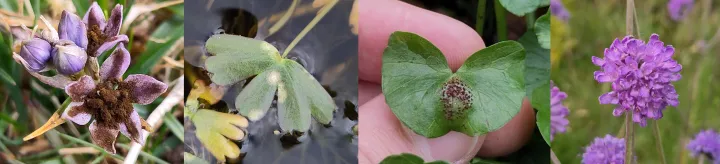
Description
Symptoms
The primary symptom of Entyloma smuts is the appearance of localized spots on the foliage of host plants. Initially, these spots manifest as chlorotic areas that gradually transition into yellow, brown, or necrotic lesions.
On the underside of the leaves, the pathogen develops spore masses. These often appear as small, subtle pustules that eventually rupture the host epidermis to release teliospores into the surrounding environment.
As the disease progresses, the infected leaf tissue begins to wither and die, leading to premature leaf drop. The confluence of numerous small spots can cause the entire leaf to lose its photosynthetic function.
Infected plants may exhibit stunted growth, wilting, or slight deformation of the stems. While the symptoms can sometimes be confused with other common leaf spot diseases, the internal presence of fungal spores is a key diagnostic characteristic.
The severity of the symptoms varies depending on the specific host-pathogen interaction, but heavy infestations generally lead to significant weakening of the plant's overall vitality.
Pathogen
The disease is caused by fungi belonging to the order Entylomatales. These are specialized pathogens that primarily target the vegetative parts, specifically the leaves, of various herbaceous plants.
The lifecycle of Entyloma fungi involves the production of thick-walled teliospores. These spores are highly resilient and allow the pathogen to survive in soil or crop debris for extended periods.
Dissemination during the growing season typically occurs via conidia or basidiospores. These are easily spread by wind currents, rain splashing, or contact with tools and machinery in the field.
Once the spores land on a susceptible host under favorable conditions, they germinate and penetrate the leaf tissue. The mycelium then colonizes the intracellular or intercellular spaces, extracting nutrients from the host.
Entyloma species often show a high degree of host specificity, meaning they typically affect members of specific plant families, such as Asteraceae, which is crucial for identifying potential risks.
Conditions for development
Entyloma smuts thrive in environments with high humidity and moderate temperatures. Persistent moisture on leaf surfaces, such as dew or rain, is essential for the germination of fungal spores.
Poor ventilation within a crop canopy creates a microclimate that favors infection. When plants are spaced too closely, humidity stays trapped, providing ideal conditions for the pathogen to spread.
The presence of infested crop debris is the most common source of primary inoculum. Fungi overwinter in this residue, and without proper field sanitation, the disease will likely return in subsequent seasons.
Soil management plays a significant role in disease development. Areas with poor drainage often exhibit higher rates of infection due to increased relative humidity and prolonged leaf wetness.
Environmental stress, such as nutrient deficiencies or drought, can weaken a plant's natural defense mechanisms, making them more vulnerable to initial infection by the fungus.
Why it matters
The most significant harm caused by Entyloma smuts is the reduction of the leaf surface area available for photosynthesis. This decline in plant energy production directly limits growth and overall yield.
For crops where the foliage is the marketable product, the presence of spots drastically reduces quality and market value. Severe outbreaks can make an entire crop unmarketable.
In addition to yield loss, the infected plant becomes more susceptible to secondary pathogens. These opportunists take advantage of the necrotic tissue, further damaging the plant health.
Economic losses arise not only from reduced production but also from the costs associated with repeated fungicide applications required to manage an ongoing outbreak.
Repeated yearly infections can lead to a long-term buildup of inoculum in the soil, making it increasingly difficult to grow susceptible host species on the same plot of land.
Protection
Crop rotation is the most effective cultural practice for managing Entyloma smuts. By avoiding susceptible host plants on the same field for several years, growers can starve the pathogen of its host.
Field sanitation is critical; removing and destroying crop residues helps eliminate the primary source of overwintering spores. Deep plowing can also bury debris, accelerating its decomposition.
Systemic fungicides may be used to control outbreaks if detected early. However, these applications should be part of an integrated pest management program to minimize the risk of fungicide resistance.
Planting resistant or tolerant cultivars is highly recommended as a sustainable control measure. Breeding programs often focus on enhancing natural immunity against specific fungal strains.
Maintaining optimal plant spacing to promote airflow and ensuring balanced fertilization helps keep plants vigorous, which can significantly improve their resistance to fungal infections.
Discussion
No discussions yet — be the first.