
Entomophthora muscae
Entomophthora muscae
Description
Symptoms
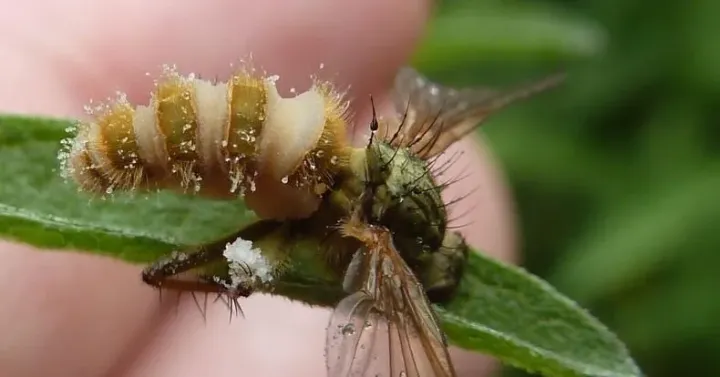
The most visible sign of infection is the erratic behavior of the fly. Infected flies become disoriented and eventually settle on the undersides of leaves or stems, spreading their wings in a characteristic pose.
Soon after death, a distinctive white, powdery layer of fungal growth emerges through the intersegmental membranes of the fly's abdomen. This layer is composed of masses of developing conidiophores.
A white halo of ejected spores can often be observed on the surface surrounding the carcass. This visual indicator helps identify that the fungal infection is currently in its active reproductive phase.
The body of the fly becomes stiff and swollen, effectively becoming a reservoir for the fungus. These "mummified" insects remain firmly attached to the substrate thanks to the action of the fungal mycelium.
During periods of high humidity, the fungal growth becomes particularly dense. Field inspections often reveal these corpses attached to foliage, indicating the presence of active biocontrol agents in the area.
Pathogen
Entomophthora muscae is an obligate entomopathogenic fungus belonging to the order Entomophthorales. It is widely recognized as a highly specialized parasite that infects various species of flies, most notably the common housefly.
The fungus invades the host by penetrating the insect's cuticle with specialized germ tubes. Once inside, it consumes the internal contents of the insect, gradually replacing its tissues with fungal biomass while the insect is still alive.
A fascinating aspect of this pathogen is its ability to influence the host's behavior. Before death, the fungus causes the fly to climb to an elevated position, such as the top of a plant, which facilitates the wide dispersal of its spores.
The fungus produces conidia, which are violently ejected into the environment. This rapid release mechanism ensures that nearby insects are efficiently infected during favorable environmental conditions.
As a biological agent, it serves as a natural mechanism for population control, effectively maintaining a balance within ecosystems by preventing explosive growth in fly populations.
Conditions for development
Entomophthora muscae relies heavily on high relative humidity for successful infection and spore transmission. Moisture is essential for the germination of spores on the insect's exterior.
Temperature plays a crucial role in the fungus's lifecycle. It thrives in moderate temperatures; excessive heat can dehydrate the spores and inhibit the fungal development process, while extreme cold slows it down.
Shaded environments within dense foliage or greenhouses provide the ideal microclimate for the fungus to persist. These areas protect the spores from the damaging effects of direct UV light.
The density of the insect population is a major factor in the speed of an outbreak. Higher concentrations of hosts lead to more frequent contacts, allowing the fungus to spread rapidly through the population.
Resting spores, or chlamydospores, are produced to survive unfavorable conditions. These spores can persist in the soil or organic debris, awaiting the arrival of favorable weather to initiate new infections.
Why it matters
The fungus does not damage plant tissues and is therefore considered beneficial in agricultural contexts. It acts as a natural pest control agent, reducing the number of flies that can be nuisance pests.
By suppressing fly populations, the fungus indirectly reduces the risk of mechanical transmission of plant pathogens. Many fly species act as vectors for bacteria and viruses that cause damage to crops.
Using this fungus as a biological control agent is highly advantageous for sustainable farming. It eliminates the need for chemical insecticides that might otherwise be required to control the same pests.
The presence of Entomophthora muscae signifies a healthy, balanced agroecosystem where natural predators and pathogens are active and providing free ecosystem services.
Integrated Pest Management (IPM) programs often aim to preserve natural populations of this fungus by creating suitable habitats and minimizing toxic chemical interventions.
Protection
No direct control is needed for this fungus, as it is a natural ally to farmers. Efforts should be focused on conservation rather than eradication.
To promote the activity of the fungus, it is recommended to minimize the use of broad-spectrum fungicides that could accidentally suppress the pathogen's growth in the field.
Maintaining balanced agricultural practices, such as proper irrigation and the protection of natural habitats, helps sustain the fungal population during the growing season.
Monitoring the presence of infected flies can provide valuable data on the natural suppression levels of pest populations, guiding decisions on whether additional interventions are necessary.
- Encourage biodiversity near crops.
- Avoid broad-spectrum chemical sprays.
- Monitor for infected "mummified" flies on foliage.
- Maintain adequate humidity in greenhouses.
Discussion
No discussions yet — be the first.