
Entomophthora gammae infection
Entomophthora gammae
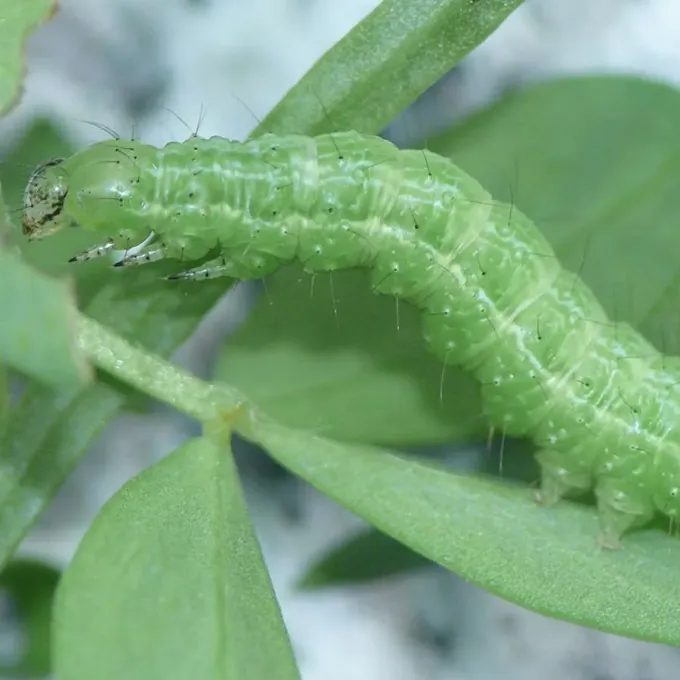
Description
Symptoms
The first sign of infection is a change in the behavior of the silver Y moth larvae. Infected individuals become lethargic and often migrate to the upper parts of the plants shortly before death.
A characteristic symptom is the immobilization of the insect on the leaf or stem surface. The caterpillar becomes firmly anchored to the substrate by strong mycelial growths that penetrate through the skin.
The appearance of the dead insect changes significantly: its skin turns a grayish or yellowish color. Under high humidity, the body becomes covered with a thick, velvety layer of fungal conidia.
Dissection of a deceased caterpillar reveals that internal tissues have been entirely replaced by fungal mass. There is usually no foul odor, as the development of the fungus often inhibits secondary bacterial decay.
The mass presence of "mummified" caterpillar corpses on crop leaves serves as a clear indication of active disease spread and the natural reduction of the pest population.
Pathogen
The causative agent of this disease is the specialized entomopathogenic fungus Entomophthora gammae, which belongs to the order Entomophthorales. This microorganism is an obligate parasite specifically targeting caterpillars and adults of the silver Y moth, Autographa gamma.
The fungus completes its life cycle within the host's body, where it develops by absorbing nutrients from the hemolymph. Eventually, the mycelium fills all internal cavities, causing complete disruption of the insect's internal organ systems.
Sporulation occurs on the surface of the dead insect. Conidia are actively discharged into the environment, ensuring the infection spreads to other individuals upon contact.
Unlike many other generalist entomopathogens, Entomophthora gammae exhibits high host specificity. This means the pathogen targets only the specific pest without harming beneficial insects or pollinators.
This fungus acts as a crucial natural regulator of silver Y moth populations in various ecosystems. In favorable years, outbreaks of this fungal disease can eliminate up to 90% of the local pest population.
Conditions for development
The development of Entomophthora gammae is highly dependent on hygrothermal conditions. Optimal conditions for spore germination and caterpillar infection include high relative humidity, typically above 80-90%.
Temperature plays a secondary but significant role. The fungus develops most actively at moderate temperatures ranging from +18°C to +24°C.
The presence of liquid moisture, such as dew, fog, or rainfall, promotes the rapid release of conidia. This explains why disease outbreaks are often observed following humid weather during the moth's active flight season.
The density of the silver Y moth population also influences the rate of infection spread. Higher concentrations of insects in a specific area increase the probability of spore transfer between individuals.
The absence of direct sunlight improves spore survival on leaf surfaces. Therefore, dense crop canopies create a favorable microclimate for the pathogen's development.
Why it matters
This is not a plant disease, but rather an insect disease that provides a significant benefit to agriculture. It serves as a natural biocontrol agent, reducing the population of a major polyphagous pest.
The fungus is highly beneficial to farmers as it reduces damage to crops such as soybeans, sugar beets, vegetables, and cereals. It poses no threat to cultivated plants.
The high biological efficacy of this pathogen allows for a potential reduction in the need for insecticide applications. The fungus acts as a self-sustaining natural pesticide that regulates the pest's numbers.
In agroecosystems where the fungus appears regularly, a long-term suppression of the pest population is often observed, contributing to a more sustainable and ecological pest management approach.
Importantly, infected caterpillars stop feeding long before they die. This provides an additional protective benefit to the crops, as the damage to the leaf surface is minimized early on.
Protection
No specific measures to control this fungus are required, as it is a natural ally in integrated pest management. Efforts should focus on preserving the conditions that allow this fungus to thrive.
Wide-spectrum fungicide use should be minimized, as these chemicals can be toxic to entomopathogenic fungi. Preference should be given to selective products when disease control is necessary.
Maintaining sound agricultural practices helps sustain the health of the agroecosystem. Proper crop rotation and optimal sowing dates help maintain the balance needed for the pathogen's development.
It is not recommended to conduct insecticide treatments if signs of this fungus are visible in the field. Destroying this beneficial fungus may lead to a secondary pest outbreak.
As a preventive strategy, farmers should choose pest control methods that do not disrupt the natural relationship between the pathogen and the silver Y moth, allowing the fungus to naturally regulate the insect population.
Discussion
No discussions yet — be the first.