
Livid entoloma
Entoloma sinuatum
Description
Symptoms
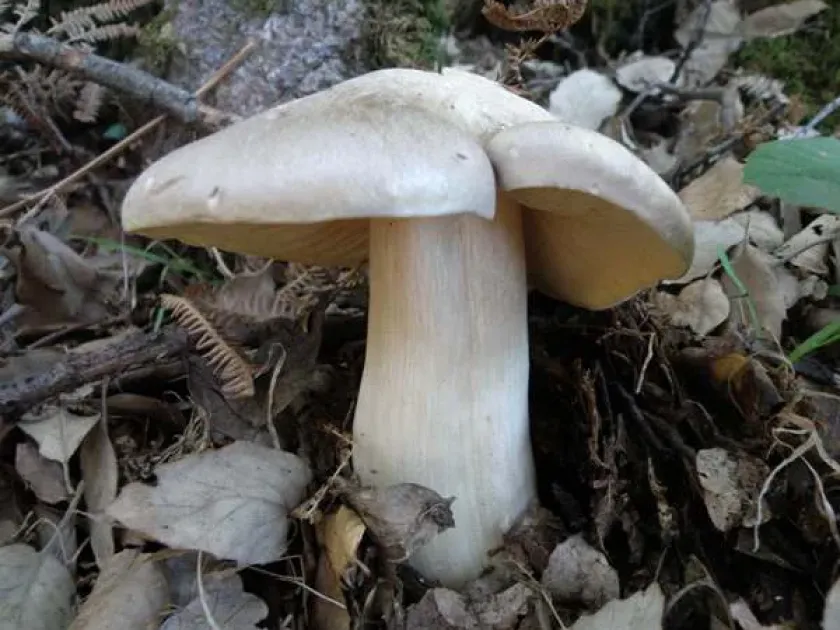
The Livid Entoloma (Entoloma sinuatum) is a large gilled mushroom that is often mistaken for edible species, such as the St. George's mushroom. The cap reaches 5–20 cm in diameter and displays a dirty-white, yellowish-grey, or brownish color with a slightly fibrillose, cracking surface.
The gills are initially yellowish but turn a distinctive pink as the spores mature, which is a key diagnostic feature. The stem is solid, fleshy, lacks a ring, and is white, eventually turning yellow with age.
The flesh is thick, white, and has a strong, mealy odor that intensifies when cut. This specific smell is a critical difference from many edible mushrooms of similar structure.
The spore print of this species is pink, which is clearly visible when the mushroom is placed on paper. It grows solitarily or in small clusters, forming visible fruiting bodies near trees.
Unlike many saprotrophs, this species is closely associated with the root systems of broad-leaved trees, often appearing on lawns, in gardens, or park areas near cultivated plants.
Pathogen
The pathogen is a basidiomycete fungus from the Entolomataceae family. It is important to note that it is not a phytopathogen in the strict sense (it does not directly cause disease in plants), but it actively colonizes the soil and root zone.
The fungal mycelium develops in the top layer of the soil, penetrating the rhizosphere of trees and shrubs. While it does not feed on living plant tissues, its extensive mycelial network can influence the soil's microbiological composition.
This fungus is a mycorrhizal symbiont that forms associations with the roots of broad-leaved trees, such as oak, beech, or hornbeam. In gardening, it is often found under old fruit trees.
The life cycle includes a long period of mycelial growth in the soil and short-term production of fruiting bodies for sporulation. Spores are dispersed by wind and insects, colonizing new areas with suitable tree species.
Biologically, this object is classified as a macromycete. Its development is tightly linked to soil moisture and the presence of organic matter, making gardens with humus-rich soil a favorable environment.
Conditions for development
The most active development of fruiting bodies occurs from late spring to early autumn. The fungus prefers well-moistened soils rich in organic debris.
Optimal conditions for mushroom emergence include warm weather with heavy rainfall following dry periods. In gardens, it most often settles in areas where the soil retains moisture for long periods.
Shaded areas or zones under dense tree canopies create a microclimate with reduced sunlight, which contributes to the longevity of the mycelium in the topsoil.
High concentrations of fallen leaves and woody debris in the soil create a nutrient-rich medium that stimulates the growth of the mycelium.
In intensive gardening, with frequent mulching or the use of organic fertilizers, the risk of Entoloma appearance increases as it successfully competes with other soil microorganisms.
Why it matters
The primary danger of the Livid Entoloma lies in its high toxicity to humans and pets. Consumption of even a small amount of the mushroom causes severe food poisoning.
Symptoms of poisoning include intense nausea, vomiting, diarrhea, and abdominal pain, appearing within 30–60 minutes after ingestion. Severe cases of intoxication can lead to liver and kidney damage.
The economic impact involves the need to isolate areas where mushrooms are growing, especially if children or pets play in the garden and are prone to interacting with or consuming found objects.
The fungus is not a pathogen for the crops themselves, but its presence in tree basins requires caution during agricultural work to avoid accidental contact with toxic spores.
The appearance of the fungus can indirectly signal waterlogged soil or an excess of undecomposed organic matter, which may lead to the development of other, truly phytopathogenic fungal infections.
Protection
The main control method is the physical removal of fruiting bodies as soon as they are detected. It is important to collect the mushrooms along with the mycelium to prevent maturation and spore dispersal.
To prevent recurrence, it is necessary to improve soil aeration and ensure proper drainage of excess moisture from tree basins. Moderate application of organic matter and regular soil cultivation are recommended.
In case of massive mycelial spread, deep digging of the soil can be performed, which disrupts the fungal network and changes environmental conditions, making them less suitable for this species.
Chemical treatment with fungicides against Entoloma is generally not recommended, as most products are designed to protect above-ground plant parts rather than soil macromycetes.
- Regularly inspect the garden area;
- Ensure timely cleanup of fallen leaves;
- Follow hygiene rules when working with soil;
- Prevent children and pets from accessing suspicious mushrooms.
Discussion
No discussions yet — be the first.