
Encoelia glauca
Encoelia glauca
Description
Symptoms
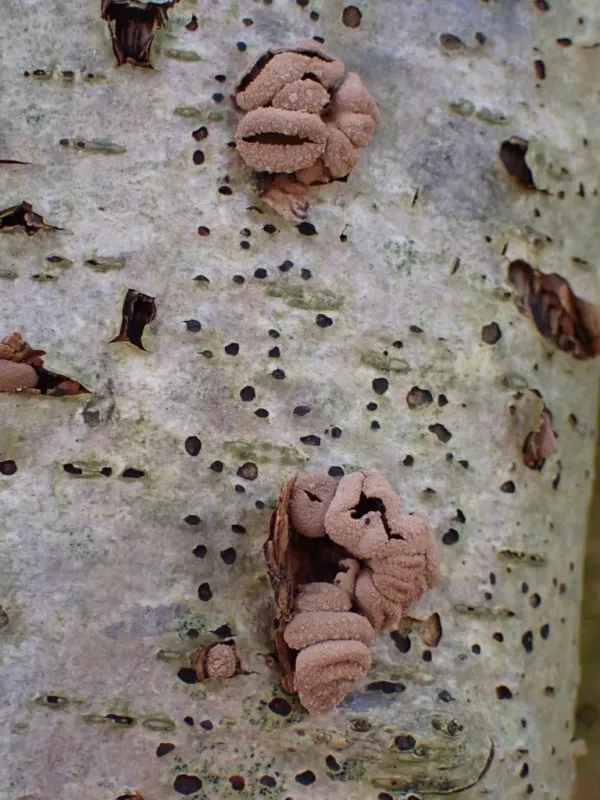
The primary symptom of infection is the appearance of small, cup-shaped apothecia on the bark of branches or main stems. They often emerge in clusters, ranging in diameter from a few millimeters to one centimeter.
In areas where the fungus is active, the bark becomes necrotic. It dries out, develops cracks, and often separates from the underlying wood, which indicates the cessation of sap flow and tissue death.
Branch dieback is a common sign of infestation. Foliage on infected branches may wither prematurely and drop, while the branches themselves become brittle, lose flexibility, and gradually die from the tip inward.
The color of the affected bark typically ranges from light brown to ash-grey. Compared to healthy tissue, the necrotic zones appear as distinct patches that progressively girdle the branch, causing distal portions to wither.
- Presence of cup-shaped fungal fruiting bodies on bark.
- Cracking and peeling of the bark from the wood.
- Premature yellowing or browning of foliage on specific branches.
- Progressive dieback of small and skeletal branches.
Pathogen
The disease is caused by the ascomycete fungus Encoelia glauca (synonym Cenangium glaucum), which belongs to the order Helotiales. This pathogen is a specialized fungus that primarily targets weakened or dying tissues of deciduous tree species.
The fungal life cycle involves the formation of fruiting bodies known as apothecia, which develop directly on the surface of infected bark. These structures are typically cup-shaped or saucer-shaped and display a characteristic glaucous (bluish-grey) hue.
The fungus generally follows a saprotrophic lifestyle but can manifest as a weak necrotrophic parasite. It colonizes the bark and the cambial layer, gradually expanding around the circumference of the affected branch or stem.
The pathogen produces conidial spores that facilitate the rapid spread of infection within the host plant or to neighboring trees. Fungal mycelium penetrates deep into the bark layers, disrupting the tree's natural physiological processes.
Unlike highly aggressive pathogens, Encoelia glauca rarely kills healthy, vigorous trees. However, it significantly accelerates the decline and mortality of stressed specimens within stands with poor phytosanitary conditions.
Conditions for development
The development of Encoelia glauca is favored by periods of high air humidity and moderate temperatures. The fungus is particularly active on trees stressed by drought, late frosts, or insect damage.
The pathogen prefers shaded areas of the crown where a microclimate with elevated moisture levels persists. Such conditions are ideal for spore germination and the establishment of new infection sites.
Mechanical injuries to the bark caused by hail, snow load, or boring insects act as primary infection courts. These wounds provide direct access for fungal spores to reach the inner, nutrient-rich cambial tissues.
A deficiency in mineral nutrition and overall host immune suppression creates favorable conditions for the fungus to shift from a saprotrophic phase to a parasitic one, allowing it to colonize living bark.
Dissemination of spores occurs primarily via wind currents and rain splashes. This mechanism makes the spread of infection highly effective in dense, poorly managed forest or orchard stands during rainy seasons.
Why it matters
The damage caused by Encoelia glauca lies in the accelerated dieback of branches, which leads to crown degradation. This reduction in leaf area decreases the tree's overall vigor and photosynthetic capacity.
Chronic infestation weakens the tree's systemic defenses, making it susceptible to secondary pests such as bark beetles and wood-boring insects, which often deal the final blow to the tree's vitality.
In forestry, the presence of this fungus serves as an indicator of poor stand health. It necessitates active phytosanitary monitoring to prevent widespread canopy dieback in the affected area.
For ornamental or fruit trees, the disease destroys aesthetic value and reduces yield. Extensive pruning required to remove infected branches can cause further structural trauma to the plant.
Economic losses are also associated with the costs of implementing sanitary measures, such as logging or disposing of infected wood to prevent the fungus from spreading to healthy trees nearby.
Protection
The main preventive measure is maintaining good silvicultural practices. Timely removal and destruction of dead or infected branches are essential to reduce the inoculum level in the environment.
Wounds created during pruning should be disinfected with copper-based solutions or sealed with specialized horticultural dressings to prevent fungal spores from colonizing the exposed raw tissue.
Prioritizing tree health through regular fertilization and irrigation during drought cycles significantly enhances the plant's natural defense mechanisms, allowing it to compartmentalize and resist fungal penetration.
Ensuring adequate air circulation within the crown through proper thinning and formative pruning reduces humidity levels, creating an unfavorable environment for the development of fungal fruiting bodies.
Chemical control using systemic fungicides or copper-based sprays can be effective only during the early stages of infection, provided that the fungicide coverage is thorough and covers the entire affected bark area.
Discussion
No discussions yet — be the first.