
Elytroderma needle cast
Elytroderma deformans
Description
Symptoms
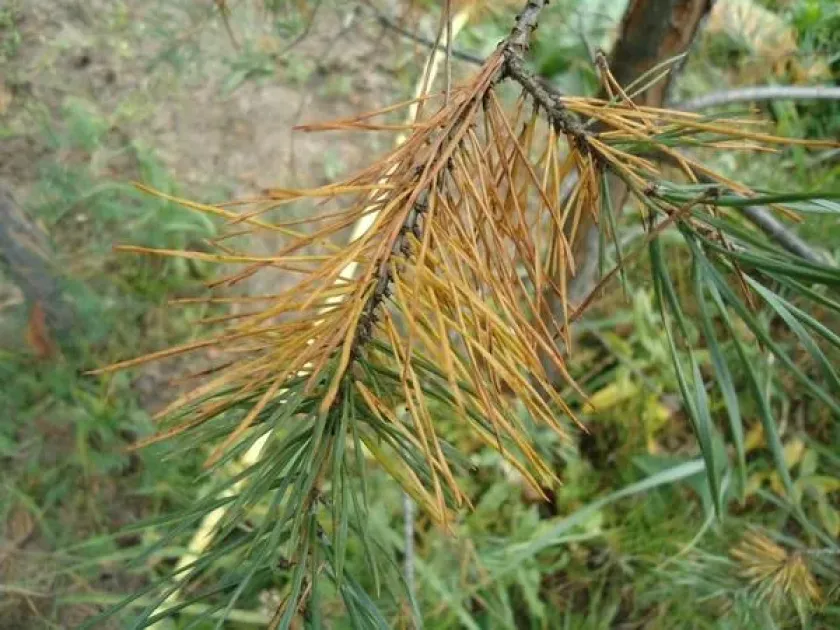
The most visible symptom is the yellowing and subsequent reddening of the needles, which often remain attached to the branch for an extended period.
Infected needles exhibit dark, elongated fruiting structures of the fungus that form distinct rows along the needle surface.
The fungus causes characteristic bending and twisting of the shoots, a condition often referred to as a crook in the twigs.
Severe and chronic infections lead to the formation of "witch's brooms," which are dense clusters of abnormally growing, stunted twigs and needles.
Trees affected by the pathogen show a thinning crown due to premature needle shedding, significantly altering the overall health and look of the pine.
Pathogen
The disease is caused by the ascomycete fungus Elytroderma deformans, which is a chronic parasite specific to pine species.
Unlike many other needle casts, this fungus is systemic and can persist in the host tissue, specifically in the phloem of needles and branches, for many years.
The pathogen produces fruiting bodies (hysterothecia) that appear as black, narrow lines on the needles, releasing spores that spread the infection.
The mycelium of the fungus can grow into the twigs, causing persistent and long-lasting changes to the tree's development and structure.
The biological cycle of the fungus is highly adapted to the host, allowing it to survive through harsh winter periods within the living branches of the tree.
Conditions for development
The development of the disease is favored by cool, moist spring weather, which is ideal for the discharge and germination of fungal spores.
Stands with poor air circulation, particularly those in low-lying areas or dense thickets, are highly susceptible to infection outbreaks.
The presence of old, infected trees nearby serves as a primary source of inoculum for younger, more susceptible pine stands.
Physical injuries to the needles or twigs provide entry points for the fungal spores, accelerating the colonization of the host plant.
Long periods of high relative humidity are essential for the spores to successfully infect healthy tissues during the growing season.
Why it matters
The infection severely stresses the tree, leading to reduced growth rates and making the tree more susceptible to attacks by bark beetles and other pests.
Chronic infestation results in the premature death of needles, which limits the tree's photosynthetic capacity and weakens its overall vigor.
In forest nurseries, this disease can cause significant mortality among seedlings, leading to substantial economic and reforestation losses.
The architectural deformation of branches and stems reduces the commercial value and timber quality of the affected pine trees.
In mature stands, persistent infection may eventually lead to tree mortality, necessitating extensive sanitation and harvest operations.
Protection
Management of the disease starts with cultural practices, such as thinning stands to increase air circulation and reduce humidity levels.
Sanitation cutting, which involves the removal and destruction of heavily infected trees or branches, helps to reduce the local spore population.
In high-value areas or nurseries, the application of appropriate systemic fungicides can help control the spread of the fungus during peak infection periods.
- Prioritize the planting of pine species known to have resistance to the fungus.
- Avoid establishing new plantations in close proximity to heavily infected old stands.
- Regular inspection of young trees to detect early signs of the needle cast.
Maintaining tree health through proper site selection and avoiding mechanical injury are the most effective long-term preventative measures.
Discussion
No discussions yet — be the first.