
Citrus scab
Elsinoë australis
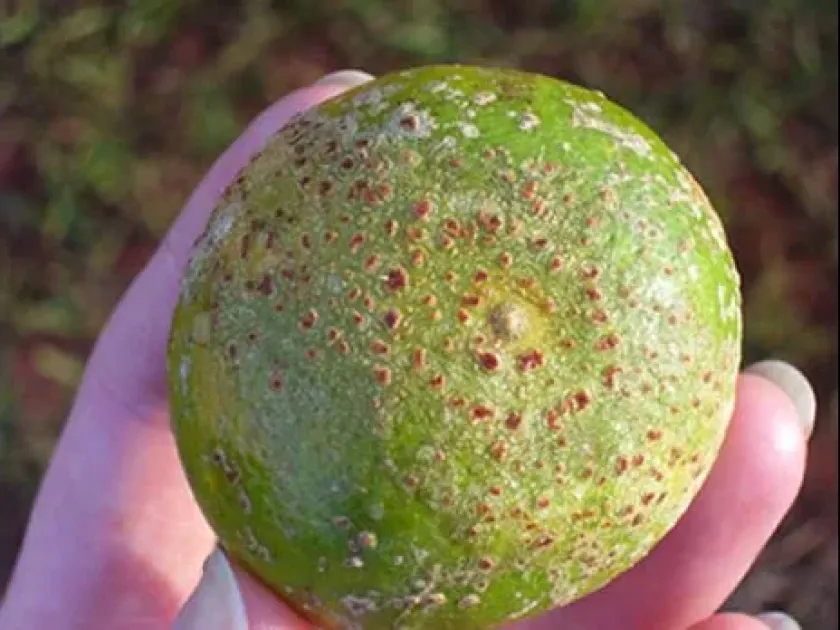
Description
Symptoms
Early symptoms appear as small, translucent spots on young leaves and fruitlets, which eventually darken over time.
As the infection progresses, these spots develop into characteristic pustules or corky, wart-like growths that create a rough texture on the surface.
Fruit shows visible scabs or raised corky patches that significantly ruin their aesthetic appeal and marketability.
Severe infestations cause leaves to deform, curl, and drop prematurely, which compromises the overall vigor and photosynthetic capacity of the tree.
- Small raised spots on young fruit.
- Cork-like scabs on the fruit rind.
- Deformed and curled leaf blades.
Pathogen
The causative agent of this disease is the fungus Elsinoë australis, which primarily affects plants within the Rutaceae family.
This pathogen belongs to the group of fungi that cause disfiguring scabs and corky tissue formations on the surface of plant organs.
The fungus maintains its lifecycle through both asexual conidia and sexual ascospores, ensuring it remains viable throughout different seasons.
Infection remains present in diseased branches and fallen fruit, which act as a reservoir for spreading the spores when conditions become favorable.
Spore dissemination occurs primarily via water splashes from rainfall and wind, which carry the pathogen to healthy young tissue.
Conditions for development
The development of the fungus is highly dependent on high humidity and prolonged moisture, particularly during the spring growth flush.
Optimal temperatures for spore germination and tissue colonization range from 15 to 25 degrees Celsius, making mild, rainy weather ideal for outbreaks.
Young, rapidly growing tissues are most susceptible to the pathogen, so management must focus on protecting new vegetative growth.
Poor orchard sanitation, such as dense canopy growth or lack of pruning, increases humidity levels and creates a perfect breeding ground for the fungus.
Warm, wet conditions facilitate the rapid spread of spores throughout the orchard, increasing the severity of the disease during favorable seasons.
Why it matters
The primary economic damage is the reduction in fruit quality, as scab-covered citrus cannot meet the standards for fresh market sales.
Heavy infection levels often trigger fruit drop, which significantly decreases total harvest yields per tree.
Affected trees experience reduced vigor, making them more susceptible to secondary pests and other physiological stressors.
If not managed, the disease can lead to dieback of twigs and branches, resulting in long-term decline of the orchard's productivity.
Export restrictions are often imposed on regions where this disease is prevalent, causing further financial difficulties for commercial growers.
Protection
Sanitation is the first line of defense; removing infected branches and debris from the orchard reduces the primary inoculum source.
Application of copper-based fungicides or appropriate systemic chemicals during the early vegetative stage is essential for prevention.
Regular orchard monitoring is necessary, particularly during periods of frequent rainfall, to detect the onset of the disease and apply timely treatments.
Choosing resistant citrus cultivars is the most effective long-term strategy for managing the disease and reducing reliance on chemical sprays.
Proper orchard management, including thinning the canopy for better airflow and implementing efficient irrigation, minimizes the microclimate favorable to the fungus.
Discussion
No discussions yet — be the first.