
Elaphomyces granulatus
Elaphomyces granulatus
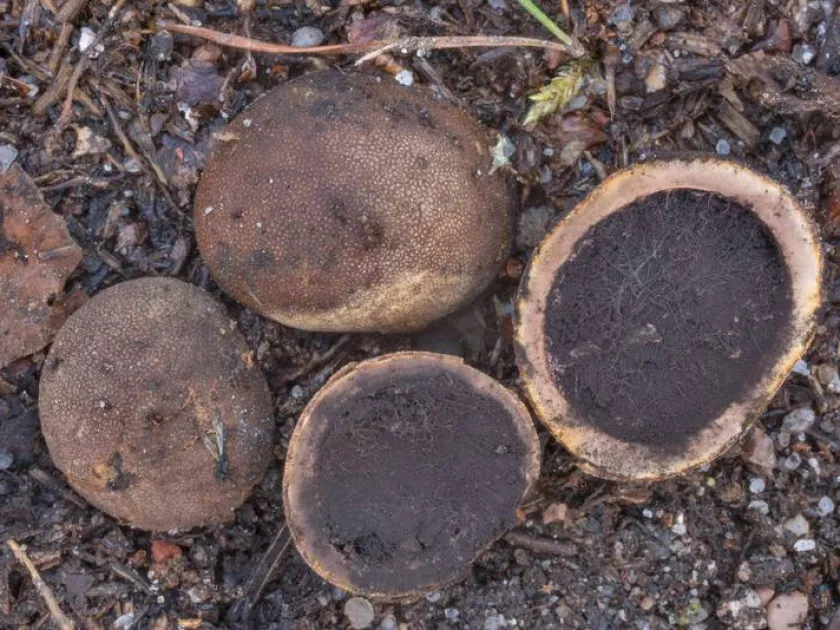
Description
Symptoms
Direct detection of Elaphomyces granulatus is challenging because it remains entirely below the surface. A primary sign of its presence is the characteristic pitting in the ground caused by wildlife digging for the truffles.
During a root inspection of saplings, researchers look for thick, granular white or greyish fungal covers on the fine roots. Infected roots often appear stunted, malformed, and lack normal branching.
Above-ground symptoms include uneven growth rates and chlorosis of the needles. Trees infected by this fungus show poor vigor and stunted annual shoot elongation compared to healthy trees.
The soil around infected trees often exhibits a distinct odor and a dense texture. Small fragments of the warted, outer peridium of the truffle can be recovered from soil samples in suspected areas.
Increased vulnerability to secondary pests and drought in seedlings can also serve as an indicator that the root system is being compromised by fungal activity.
Pathogen
Elaphomyces granulatus, widely known as the deer truffle, is a subterranean ascomycete fungus. While it naturally exists in forest ecosystems as a mycorrhizal partner, it can negatively affect young tree growth in nurseries and managed forest stands by becoming a resource competitor.
The fungus produces small, wart-covered, spherical fruit bodies hidden underground. These structures release spores that remain in the soil and are dispersed by small mammals that dig them up for food.
Its relationship with host trees, typically conifers like pine or spruce, is complex. When the fungal colonization is excessive, it transforms from a beneficial mycorrhizal partner into a parasitic entity that drains energy from the host's root system.
The pathogen infects the root tips, forming thick, granular fungal sheaths. These sheaths physically block the absorption of water and minerals, which is critical for the survival of young saplings.
The life cycle of this fungus is deeply integrated into the soil ecosystem. Its resilience and ability to survive long periods in the soil make it a persistent factor in forest soil health.
Conditions for development
The deer truffle thrives in acidic, sandy soils with high organic content. It is most commonly found in mature pine or spruce forests where years of needle accumulation have created a thick, acidic layer.
Optimal temperatures for mycelial growth range from 12 to 18 degrees Celsius. The fungus is well-adapted to cool, temperate climates and persists effectively during cooler months.
High soil moisture is essential for the maturation of the fruit bodies. Areas with poor drainage and high shade density provide the perfect environment for the fungus to establish and spread.
Poor nursery practices, such as lack of soil aeration and monoculture planting, facilitate the expansion of the fungal colony. Compacted soil prevents oxygen from reaching roots, which ironically aids the fungal colonization.
The presence of wild boar, squirrels, and voles is a critical factor for spore distribution. These animals act as vectors, spreading the fungus across vast areas of the forest plantation.
Why it matters
The primary damage is caused by the metabolic load the fungus places on the host tree. By aggressively sequestering nutrients meant for the tree, the fungus reduces the sapling's overall growth potential.
In forest nurseries, this leads to significant economic loss as infected seedlings fail to reach standard sizes and exhibit high mortality rates during outplanting.
Reduced vigor makes trees susceptible to secondary pathogens and climate-related stress, such as drought. Infected trees have diminished capacity to repair tissues after environmental damage.
Long-term forest productivity is compromised as the fungus interferes with the nutrient cycle. Subsequent generations of trees planted in the same soil often suffer from the same growth retardation.
The structural integrity of the root system is weakened, making trees more prone to lodging and windthrow in mature plantations. This causes thinning of the forest stand and loss of timber value.
Protection
Preventative measures in nurseries involve regular soil tilling and deep plowing to break up the mycelial network and disturb the soil environment preferred by the truffle.
Liming the soil to adjust the pH toward neutral is a highly effective cultural control. Elaphomyces granulatus is sensitive to higher pH levels and fails to thrive in non-acidic soils.
Maintaining strict crop rotation protocols is essential. Avoiding the repeated planting of host species on known infested sites helps reduce the density of fungal spores in the soil.
Fungicides can be used during site preparation, but they should be applied cautiously to avoid harming beneficial soil biota. Effective drainage systems should be implemented to prevent moisture accumulation.
Integrated management includes monitoring wild animal populations and protecting nursery areas with physical barriers to reduce the spread of spores into managed lands.
Discussion
No discussions yet — be the first.