
Elaphomyces citrinus
Elaphomyces citrinus
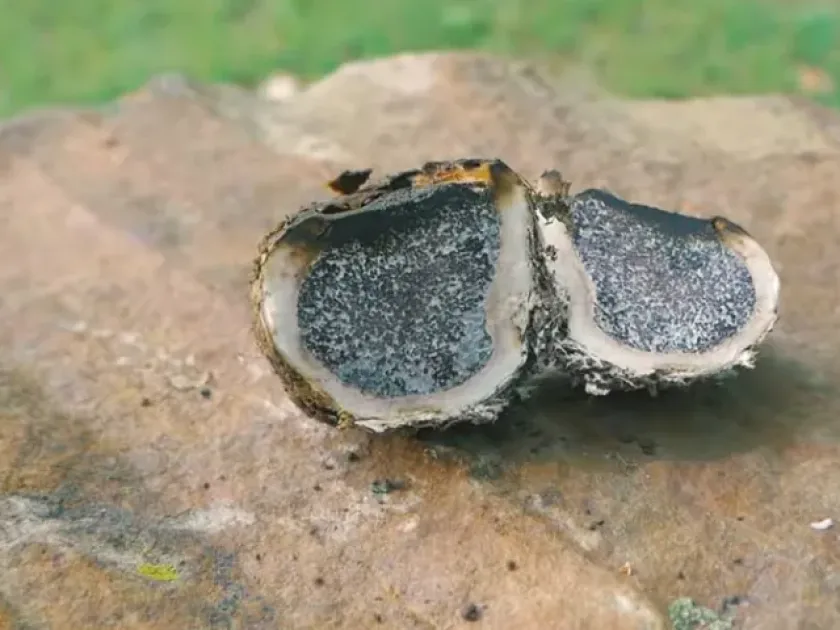
Description
Pathogen
The pathogen is Elaphomyces citrinus, an ascomycete fungus widely known as a type of false truffle. It lives primarily underground, forming its sporocarps beneath the forest litter or in the upper soil horizons.
This species functions as an obligate mycorrhizal symbiont, establishing a complex connection with tree roots. It facilitates the nutrient exchange between the fungal mycelium and the host plant's root system.
Biologically, the fungus is highly adapted to subterranean life, having lost the ability to produce typical aerial fruiting bodies found in other mushrooms.
The fruiting body is characterized by a yellowish to lemon-colored outer skin, which protects the inner spore mass from soil moisture and external environmental stress.
Spore dispersal relies heavily on mycophagous animals, which consume the fruiting bodies and spread the spores through their waste across the forest floor.
Conditions for development
Development is most favorable in acidic, organic-rich soils where the humus layer remains undisturbed and provides consistent moisture levels throughout the growing season.
Temperature fluctuations in the soil are a limiting factor for mycelial spread. The species thrives in temperate zones with stable, cool, and humid environmental conditions.
Lack of canopy cover or excessive soil disturbance can drastically reduce the viability of the fungus, as it requires a specific microenvironment provided by forest debris.
The fungal growth is strongly associated with mature forest stands, where established root systems allow for continuous mycorrhizal expansion and colonization.
Interaction with forest rodents is a critical condition for its lifecycle, as these animals play a functional role in distributing spores across the habitat.
Why it matters
While often considered a symbiont, excessive colonization can disrupt the balance of the soil microbiome, potentially hindering the efficiency of other beneficial fungi.
In nursery settings, it may compete with favorable mycorrhizal inoculants, leading to suboptimal nutrient uptake and reduced vigor in young saplings.
Its presence is often a biological indicator of specific soil acidification, which may signal conditions that are not ideal for all types of silvicultural practices.
The fungus is non-edible and possesses no commercial value, representing a parasitic or neutral biological pressure on the host tree's root resources.
Due to its underground growth habit, control is virtually impossible, and its impact on forest productivity remains a topic of ongoing ecological observation.
Discussion
No discussions yet — be the first.