
Description
Symptoms
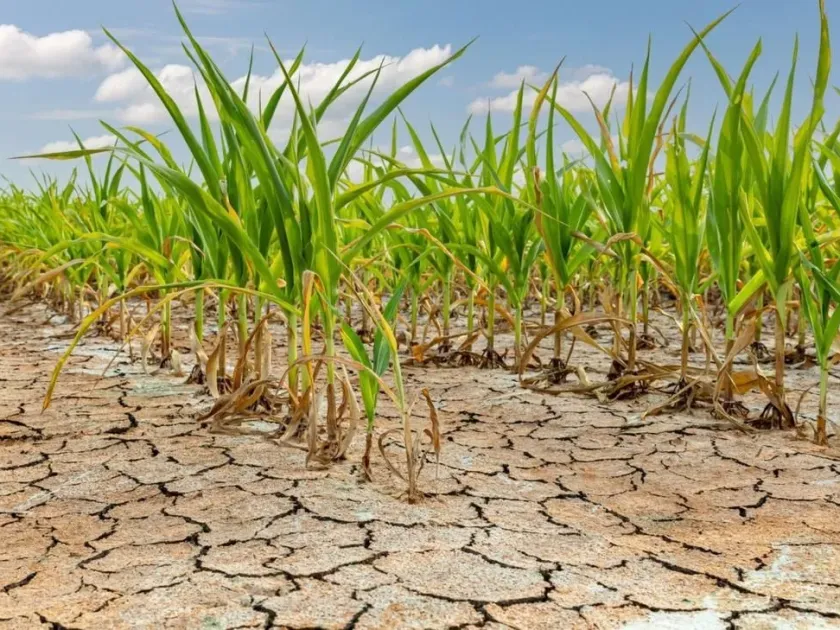
The most prominent sign of drought-induced stunting is a significant reduction in plant height compared to healthy crops. Internodes are noticeably shortened, and the overall stature of the plant remains compact and underdeveloped.
Leaves often appear smaller than normal, with some curling at the edges due to water loss. In soybeans, leaves may exhibit premature yellowing (chlorosis) or wilting, particularly during the peak heat hours of the day.
The root system becomes restricted as plants stop allocating energy to root expansion in favor of basic survival. In severe cases, root tips may necrotize, preventing the plant from accessing deep water sources.
Flowering and pod set are frequently delayed or aborted under severe moisture deficiency. Soybeans may shed flowers and young pods, significantly reducing the potential yield for the season.
In the field, stunting often appears in patches where soil moisture retention is poor or where compaction hinders root development, creating an uneven look across the entire crop stand.
Pathogen
Stunting is not caused by a biotic pathogen like a fungus or bacterium, but is rather a physiological condition triggered by abiotic stress. It results from a metabolic shutdown caused by a lack of available soil moisture.
The primary mechanism involves the loss of turgor pressure within the cells, which is necessary for cell expansion and division. When water availability drops, the plant halts these processes to conserve energy.
The plant produces abscisic acid, a hormone that signals the closure of stomata to prevent further water loss. While this is an adaptive strategy, the resulting reduction in gas exchange severely limits photosynthesis and growth.
Prolonged drought leads to a collapse in the transport of water and nutrients from the roots to the leaves. This starvation effect is what manifests as visible stunting and wilting of the plant tissues.
Physiological stunting renders the plant more susceptible to opportunistic diseases. While the drought itself is the cause of the poor growth, secondary infections often attack the weakened plants.
Conditions for development
The development of stunting is driven by long intervals without rainfall coupled with high ambient temperatures. Increased evaporation rates drain soil moisture quickly, leaving the crop without sufficient water reserves.
Soil texture is a major factor, as sandy soils have lower water-holding capacity compared to loam or clay soils. Plants growing in light-textured soils are significantly more prone to drought-induced stunting.
Compacted soil layers prevent roots from reaching deep, moist zones. This forces the crop to rely on surface water, which is the first to be depleted during a dry spell, leading to immediate stress symptoms.
Inadequate nutrient availability, particularly potassium, exacerbates drought effects. Potassium plays a crucial role in regulating osmotic potential within cells, helping the plant retain moisture during dry periods.
High weed density acts as a massive drain on limited soil moisture. Weeds compete directly with soybeans for the available water, significantly accelerating the arrival of stunting and reducing crop yields.
Why it matters
The primary harm caused by stunting is a drastic reduction in total yield. For soybeans, this results in fewer pods, smaller seed size, and a significant decrease in the overall mass of the final harvest.
Structural changes in the plant architecture make mechanical harvesting difficult. If the plant height is too low, the combine header may miss many pods, leading to significant harvest losses in the field.
Quality degradation is another major concern. Stunted soybeans often produce shriveled, poor-quality seeds that have lower oil and protein content, making them less valuable in the commodity market.
Stunted plants often have poor physiological vigor, making them less capable of responding to chemical treatments. This makes managing weeds and other pests more difficult and costly for farmers.
Economic losses are compounded by the wasted inputs such as fertilizers. Since stunted plants cannot actively absorb nutrients from the soil, these expensive inputs are often lost through runoff or leaching.
Protection
Implementation of moisture-conserving tillage practices, such as no-till or minimum tillage, is crucial. Maintaining crop residues on the surface significantly reduces evaporation and keeps the soil cool.
Selecting drought-tolerant soybean varieties is a foundational strategy for long-term management. Breeding programs have produced hybrids specifically adapted to perform well in regions prone to irregular rainfall.
Adjusting seeding rates based on soil moisture potential can prevent excessive competition. In dry regions, lower plant populations can help ensure that each individual plant has sufficient water access.
Applying anti-stress products, such as those containing amino acids or sea kelp extracts, can help plants recover from drought stress more rapidly once rainfall eventually occurs.
Rigorous weed control is essential during the early vegetative stages. Eliminating weed competition during critical development periods allows the soybean crop to maximize its growth potential even under varying climates.
Pathogens and affected parts
Affects crops · 1
Discussion
No discussions yet — be the first.