
Dothiora taxicola
Dothiora taxicola
Description
Symptoms
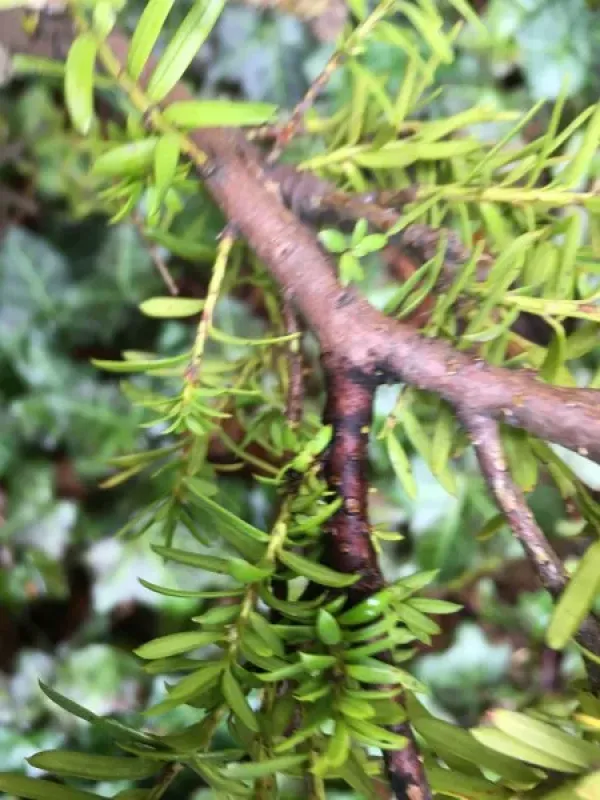
The first clinical signs of infection include localized chlorosis or browning of the needles, which eventually transition into necrosis and total tissue desiccation.
Bark lesions often appear as discolored or sunken patches on branches, which gradually expand to girdle the branch, disrupting nutrient transportation.
Infected areas are often characterized by the presence of small, black, eruptive fruiting bodies of the fungus visible on the surface of the affected bark.
As the disease progresses, systemic symptoms manifest as branch dieback, where distal parts of the limb wither and die due to impaired circulation.
Severe infestations result in heavy needle drop, leading to sparse foliage and a significantly reduced aesthetic value of the specimen.
Pathogen
The disease is caused by the ascomycete fungus Dothiora taxicola, which acts as a pathogen primarily targeting trees of the Taxaceae family.
The fungus maintains its life cycle by colonizing weakened or dying bark and needle tissues, where it establishes its mycelial structures.
Reproduction is facilitated by spores that are disseminated via wind or rain splash, enabling the pathogen to reach new hosts or adjacent branches.
Upon maturity, the fungus develops stromata — dense fungal masses that erupt through the host's epidermal layer to release spores into the environment.
The pathogen is highly resilient and can persist in infected plant debris, making proper sanitation a critical component of disease management.
Conditions for development
High relative humidity and prolonged rainfall are the primary environmental drivers that trigger the germination and spread of Dothiora taxicola spores.
Dense planting schemes that restrict air movement and trap moisture within the canopy create an optimal microclimate for rapid fungal colonization.
Plants suffering from physiological stress, caused by poor soil drainage, nutrient deficiencies, or water stress, are significantly more susceptible to infection.
Physical injuries to the bark, resulting from winter frost cracks or improper pruning techniques, provide entry points for the pathogen to establish itself.
Warm, humid spring weather coinciding with the tree's growth phase is considered the high-risk period for initial disease development in nurseries and gardens.
Why it matters
The primary concern regarding this disease is its impact on the health and longevity of yew trees, often leading to irreversible damage if left untreated.
Damage to vascular tissues restricts the flow of water and photosynthates, causing a gradual decline in the overall vigor of the host plant.
In ornamental landscaping, the loss of foliage and branch structure destroys the desired shape, rendering the plant unsuitable for its intended design purpose.
The accumulation of inoculum on infected trees poses a continuous risk to surrounding healthy plants, potentially leading to epidemic-level outbreaks.
Young trees are particularly vulnerable, with infections often escalating rapidly to cause mortality within a single growing season.
Protection
Sanitation is the cornerstone of management; it is imperative to prune all symptomatic branches well below the necrotic area and destroy the material immediately.
Improving cultural conditions, such as thinning the canopy to promote airflow and ensuring well-drained soil, is essential for disease prevention.
The application of protective fungicides, particularly copper-based formulations, serves as an effective method to suppress fungal activity during wet seasons.
Maintaining optimal tree vigor through balanced fertilization and adequate hydration helps the plant bolster its natural resistance to pathogen penetration.
- Regular monitoring for early signs of bark discoloration.
- Disinfecting pruning tools between cuts to prevent cross-contamination.
- Removing and destroying all fallen needles and debris beneath the tree.
- Applying systemic fungicides if the infection pressure is high.
- Protecting the bark from mechanical injury and winter sunscald.
Discussion
No discussions yet — be the first.