
Diplophlyctis infection
Diplophlyctis
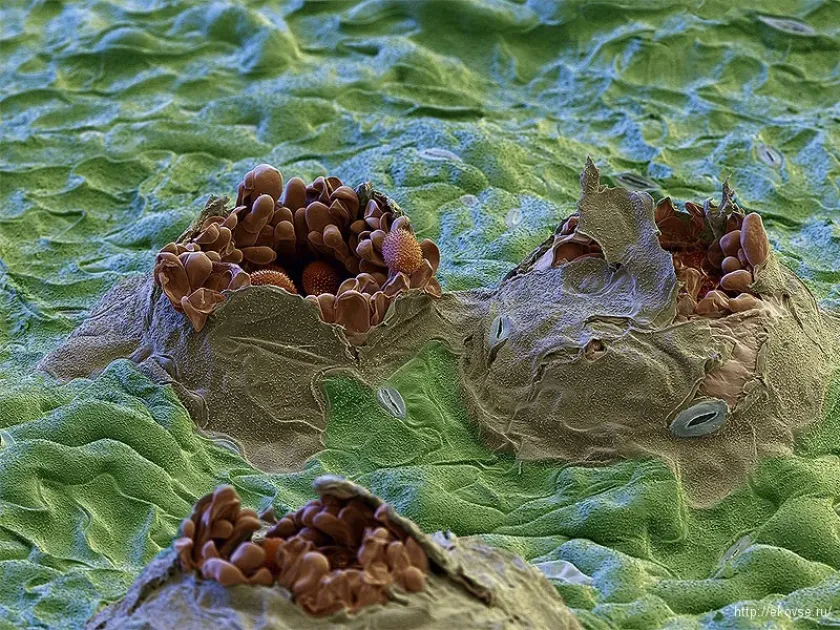
Description
Pathogen
The disease is caused by members of the genus Diplophlyctis, which belong to the phylum Chytridiomycota (chytrid fungi). These are primitive aquatic or semi-aquatic microorganisms known for their unique life cycle.
The pathogen reproduces by forming motile zoospores, each possessing a single flagellum. These zoospores use the film of water on soil particles or leaf surfaces to swim actively toward host plant tissues.
Upon reaching the host, the zoospore encysts and penetrates the plant cell wall using specialized enzymes. Once inside, it develops an endobiotic thallus that extracts nutrients directly from the host cells, leading to their degradation.
When environmental conditions are favorable, the thallus differentiates into sporangia. These structures release a massive number of new zoospores, enabling rapid spread and repeated infection cycles within a short period.
Diplophlyctis species are known for their ability to persist in the environment as dormant resting spores. This feature allows them to survive adverse conditions like drought or lack of host plants by remaining in the soil debris.
Conditions for development
High moisture levels are the most critical factor for the development of Diplophlyctis. Flooding, overwatering, or waterlogged soils provide the essential aquatic medium for zoospore movement.
Development is most efficient at temperatures ranging between +15°C and +26°C. These conditions facilitate rapid metabolic activity and shorten the interval between consecutive infection cycles.
Organic-rich soils containing significant amounts of decomposing plant matter serve as ideal reservoirs for the fungus. The pathogen utilizes this organic debris as a food source during its saprotrophic phase.
Poor drainage and soil compaction contribute to the creation of anaerobic micro-niches where the pathogen thrives. Such environments weaken plant root systems, making them easier targets for fungal invasion.
The use of contaminated irrigation water, particularly from surface reservoirs, is the primary vehicle for pathogen introduction into agricultural systems. High humidity in greenhouses can also trigger secondary infections.
Why it matters
The primary damage caused by Diplophlyctis is focused on the roots. Infection disrupts the root hair structure, leading to stunted growth and reduced uptake of water and essential nutrients.
Symptoms often include chlorosis, wilting of the foliage, and a general decline in plant vigor. Because the root system is damaged, plants are unable to sustain their growth, leading to yield loss.
The infection creates physical wounds in the plant tissue, which serve as entry points for secondary opportunistic pathogens such as bacteria and other fungi, leading to more complex root rot issues.
In hydroculture systems, this pathogen can be particularly devastating, potentially causing total crop failure. The lack of natural soil microflora in these systems often allows the fungus to spread unchecked.
Economic losses are driven by increased management costs, the need for chemical interventions, and the disposal of infected plant material, which impacts the overall profitability of the farming operation.
Protection
The cornerstone of management is moisture control. Improving soil drainage, utilizing raised beds, and avoiding over-irrigation are vital steps to restrict the aquatic movement of zoospores.
Disinfecting irrigation water through advanced filtration, UV treatment, or chemical stabilization is highly recommended. Monitoring water sources for the presence of pathogens can prevent initial outbreaks.
Implementing rigorous sanitation practices, such as removing crop residues and sterilizing tools and growing media, is essential. This reduces the primary inoculum and limits the survival of the fungus.
Biological control agents, such as beneficial Trichoderma strains, can be employed to colonize the rhizosphere and compete with the pathogen, creating a protective barrier for the roots.
If chemical control is necessary, systemic fungicides effective against chytrids and oomycetes should be applied. Proper timing and alternating modes of action are crucial to prevent the development of resistant fungal populations.
Discussion
No discussions yet — be the first.