
Entomosporium leaf spot
Diplocarpon mespili
Description
Symptoms
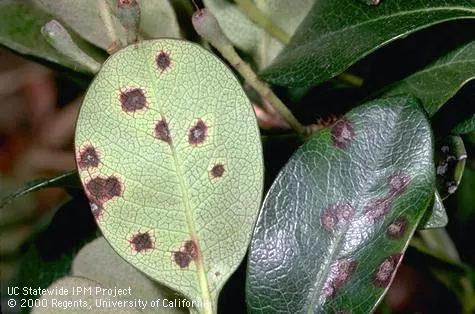
Early symptoms include small, circular, reddish-brown spots on the leaves, which gradually darken as the fungal infection progresses and matures.
A distinctive feature is the presence of tiny, black, pimple-like structures in the center of the spots, known as acervuli, where new spores are generated.
As the infection intensifies, these spots can merge into larger necrotic patches, causing the leaves to turn yellow and eventually drop from the tree prematurely.
In addition to foliage, the fungus may infect petioles and young fruit, causing dark, depressed lesions that can deform the fruit or make it unsightly.
On susceptible twigs, the fungus can cause minor cankers or dieback, which serves as a reservoir for the pathogen until the following spring.
Pathogen
The disease is caused by the fungus Diplocarpon mespili, which has an asexual stage known as Entomosporium mespili, commonly affecting plants in the Rosaceae family.
The fungus overwinters primarily on fallen, infected leaves, but it can also survive in small cankers on young twigs or on overwintering buds of the host plant.
In spring, when temperatures rise and moisture is present, the fungus produces spores (conidia and ascospores) that are dispersed by rain splashes or wind currents.
Upon landing on a suitable host leaf, the spores germinate and penetrate the epidermal tissue, establishing the infection site where the fungal colony begins to thrive.
The pathogen completes multiple life cycles during the growing season, allowing for rapid secondary spread whenever favorable environmental conditions return.
Conditions for development
Moisture is the most critical factor for the disease; frequent rainfall, heavy dew, or overhead irrigation creates the wet environment necessary for spore dispersal.
Optimal temperatures for fungal growth range from 18 to 24 degrees Celsius, which are typical for spring and early summer weather patterns in many regions.
Poor air circulation within the tree canopy, often caused by overly dense planting or lack of pruning, leads to prolonged leaf wetness and higher infection rates.
The disease is most prevalent in areas with high humidity, where leaves stay wet for extended periods, allowing the fungus sufficient time to penetrate the tissue.
Poor sanitation practices, such as allowing infected debris to remain under the trees, significantly increase the inoculum pressure for the next growing season.
Why it matters
The primary damage is premature defoliation, which severely reduces the tree's ability to photosynthesize and store essential energy for the next year.
Chronic infection weakens the tree, making it more susceptible to environmental stressors, such as winter injury or drought, potentially leading to limb dieback.
Infected fruit often suffers from reduced market quality and may be subject to rot, leading to significant economic losses for commercial fruit growers.
Repeated yearly infections can lead to the general decline of the tree, resulting in stunted growth and a permanent reduction in total annual fruit production.
In nursery environments, this disease can render entire batches of seedlings unsellable due to their unsightly appearance and overall lack of vigor.
Protection
Effective management begins with strict sanitation: rake and destroy all fallen leaves in autumn to remove the primary source of the fungus for the following spring.
Promote good airflow by pruning trees regularly to open up the canopy, which allows leaves to dry more quickly after rainfall or dew events.
Apply protective fungicides during the period of leaf expansion, especially if weather forecasts predict extended periods of wet and humid conditions.
Avoid overhead irrigation whenever possible, or schedule watering to ensure foliage dries quickly during the warmest part of the day.
- Practice excellent orchard sanitation.
- Use copper-based fungicide sprays.
- Prune to improve canopy air circulation.
- Monitor trees during wet spring weather.
Discussion
No discussions yet — be the first.