
Didymella leaf spot
Didymella negriana
Description
Symptoms
Symptoms typically begin as small, indistinct spots on the leaves. These spots gradually expand and develop a distinctive light-colored center surrounded by a reddish-brown or dark border.
As the infection progresses, large necrotic patches form on the foliage. This often leads to premature yellowing and heavy leaf drop, which can leave a blackcurrant bush almost bare by mid-summer.
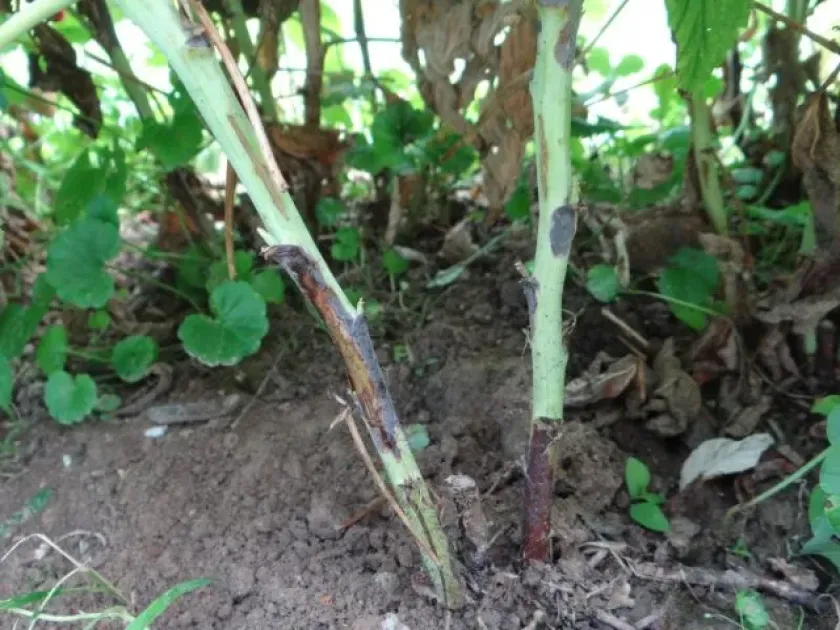
Infection also affects the canes. Dark, sunken lesions appear on the bark, which can eventually girdle the stem, causing the upper portion of the branch to wither and become brittle.
Under humid conditions, the surface of the lesions may show tiny black specks. These are the fruiting bodies of the fungus, representing the site of active sporulation where new spores are generated.
Diagnosis requires checking the lower canopy of the bush, where the infection often starts. The proximity to soil and the higher humidity in the center of the bush make these areas most vulnerable.
Pathogen
The disease is caused by the fungus Didymella negriana, an ascomycete pathogen that specifically targets blackcurrant plants. It is a persistent fungus that thrives in temperate climates.
The fungus survives the winter primarily in infected plant debris, including fallen leaves and cankered stems, where it exists as mycelium or as fruiting bodies known as perithecia.
During the spring and early summer, spores are released from these overwintering structures and spread via wind and rain splashes. They land on healthy leaves and shoots, initiating the infection cycle.
The pathogen utilizes a complex life cycle, producing both sexual and asexual spores, which allows it to adapt quickly and maintain pressure on the host plant throughout the growing season.
Once established, Didymella negriana can continue to produce secondary spores as long as conditions remain moist and mild, leading to multiple cycles of infection within a single year.
Conditions for development
Moisture is the primary driver for the development of Didymella leaf spot. Prolonged wet weather, frequent rain, and heavy morning dews provide the necessary environment for spore germination.
Poor airflow within the canopy significantly increases the risk of the disease. Dense, unpruned bushes trap moisture, allowing the fungus Didymella negriana to thrive unchecked by drying winds.
Cool to moderate temperatures (approximately 15–22°C) are ideal for the fungus. These conditions are common in late spring and early summer, coinciding with the most susceptible phase of leaf development.
Poor garden sanitation creates a favorable environment for the pathogen. Leaving infected leaves on the ground provides a reservoir of spores that will re-infect the bush in the following season.
Nutritional stress, particularly nitrogen-rich soil, can encourage excessive succulent growth. This thin-walled tissue is more easily penetrated by the fungal mycelium, making the plant more susceptible.
Why it matters
The primary impact of the disease is the reduction of the plant's photosynthetic capacity due to premature leaf loss. This starves the plant, weakening its overall health and reducing its winter hardiness.
Yield loss is significant, as the bush lacks the energy reserves to produce quality berries. The resulting fruit is often small, flavorless, and prone to shriveling before reaching maturity.
Canes damaged by the fungus become brittle and are prone to breaking under the weight of fruit or during heavy winds. This forces the gardener to perform extensive pruning, sacrificing potential fruit-bearing wood.
Over time, the chronic presence of the disease can lead to the slow decline of the entire bush. Weakened plants are less resistant to secondary pests and other pathogens that could lead to plant mortality.
The economic impact involves both the loss of harvest and the ongoing costs associated with managing the disease, including fungicide applications and increased maintenance labor.
Protection
Sanitation is the most critical control method. Raking up and burning or disposing of all fallen leaves at the end of the season removes the primary source of overwintering inoculum.
Good pruning practices are essential to open up the canopy. By increasing air circulation and sunlight penetration, the bush dries out faster, which suppresses the germination of fungal spores.
Preventative fungicide sprays, particularly those based on copper, can be effective if applied early in the spring before infection occurs and immediately after harvest.
If the disease becomes severe, systemic fungicides may be required. These should be applied according to the label, with careful attention to safety intervals to ensure the berries remain safe for consumption.
- Prune annually to maintain bush structure and airflow.
- Remove and destroy all dead plant material.
- Use resistant cultivars when available.
- Balanced fertilization to prevent overly lush, weak growth.
- Regular monitoring for early signs of leaf spot.
Discussion
No discussions yet — be the first.