
Tomato didymella stem rot
Didymella calidophila
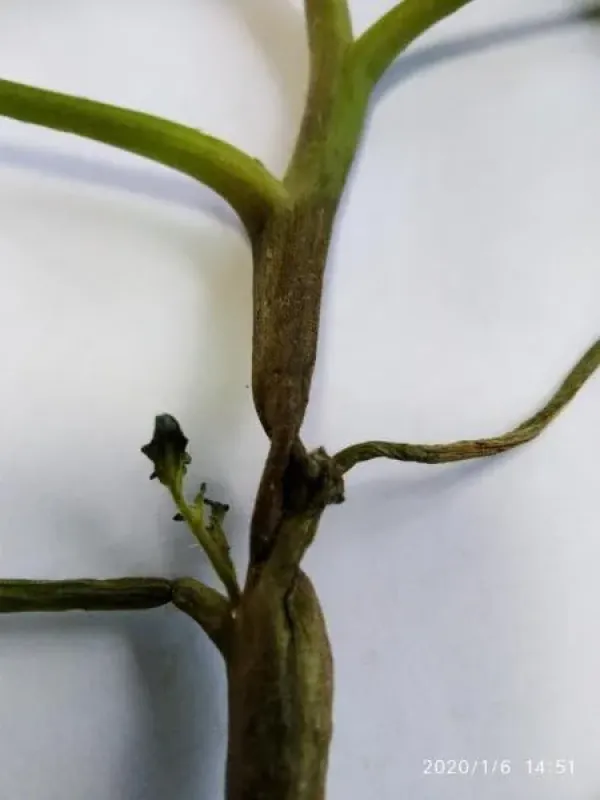
Description
Symptoms
Initial symptoms appear as dark, watery lesions on the lower part of the stem, which gradually enlarge and turn brown over time.
Affected areas are often covered with small black dots — the fungal pycnidia — which serve as a key diagnostic feature for identifying the species.
On leaves, the disease manifests as irregularly shaped necrotic spots with a distinct border, leading to premature yellowing and necrosis of the leaf blade.
Fruits are affected less frequently; however, under severe infection pressure, depressed spots can develop on the fruit surface, eventually leading to decay.
- Darkening and cracking of the main stem.
- Presence of black pycnidia on necrotic lesions.
- Wilting of the plant top due to impaired nutrient transport.
Pathogen
The causal agent of the disease is the fungus Didymella calidophila, which belongs to the class of Ascomycetes. This pathogen attacks tomato tissues, thriving under high humidity and moderate temperatures.
The fungus is capable of surviving in plant debris, soil, and greenhouse structures, making it difficult to eradicate completely in protected cultivation environments.
The pathogen's life cycle involves the production of pycnidia, specialized fruiting bodies containing spores, which are easily dispersed by water droplets and air currents.
The disease is characterized as a fungal infection of stems, leaves, and fruits, causing necrotic processes in the plant's vascular tissues.
The biology of the pathogen allows it to parasitize both cultivated plants and weeds from the Solanaceae family, significantly expanding the range of infection hosts.
Conditions for development
The primary factor promoting the development of Didymella stem rot is high relative humidity, exceeding 80–85 percent.
The optimal temperature for active mycelial growth of the pathogen ranges between +18 and +25 degrees Celsius.
Crowded plantings that restrict airflow and contribute to condensate accumulation on leaves significantly increase the risk of disease outbreaks.
Poor agricultural practices, such as excessive overhead irrigation, create ideal conditions for spore germination on the surface of vegetative organs.
Insufficient disinfection of greenhouses after the harvest season contributes to the accumulation of inoculum in the soil and on equipment.
Why it matters
Didymella causes significant economic losses by inducing premature plant death and substantially reducing the yield of marketable fruits.
Stem lesions lead to a disruption of transpiration and nutrient transport, causing growth suppression and eventual wilting of the plant.
Under epiphytotic conditions, the disease can destroy up to 30–50 percent of the crop in protected environments if timely protective measures are not taken.
Damaged tissues serve as entry points for secondary bacterial infections, leading to rapid decay of fruits during storage and transportation.
The infection is highly persistent in the environment, meaning that without proper site treatment, the pathogen will continue to affect new tomato crops annually.
Protection
The basis of control is strict adherence to crop rotation and the removal of all plant debris from the plot after the end of the growing season.
Maintaining an optimal microclimate in greenhouses is essential, regularly ventilating them to prevent the formation of excessive condensation.
Preventive applications of contact and systemic fungicides during the early stages of plant growth significantly reduce the likelihood of infection.
Upon detection of initial signs, it is necessary to remove affected leaves and stems while avoiding the spread of spores to healthy plant parts.
The use of healthy planting material and varieties with relative resistance to fungal stem diseases improves the effectiveness of management strategies.
Discussion
No discussions yet — be the first.