
Diatrype stigma
Diatrype stigma
Description
Symptoms
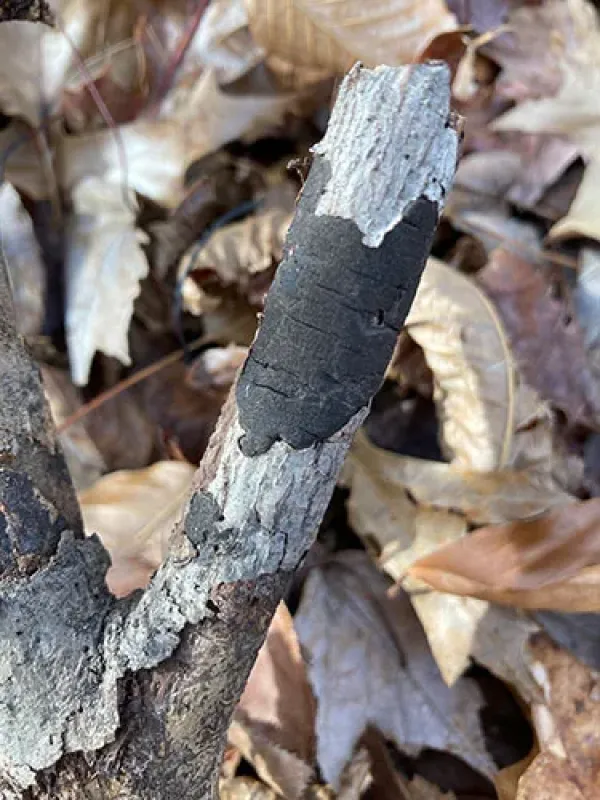
The most distinctive visual sign is the presence of black, elongated, or oval-shaped stroma that resemble burnt marks or "stigma" on the bark of twigs and branches.
These stroma are often clustered together, sometimes forming extensive patterns that can cover significant areas of the bark, giving it a rough, blackened appearance.
As the fungal infection progresses, the bark in the affected areas becomes brittle, cracks, and eventually detaches, exposing the decaying wood underneath.
Infected branches often show signs of premature wilting and thinning of the canopy as the water-conducting tissues are impaired by the invading mycelium.
- Presence of blackened, crust-like stroma.
- Bark cracking and sloughing off.
- Localized necrosis and ulcers.
- Branch dieback in the crown.
- Discoloration of the underlying wood.
Pathogen
Diatrype stigma is an ascomycete fungus that acts as a saprotroph and a weak parasite on various deciduous tree species, particularly causing bark necrosis.
The fungus produces numerous stromatic fruiting bodies that erupt through the tree bark, often appearing as flattened, black, crust-like formations on the surface.
The mycelium of the fungus penetrates the periderm and cortex, colonizing the host tissue and disrupting the plant's physiological functions by decomposing wood fibers.
Reproduction occurs via spores which are easily dispersed by wind and rain, allowing the pathogen to colonize other weakened parts of the same host or adjacent trees.
This fungus is widely recognized in mycology as a key player in the decomposition of dead or dying hardwood branches, often contributing to the development of white rot.
Conditions for development
Diatrype stigma thrives in moist environments, with high humidity and rainfall being primary drivers for the rapid germination of spores and fungal colonization.
The fungus primarily targets trees that are already stressed due to drought, physical trauma, nutrient deficiencies, or other pre-existing biological infections.
Physical damage to the bark, caused by environmental factors like frost or wind, provides an entry point for the fungus to establish itself within the living host tissues.
Poor ventilation within dense stands creates a microclimate conducive to the pathogen's spread, as stagnant air allows spores to settle and germinate more effectively.
Temperatures ranging from 15 to 25 degrees Celsius promote optimal fungal activity, leading to faster development of stromata and deeper penetration into the tree trunk.
Why it matters
The fungus causes damage by destroying the bark and cambium, which restricts nutrient transport and ultimately leads to the death of affected branches or entire trees.
It induces wood decay by breaking down cellulose and lignin, transforming healthy wood into white rot, which significantly lowers the structural integrity of the tree.
In forestry and landscaping, the infection leads to economic losses through the degradation of timber quality and the necessity of removing hazardous, decayed branches.
The presence of this fungus can also hinder the recovery of trees from other stresses, as it aggressively occupies tissues that the plant would otherwise heal.
If left unmanaged, the pathogen can turn an entire orchard or forest stand into an infection reservoir, posing a constant threat to surrounding healthy vegetation.
Protection
The most effective management strategy involves rigorous sanitary pruning, which requires the complete removal of infected branches to prevent the pathogen from spreading further.
It is essential to properly treat all pruning cuts with appropriate wound sealants or fungicides to protect the exposed wood from new spore infections.
Maintaining high tree vigor through adequate fertilization and irrigation is crucial, as healthy trees are significantly more resistant to infection by Diatrype stigma.
Removing and destroying infected bark or wood debris from the site is a vital practice to reduce the local spore load and prevent the re-establishment of the fungus.
Regular monitoring of the canopy for early symptoms allows for early intervention, which is much more effective than attempting to control the disease in advanced stages.
Discussion
No discussions yet — be the first.