
Diatrype disciformis
Diatrype disciformis
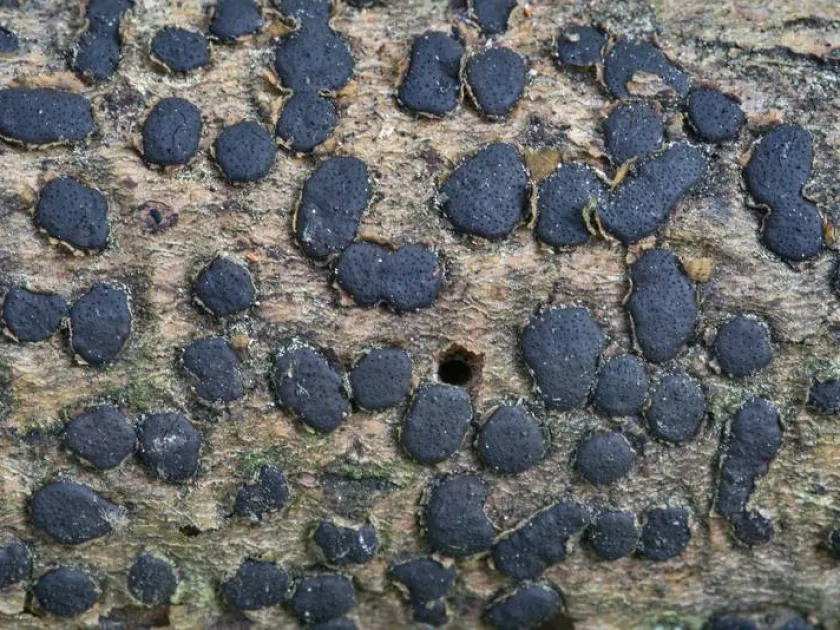
Description
Symptoms
The primary symptom of infection is the appearance of small, black, disc-shaped stromata on the surface of the bark.
In areas where the mycelium develops, the bark takes on a necrotic appearance, gradually cracking and decaying.
The disease most frequently affects thin branches and the trunks of young trees, particularly in the lower crown area.
Upon close inspection, one can observe stromata erupting through the periderm, giving the bark a rough, textured surface.
Infected areas may eventually be covered with a fungal layer, indicating active sporulation of the pathogen.
Pathogen
The disease is caused by the ascomycete fungus Diatrype disciformis, which belongs to the order Xylariales.
This organism acts as a facultative parasite, often living a saprotrophic lifestyle on dead or decaying wood tissues.
The fungus produces distinctive stromata — dense fungal structures containing perithecia where ascospores develop.
Fungal spores are dispersed primarily by wind currents and splashing raindrops during periods of high humidity.
Infection typically occurs when spores enter the plant tissue through bark wounds, fissures, or dying small twigs.
Conditions for development
The development of the fungus is promoted by high relative air humidity in forest stands and urban park areas.
The pathogen thrives on weakened trees experiencing stress from poor light conditions or a lack of essential nutrients.
Temperature ranges between 15°C and 25°C provide the most favorable environment for spore germination and growth.
The presence of significant amounts of woody debris and dead standing timber provides a reservoir for infection accumulation.
Overcrowded planting layouts that restrict airflow and crown ventilation significantly increase the risk of disease spread.
Why it matters
Diatrype disciformis causes premature branch dieback, which negatively impacts the aesthetic value and vitality of the tree.
Mass infections lead to a reduction in overall wood increment and a decline in the tree's physiological condition.
The fungus degrades bark integrity, which creates entry points for secondary pests and other opportunistic pathogens.
Infection in young saplings can lead to total mortality if environmental conditions become unfavorable for the host.
In commercial forestry, the development of this fungus results in reduced timber quality for deciduous species.
Protection
The most important control method is timely sanitary pruning and the removal of infected branches, followed by their destruction.
It is essential to maintain optimal planting density to ensure adequate aeration and sunlight exposure for the tree crowns.
Regular fertilization is recommended to boost tree immunity and increase resistance to fungal colonization.
When infection spots are detected, the application of copper-based fungicides may be used to disinfect wounds and pruning cuts.
Adherence to forest hygiene practices, including the removal of deadwood, helps reduce the infection pressure within the stand.
Discussion
No discussions yet — be the first.