
Phomopsis stem canker of sunflower
Diaporthe ueckeri
Description
Symptoms
Initial symptoms are characterized by the appearance of light brown, necrotic spots with a distinct yellow halo, primarily on the lower and middle leaves of the sunflower plants.
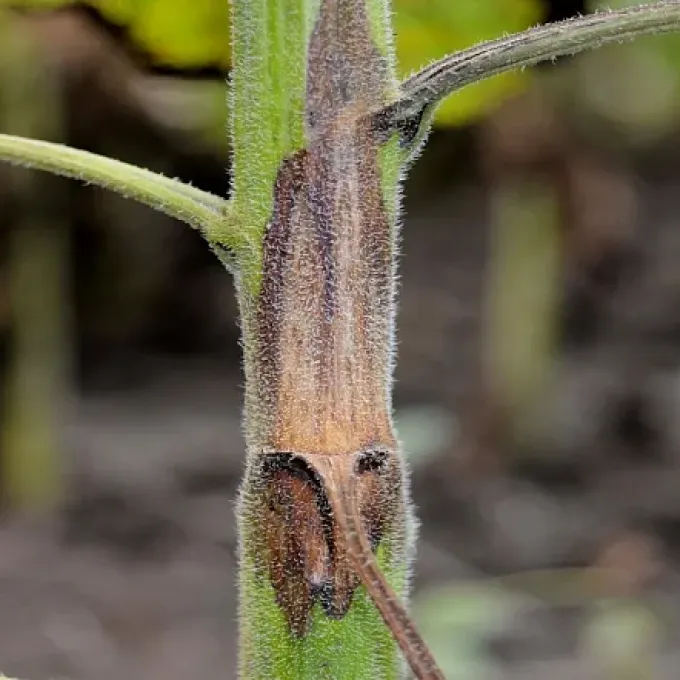
The infection progresses along the petiole until it reaches the stem. At the point of attachment, a large, grey-brown lesion develops. These lesions often expand rapidly, resulting in the softening of the stem tissue and a characteristic ash-grey discoloration.
A diagnostic internal symptom is the disintegration of the stem pith, which turns into a dark, loose, and fibrous mass. This internal rotting makes the stem extremely brittle and prone to lodging under mild wind pressure.
Affected heads are often underdeveloped and produce shriveled, light seeds with reduced oil content. In severe cases, the entire head may wither prematurely, leading to significant yield loss before harvest time.
In high-humidity environments, the surface of the canker develops tiny black dots, which are the fungal fruiting bodies (pycnidia), serving as the source for secondary infection cycles within the field.
Pathogen
The causal agent of sunflower Phomopsis stem canker is the fungus Diaporthe ueckeri. It is a highly destructive pathogen capable of causing significant crop failure in susceptible sunflower varieties under favorable environmental conditions.
The fungus survives as pycnidia and perithecia on infested crop debris left in the soil from previous seasons. During wet spring conditions, spores are released and disseminated by wind and splashing raindrops onto the emerging sunflower plants.
The pathogen is known for its high virulence, attacking various vegetative parts of the sunflower plant. Once it gains entry through the stomata, it invades the vascular tissue, effectively hindering the transportation of nutrients and water throughout the plant.
The colonization of the stem by the fungal mycelium leads to the internal decay of the pith, which disrupts the structural integrity of the plant and causes a rapid decline in plant health.
Due to the persistence of the pathogen in the soil and its ability to infect at multiple growth stages, management of this disease requires a rigorous and multi-faceted agronomic approach.
Conditions for development
The development of Phomopsis stem canker is favored by moderate to high temperatures ranging from 20°C to 25°C, coupled with high relative humidity and frequent rainfall events during the vegetative stage.
The most susceptible period for initial infection is between the V6 stage (six pairs of leaves) and the R1 stage (early budding/flowering), when the plant is experiencing rapid physiological changes.
Dense plant populations create a humid microclimate within the canopy, which significantly promotes the spread of fungal spores and increases the frequency of plant-to-plant contact.
Excessive nitrogen fertilization can lead to overly lush vegetation, making the plants more vulnerable to pathogen colonization and reducing their natural physical barriers against fungal invasion.
Continuous cropping without sufficient break intervals increases the primary inoculum density, elevating the risk of a disease outbreak during seasons with conducive weather patterns.
Why it matters
The disease causes substantial economic losses by reducing seed yield, oil percentage, and overall grain quality, which negatively affects the market value of the harvested crop.
Premature lodging of the crop caused by the stem canker complicates mechanical harvesting, resulting in higher field losses and increased logistical challenges during the harvest season.
By interfering with the vascular transport system, the fungus causes premature wilting of the plants, which limits the grain-filling process and leads to uneven maturation across the field.
If the infection extends to the sunflower head, it can lead to decay and increased susceptibility to other pathogens, making the seeds unmarketable and unsuitable for storage due to increased moisture levels.
The cumulative effect of these factors, especially in epidemic years, can lead to yield reductions exceeding 50%, highlighting the critical need for proactive disease management.
Protection
Crop rotation is the foundational control measure. Implementing a 6 to 8-year break between sunflower crops is essential to allow for the natural degradation of the infested crop residues and a decline in soil-borne inoculum.
Selecting and planting genetically resistant or tolerant hybrids is a vital strategy to mitigate the impact of the disease, as these varieties possess inherent mechanisms to limit mycelial growth.
Fungicide application serves as an effective intervention. It is recommended to use a preventative program with two applications: the first during the early vegetative stage and the second just before flowering begins.
- Deep plowing to bury infected crop residues deeply into the soil.
- Rigorous weed control to eliminate alternative hosts for the pathogen.
- Optimized plant density to improve aeration and reduce canopy humidity.
- Balanced nutrient management, focusing on adequate potassium and phosphorus levels.
- Use of high-quality, fungicide-treated seeds to ensure healthy stand establishment.
Discussion
No discussions yet — be the first.