
Phomopsis seed decay
Diaporthe tersa
Description
Symptoms
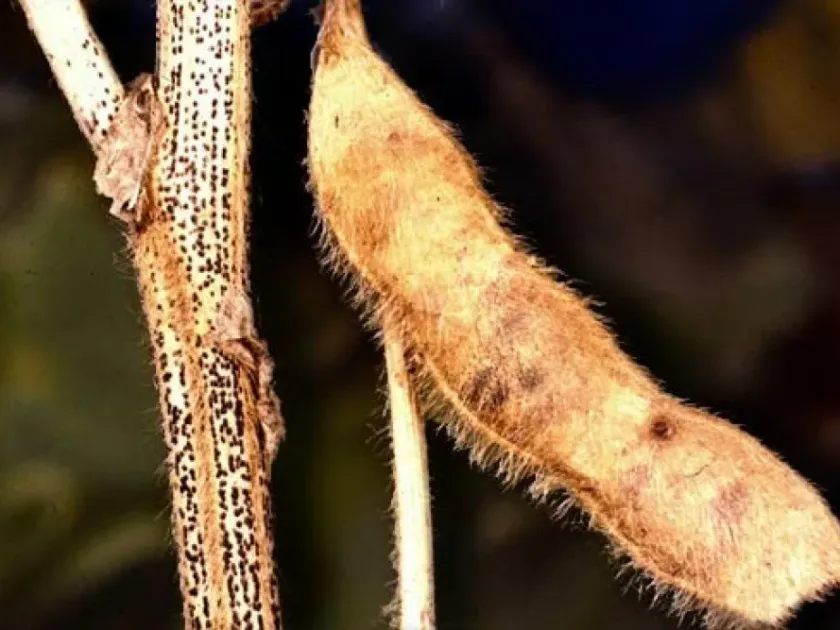
Symptoms typically appear during the reproductive stages of plant development. The most recognizable signs are elongated, dark-brown or greyish lesions on the stems, often near the nodes.
Within these lesions, numerous small, black, pepper-like structures called pycnidia develop. These are easily visible to the naked eye and are a definitive diagnostic feature of the disease.
Infected leaves may yellow prematurely, wither, and drop, leading to defoliation. In severe cases, the entire plant may die before reaching full maturity, a condition often referred to as premature senescence.
The pods show signs of discoloration, deformity, and black spotting. When the pods are opened, the seeds often appear shriveled, white, and chalky, with signs of fungal mycelium covering the surface.
Affected stems become brittle and may lodge easily, especially under adverse weather conditions, significantly complicating the harvest and contributing to yield losses.
Pathogen
The causal agent of Phomopsis seed decay is the fungus Diaporthe tersa. It is a persistent pathogen capable of surviving as mycelium in crop residues, soil, and infected soybean seeds over winter.
The fungus produces two types of spores: conidia (asexual) and ascospores (sexual). These spores are the primary inoculum, spread by splashing rain and wind during the soybean growing season.
Once it colonizes the host, the pathogen grows systemically within the plant vascular tissues. This internal infection is what makes the disease difficult to control once it has become established.
Diaporthe species exhibit significant genetic variability, which poses challenges for breeding resistant soybean cultivars. The fungus can persist in field debris for several years even in the absence of a host crop.
The pathogen is particularly adept at infecting seeds directly through the pods, leading to the characteristic seed decay that affects the crop's market value and germination potential.
Conditions for development
Warm and wet weather conditions are the primary drivers for Phomopsis epidemics. High humidity and temperatures between +20°C and +28°C create a perfect environment for fungal growth.
Frequent rainfall during the pod-filling stage is highly conducive to the spread of spores. Persistent dew or rain keeps the plant canopy wet, which facilitates the penetration of the fungus into the stems.
Field density plays a role in disease progression; overcrowded plants restrict airflow, keeping the humidity levels inside the canopy high and providing a stable climate for the pathogen.
A history of soybean monoculture increases the concentration of Diaporthe inoculum in the soil and residues, leading to an earlier and more severe disease onset in subsequent years.
Physical stress to the plant, such as hail damage or insect feeding, provides entry points for the fungus, bypassing the plant's natural surface defenses and speeding up the infection process.
Why it matters
Phomopsis seed decay can cause substantial yield losses, sometimes reaching up to 50% in heavily infested fields. The most immediate impact is on seed weight and overall grain quality.
Seeds infected by the fungus have lower oil and protein content, and they often suffer from reduced germination rates, which compromises the success of future crop cycles.
Stem lodging caused by the weakening of plant tissues makes the crop difficult to harvest, resulting in significant header losses for farmers during the combine operation.
The presence of mycotoxins, which can be associated with some Diaporthe species, may potentially impact grain quality, making it less suitable for feed or food processing.
The disease reduces the vigor of the plant, making it less resilient to other environmental stressors, which compounds the negative effect on final agricultural production.
Protection
The cornerstone of managing Phomopsis is the use of high-quality, fungicide-treated seeds. Planting pathogen-free seed helps prevent the introduction of the fungus into new fields.
Crop rotation remains a primary management strategy. Avoiding soybeans for at least 3 years allows the primary inoculum in plant residues to decompose naturally.
Effective tillage practices that bury crop residues help reduce the survival of the fungus, as the buried pathogens are exposed to decomposition by soil microorganisms.
Foliar fungicide applications during the R3 (beginning pod) to R5 (beginning seed) stages can effectively suppress the disease, especially if the weather forecast predicts wet conditions.
- Selecting soybean varieties with documented resistance to Diaporthe.
- Managing weed populations that serve as alternative hosts for the fungus.
- Adjusting plant populations to improve canopy aeration.
- Balancing soil fertility to avoid excessive vegetative growth that keeps the canopy humid.
Discussion
No discussions yet — be the first.