
Phomopsis of grapevine
Diaporthe tanakae
Description
Symptoms
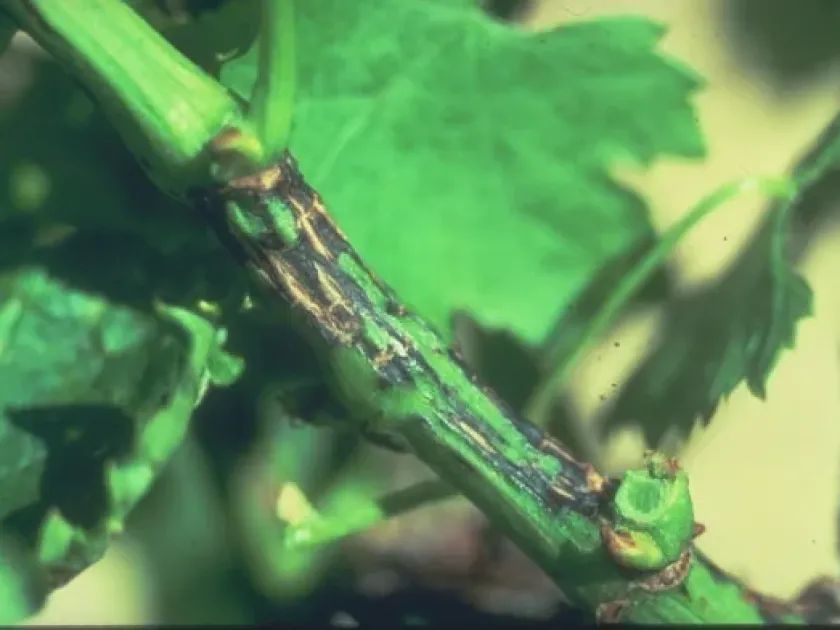
Early symptoms appear on young shoots as small, black or dark brown spots with a chlorotic halo. As the shoots grow, these spots expand and evolve into longitudinal cracks or deep lesions.
On leaves, the infection manifests as small dark spots surrounded by a yellowing area. Heavy infection leads to leaf deformation, necrosis, and premature leaf drop, which impairs the plant's photosynthetic capacity.
During the flowering and fruit-set stages, the fungus can attack the rachis, causing it to wither and leading to the complete loss of grape clusters before they fully mature.
A distinctive late-season symptom is the bleaching of the bark on infected canes, which gives them a grayish-white appearance. These blighted areas often contain numerous black dots, which are the fruiting bodies of the fungus.
As the disease progresses into the woody parts, the tissues become brittle and lose their structural integrity, which weakens the entire grapevine and affects its long-term health.
Pathogen
The causative agent of the disease is the ascomycete fungus Diaporthe tanakae (the anamorph stage is known as Phomopsis viticola). It is a persistent pathogen capable of surviving within the host plant tissues for several years.
The fungus overwinters as mycelium and pycnidia within the bark of infected annual shoots and older woody parts of the vine. This allows it to persist under various environmental conditions during the winter dormancy period.
In spring, when humidity levels rise and temperatures are favorable, pycnidia release large amounts of conidia. These spores are spread primarily by splashing rain and wind onto the developing green parts of the grapevine.
Infection occurs through natural openings like stomata or through mechanical wounds on the epidermis. Once inside, the fungal mycelium colonizes the plant tissues, leading to cell death and the formation of characteristic lesions.
The biological cycle of this fungus is highly synchronized with the vine's growth stages, making it particularly damaging during the rapid development of spring shoots and leaves.
Conditions for development
High humidity and frequent rainfall are the primary drivers for the spread of Diaporthe tanakae. The fungus requires free moisture on the surface of the plant to trigger spore germination and infection.
The optimal temperature range for the pathogen's development is between 15 and 25 degrees Celsius. Cool and wet spring conditions create a perfect environment for massive spore release and colonization.
Poor vineyard management, specifically high-density planting or inadequate canopy management, restricts airflow. This creates microclimates with persistently high humidity levels that favor fungal growth.
Wounds caused by frost, hail, or improper pruning practices significantly facilitate the entry of the fungus into the plant's vascular system, exacerbating the spread of the disease.
Extended periods of overcast and rainy weather during the early season prolong the window of susceptibility, increasing the difficulty of maintaining a healthy vineyard.
Why it matters
Phomopsis causes direct yield loss by destroying green shoots, inflorescences, and developing clusters. In severe cases, it can lead to the total loss of the year's harvest.
Long-term damage is associated with the destruction of the permanent woody structure of the vine. Infected canes and cordons lose their viability, often necessitating the removal of entire vines.
The reduction in leaf area and metabolic efficiency directly impacts fruit quality, resulting in lower sugar accumulation and diminished potential for premium wine production.
Infected vines exhibit reduced cold tolerance, making them significantly more prone to winter injury and death compared to healthy, uninfected plants.
Because the fungus is easily transmitted through cuttings, the use of contaminated propagation material poses a major biosecurity threat to new and existing vineyard plantations.
Protection
Sanitation is the cornerstone of control. Regular removal and destruction of infected canes during pruning are essential to reduce the primary inoculum load for the following season.
Effective canopy management, including proper shoot positioning and leaf removal, is crucial to improve aeration and decrease the humidity levels within the vine structure.
Chemical control strategies should involve the timely application of fungicides, particularly during the early vegetative stages such as bud break and the emergence of the first leaves.
Preventive treatments with copper-based products early in the season are highly effective in limiting the initial spread of the fungus from overwintering sites.
Sourcing healthy, certified planting material and implementing a robust integrated pest management plan are vital to preventing the establishment of Phomopsis in the vineyard.
Discussion
No discussions yet — be the first.