
Phomopsis stem canker
Diaporthe gulyae
Description
Symptoms
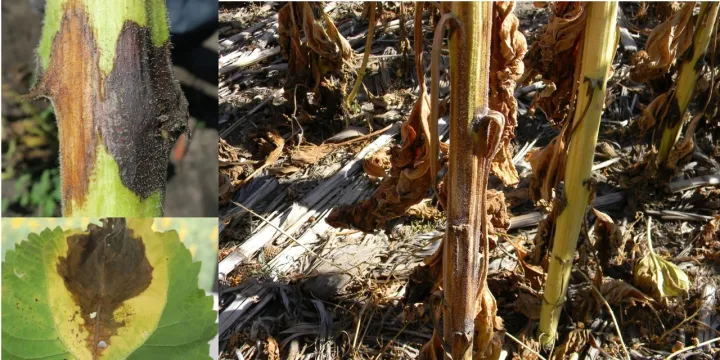
Early symptoms appear as dark, necrotic lesions on the leaves, usually starting at the edges. These spots often display a distinct yellow halo and spread along the veins toward the petiole.
The most diagnostic feature is the development of greyish-brown, burn-like lesions on the stem, typically occurring at the point of petiole attachment. These lesions expand to girdle the stem.
The internal stem tissues become hollow and brittle due to the destruction of the pith. This loss of structural integrity makes the plants extremely vulnerable to lodging even under light wind conditions.
Small black structures known as pycnidia may appear on the surface of the stem lesions, especially under humid conditions, serving as a sign of active sporulation and disease progression.
In advanced stages, the plant's vascular flow is severely restricted, leading to premature wilting of the upper parts, poorly filled heads, and shriveled seeds with reduced oil content.
Pathogen
The disease is caused by the fungus Diaporthe gulyae, a highly virulent pathogen that primarily affects sunflower crops. It can survive for several years in crop residues and soil, acting as a persistent source of inoculum.
The life cycle of the pathogen is driven by moisture and temperature. During wet weather, spores are produced and dispersed by wind or splashing rain to the healthy tissues of the sunflower plant.
The fungus invades the host through stomata on leaves. Once inside, it develops a systemic infection, spreading through the vascular system and eventually colonizing the stem and petioles.
Diaporthe gulyae is characterized by the production of both asexual conidia and sexual ascospores, allowing it to adapt to various environmental conditions and spread rapidly during the vegetative period.
The pathogen secretes toxins that disrupt host cell membranes and enzyme systems, leading to the rapid decay of internal stem tissues and overall plant weakening.
Conditions for development
The development of Phomopsis stem canker is highly dependent on environmental factors, with high humidity and temperatures between 20°C and 25°C being optimal for the fungus.
Dense crop stands can create a microclimate with high relative humidity and restricted air circulation, which significantly accelerates the infection rate and facilitates the spread of the disease.
Rainfall patterns during the early growth stages of sunflower are crucial; prolonged wet periods encourage the liberation of spores and their penetration into the susceptible leaf tissue.
Agricultural practices that leave large amounts of crop debris on the soil surface provide an ideal environment for the fungus to overwinter and re-infect subsequent sunflower crops.
Stress factors such as drought or nutritional imbalances, particularly a deficiency in essential micronutrients like boron, can render sunflower plants more susceptible to initial fungal colonization.
Why it matters
This disease is a major threat to sunflower production globally, with the potential to cause yield losses ranging from 30% to 80% depending on the severity and timing of the outbreak.
Lodging caused by stem weakening is the most severe impact, often leading to total loss of individual plants as they fall over and become impossible to harvest with combines.
The systemic nature of the infection limits nutrient and water uptake, resulting in significant reductions in seed size, weight, and overall oil quality, which directly lowers the crop's market value.
Beyond immediate production losses, the disease buildup in the field necessitates long rotation intervals, forcing farmers to avoid sunflower planting in infected fields for many years.
In cases of severe infestation, the pathogen not only reduces seed quantity but also decreases the shelf life and industrial quality of the sunflower oil extracted from the compromised crop.
Protection
Managing Phomopsis stem canker requires an integrated approach that combines genetic, cultural, and chemical strategies to minimize the impact of the pathogen.
Selecting resistant or tolerant sunflower hybrids is the most effective way to prevent significant damage, as genetic resistance provides a foundational layer of protection.
Cultural practices, such as strict crop rotation (at least 7-8 years between sunflowers) and the thorough incorporation of crop residues into the soil, are essential to reduce primary inoculum levels.
Chemical control involving the application of fungicides during the vegetative stages (4-6 leaf stage and early budding) is necessary to protect the plants during the most vulnerable periods.
- Use high-quality, treated seed to prevent early-stage infection.
- Maintain optimal plant density to improve air circulation and reduce humidity within the canopy.
- Control weeds that might serve as alternative hosts for the pathogen.
- Monitor fields regularly for early symptoms to optimize the timing of fungicide applications.
Discussion
No discussions yet — be the first.