
Diaporthe wilt of cotoneaster
Diaporthe cotoneastri
Description
Symptoms
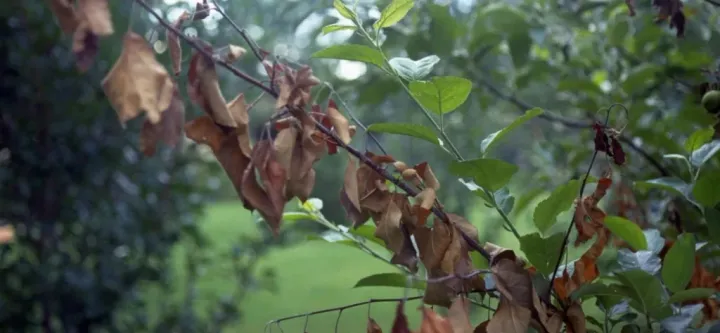
The initial symptom of Diaporthe wilt is the premature yellowing and wilting of leaves on individual branches. As the infection advances, these branches become dry and brittle.
Dark, sunken necrotic lesions appear on the bark of stems. Over time, these lesions expand, often causing the bark to crack and peel away, revealing the discolored wood underneath.
Tiny black dots, known as pycnidia, become visible on the surface of infected bark. These structures are a definitive sign of the pathogen’s presence and are crucial for field diagnosis.
The disease frequently progresses from a single branch to the entire plant structure. The shrub may exhibit stunted growth and a general decline in vigor, even when environmental conditions are seemingly optimal.
Cross-sections of affected branches reveal a distinct internal browning or discoloration, indicating that the fungus has successfully colonized the vascular bundles, blocking essential fluid transport.
Pathogen
The disease is caused by the fungus Diaporthe cotoneastri, an ascomycete pathogen that specifically targets woody ornamental shrubs. It functions as a parasitic organism, infiltrating the vascular system of the host plant.
The fungus produces pycnidia, small fruiting bodies containing spores, which serve as the primary source of inoculum. These spores are disseminated by splashing rain, wind, and contaminated gardening tools.
Once inside the host, the fungal mycelium colonizes the cortex and cambium layers. By secreting enzymes, it breaks down cellular tissues, effectively disrupting the plant's ability to transport water and nutrients.
The pathogen is highly resilient and can overwinter within dead twigs or bark tissues, remaining dormant until favorable environmental conditions allow it to resume active growth.
Given its ability to survive in plant debris, the pathogen represents a persistent threat, particularly in environments where infected materials are not properly disposed of.
Conditions for development
High humidity and moderate temperatures are the primary catalysts for the development of Diaporthe wilt. The disease spreads most aggressively during rainy seasons when moisture is consistently present.
Physical injuries, such as those caused by improper pruning, insect activity, or winter damage, provide entry points for the fungal spores to bypass the plant's natural defenses.
Dense planting configurations that limit air circulation create a microclimate with stagnant humidity, which is highly conducive to fungal infection and spore germination.
Plants under physiological stress—due to drought, nutrient deficiency, or poor soil drainage—are significantly more susceptible to infection compared to vigorous, well-maintained specimens.
The temperature range of 18°C to 25°C is ideal for fungal proliferation. During these periods, the pathogen can complete its cycle rapidly, leading to significant foliage loss in a short timeframe.
Why it matters
Diaporthe wilt significantly diminishes the aesthetic appeal of cotoneaster shrubs, which are primarily valued for their dense foliage and healthy appearance in landscape design.
The destruction of the vascular system leads to the progressive death of скелетні (structural) branches, eventually compromising the architectural integrity of the plant.
Continuous infection weakens the shrub's overall vitality, making it prone to secondary attacks by other pests and environmental stressors, leading to a long-term decline.
In severe cases, the disease results in the complete loss of the plant, requiring expensive replacement and additional effort to decontaminate the soil or surrounding areas.
Because the disease can easily spread to neighboring plants, it poses a collective threat to entire garden beds or nursery inventories, leading to substantial economic and labor-related impacts.
Protection
Rigorous sanitation is the cornerstone of managing Diaporthe wilt. Promptly prune out and destroy any branches displaying signs of wilt or necrosis to prevent the spread of the pathogen.
Disinfect pruning shears and saws using alcohol or a bleach solution between every single cut to ensure that healthy tissue does not become cross-contaminated with spores.
Preventative application of copper-based fungicides can provide a protective barrier on the bark, reducing the probability of successful spore germination during wet weather.
- Maintain good spacing between plants to improve airflow and reduce humidity around the leaves.
- Avoid overwatering and ensure that the root zone is not waterlogged to prevent stress.
- Apply balanced fertilizers to promote healthy growth, which boosts the plant's natural immune system.
- Seal larger pruning wounds with appropriate wound dressings to deny the pathogen easy entry.
Monitoring the garden regularly, especially during spring and autumn, allows for early detection and intervention, which is critical for saving the shrub from complete destruction.
Discussion
No discussions yet — be the first.