
Diaporthe stem blight of soybean
Diaporthe columnaris
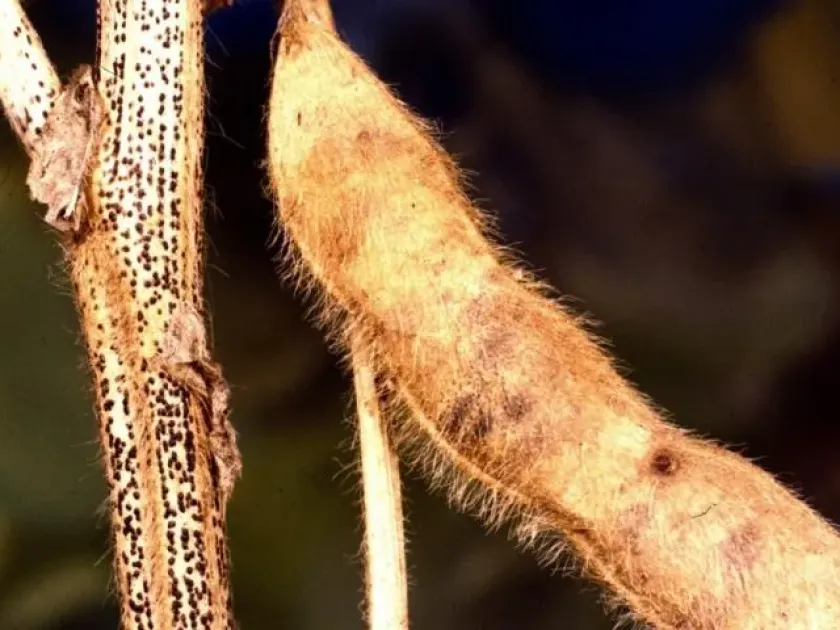
Description
Symptoms
Early symptoms appear as chlorotic spots on leaves, which gradually develop into dark, necrotic lesions. These lesions often cause the leaf tissue to curl and fall off prematurely.
The most distinctive symptom is the browning and cracking of the lower stem near the nodes. If the stem is split, internal tissue discoloration becomes visible, indicating blocked vascular systems.
Under high humidity, tiny black dots known as pycnidia erupt through the stem epidermis. These structures contain spores and are a reliable indicator of the presence of the pathogen in the field.
Affected plants frequently show signs of wilting because the pathogen impairs water uptake from roots to leaves. As the infection progresses, the plant may dry out and die before reaching full physiological maturity.
Infected seeds often appear shriveled, discolored, or covered with white mycelial growth. Germination rates of such seeds are significantly reduced compared to healthy, high-quality seeds.
Pathogen
The disease is caused by the fungus Diaporthe columnaris (anamorph: Phomopsis longicolla). It is a major pathogen of legumes, known for its ability to colonize host tissues and inhibit nutrient transport.
This pathogen survives primarily in crop residues and infected seeds. It can persist in the soil environment for several years, waiting for favorable conditions to germinate and infect new soybean crops.
The infection process starts when spores enter the host plant through wounds or natural openings such as stomata. Once inside, the fungus invades the xylem and phloem, disrupting the systemic health of the plant.
Its ability to adapt to various environmental conditions makes it a persistent threat in many soybean-producing regions. The fungus produces pycnidia, which act as secondary sources of inoculum throughout the growing season.
Research indicates that the pathogen can also inhabit various alternative hosts, including common field weeds. This wide host range makes long-term disease management complex and requires holistic agricultural strategies.
Conditions for development
The disease thrives in warm and humid climates. Prolonged periods of rainfall during the reproductive growth stages of the soybean plant are highly conducive to the spread and intensification of the fungus.
Optimal temperatures for spore germination and mycelial growth range between 20 and 28 degrees Celsius. Stable, warm conditions allow the pathogen to colonize the host tissues aggressively.
Dense canopies restrict airflow and create a microclimate with high relative humidity. This trapped moisture provides an ideal environment for the spread of spores from the lower canopy to the upper parts of the plant.
Mechanical damage to the plants significantly increases infection susceptibility. Wounds caused by insect feeding allow the pathogen to bypass the plant's natural external defenses, leading to faster colonization.
Soil nutrient imbalances, specifically nitrogen overload, can promote lush vegetative growth that is more sensitive to infection. Proper field management is essential to balance growth and disease resilience.
Why it matters
The primary impact of Diaporthe stem blight is a significant reduction in grain yield. Infected plants often produce fewer and lighter seeds, leading to substantial economic losses for producers.
The disease negatively alters the nutritional quality of the seeds. Oil and protein content levels can be lower in infected samples, making the crop less desirable for industrial processing and livestock feed.
Seed transmission poses a major risk for future seasons. Using contaminated seeds ensures that the pathogen is introduced into new fields, continuing the cycle of infection and reducing overall crop quality.
Premature plant death forces early harvesting and reduces the grain filling period. This can result in lower test weights and overall poorer performance of the harvest in the marketplace.
Secondary infections often follow, as the weakened state of the plant makes it susceptible to opportunistic fungi and bacteria. This complex infection pattern exacerbates the total damage to the crop.
Protection
The most important control measure is the use of high-quality, certified, and fungicide-treated seeds. This practice is the first line of defense against seed-borne pathogens.
Implementing a rigorous crop rotation program is highly recommended. Rotating soybean fields with non-leguminous crops for at least three to four years helps to reduce the survival rate of the fungus in the soil.
Effective tillage practices help incorporate plant debris into the soil, accelerating decomposition. Rapid breakdown of residue reduces the habitat available for the pathogen to overwinter.
Fungicide applications during the R1 to R3 growth stages can be effective if weather conditions favor disease development. Timely monitoring and diagnostic support are crucial for making informed treatment decisions.
Integrated Pest Management (IPM) strategies, including the control of insects and weeds, are vital. Healthy plants with intact stems are more resilient and less likely to fall victim to the pathogen.
Discussion
No discussions yet — be the first.