
Diabole
Diabole
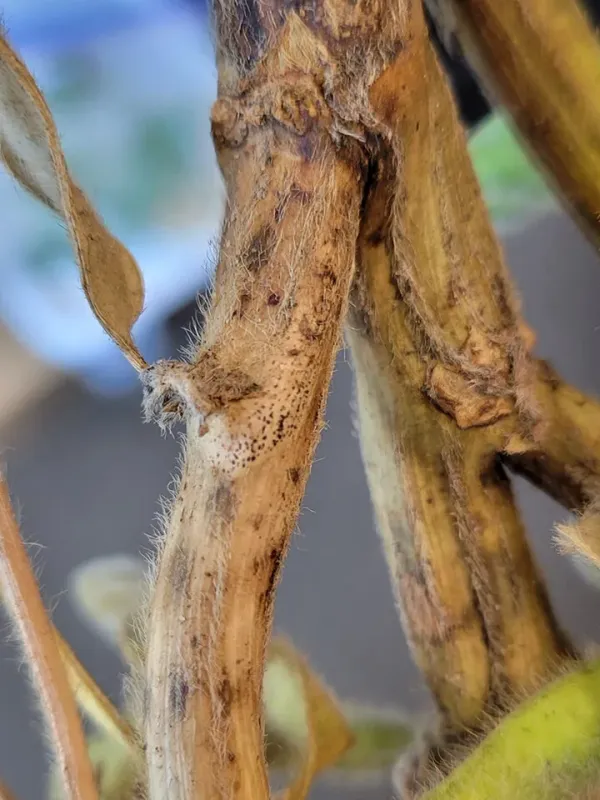
Description
Symptoms
The primary symptom of diabole is the emergence of chlorotic spots on the leaf blade, which eventually acquire a necrotic coloration. As the disease progresses, these spots merge into larger lesions.
Upon close inspection of the plant stems, characteristic sunken stripes or ulcers can often be found. These areas indicate impaired vascular conductivity, which leads to stunted growth of the plant's above-ground parts.
In conditions of high humidity, a specific coating consisting of fungal conidia may appear on the affected tissues. The color and structure of this coating depend on the stage of sporulation and the overall state of the substrate.
When the root system or root collar is affected, general plant suppression is observed, accompanied by premature wilting of the leaves, even when there is sufficient soil moisture.
Deformation of generative organs is a late symptom of diabole. Flowers and fruits may drop prematurely, which directly affects the final crop yield and the quality of the marketable produce.
Pathogen
The disease known as diabole, caused by the fungal pathogen Diabole sp., belongs to the category of highly specialized mycoses. The pathogen is classified as an obligate parasite that has adapted to thrive within the tissues of specific plant species, affecting their vascular system and parenchyma.
The pathogen's mycelium is capable of penetrating deep into plant structures, using enzymatic mechanisms to degrade cell walls. During its life cycle, the fungus forms spore structures that facilitate the spread of infection to adjacent healthy tissues.
The biology of the pathogen is closely tied to the seasonal growth cycles of the host. The pathogen can persist as resting spores in the soil or plant debris, making it highly resilient against adverse environmental conditions.
The agronomic specificity of this fungus lies in its high latency. During the early stages of infection, the plant may show no external signs of disease, even though internal tissue degradation processes are already underway.
The genetic plasticity of the Diabole pathogen allows it to overcome weak immune barriers even in relatively resistant varieties, requiring constant monitoring of the phytosanitary status of crops.
Conditions for development
The main factor promoting the development of diabole is high air humidity, exceeding 75-80%. Such conditions provide optimal circumstances for spore germination and attachment to the leaf surface.
The temperature range in which the pathogen exhibits maximum activity varies between +18 and +25 degrees Celsius. Significant diurnal temperature fluctuations can slow down the spread of the infection.
Poor planting density creates a microclimate with insufficient ventilation. Excessive crop crowding is a key agronomic factor that facilitates the rapid spread of Diabole spores within the field.
Unbalanced application of nitrogen fertilizers also contributes to disease development. An excess of nitrogen leads to lax tissues that become more vulnerable to the penetration of Diabole fungal hyphae.
The infectious background increases if plant residues from the previous season remain on the site and are not disposed of in time. The survival of inoculum in the soil serves as a starting point for primary infection in young seedlings.
Why it matters
The main danger of diabole is the critical reduction in the plant's photosynthetic capacity. Damage to the leaf apparatus leads to an inability to accumulate necessary sugars, which exhausts the organism's energy reserves.
Disruption of physiological functions leads to massive die-off of young shoots. In cases of severe infection, yield losses in intensive farming can reach thirty percent or more, making the disease economically significant.
Beyond direct yield loss, diabole infection reduces the quality of the crop. Fruits or seeds obtained from diseased plants often lose their marketability, have poor storage life, and possess low planting characteristics.
The pathogen can trigger secondary infections, as open necrotic wounds become ideal gateways for colonization by other fungal and bacterial organisms, which accelerate the rotting process.
Long-term harm manifests in soil depletion due to the constant presence of the pathogen. A farm that does not control diabole faces the necessity of complete crop rotation changes or the application of expensive chemical treatments.
Protection
Prevention begins with strict adherence to crop rotation. It is not recommended to plant susceptible crops on the same field for at least three to four years to break the biological cycle of the fungus.
The use of certified and treated seed material significantly reduces the risk of primary infection. Modern fungicides effectively suppress spore development during the initial stages.
An important practice is the timely removal of plant residues and their deep incorporation into the soil. Destroying infection reservoirs allows for a radical reduction in the infectious load for the following season.
During the growing season, it is recommended to spray with systemic fungicides upon the appearance of the first symptoms. The choice of the agent should be based on the current phytosanitary situation and application regulations.
- Optimizing planting density to improve aeration
- Application of potassium-phosphorus fertilizers to strengthen immunity
- Monitoring field boundaries to detect primary foci
- Timely weeding to eliminate potential alternate host weeds
Discussion
No discussions yet — be the first.