
Daedaleopsis nitida
Daedaleopsis nitida
Description
Symptoms
The most visible symptom is the development of fruit bodies (conks) on the trunks, branches, or stumps of infected trees, often possessing a leather-like texture.
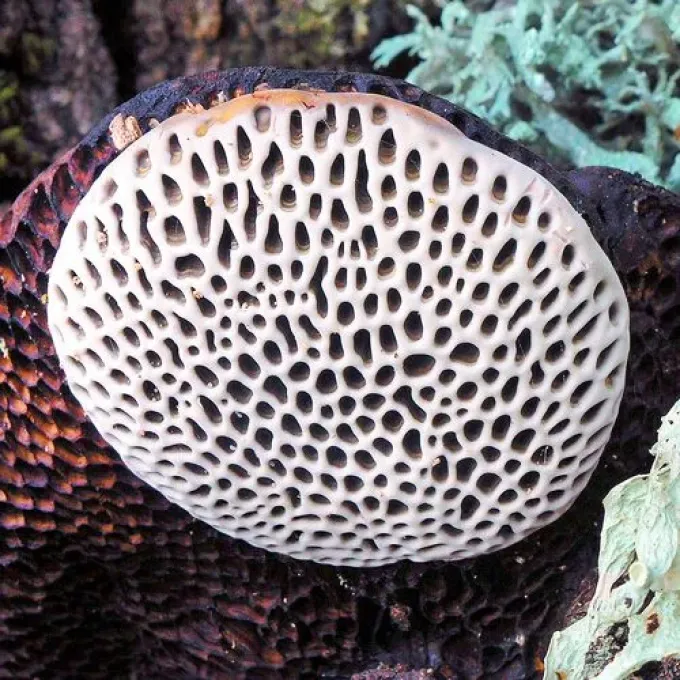
The upper surface of the fruit body is generally smooth and glossy, ranging in color from ochre to brown. The undersurface shows a distinct labyrinthine or lamellar structure typical for this species.
Internally, the wood undergoes significant changes, characterized by the development of white rot. The wood becomes soft, fibrous, and loses its structural strength.
Initial signs may include early leaf drop or visible thinning of the canopy as the water-conducting vessels of the tree become compromised by the progressing rot.
Cracking of the bark near the site of fungal growth is common, often accompanied by a discoloration that indicates deeper tissue decay beneath the surface.
Pathogen
The causal agent of this disease is the wood-decay fungus Daedaleopsis nitida, which belongs to the basidiomycetes group. This ksilotrophic fungus thrives by decomposing the internal structure of deciduous trees.
The life cycle begins when spores land on wounded bark or open wood surfaces. Once germinated, the mycelium penetrates deep into the wood, where it feeds on cellulose and lignin.
As a perennial fungus, it persists inside the host tissue for many years, actively breaking down the structural integrity of the wood during both growth and dormant seasons.
The fungus produces powerful enzymes that dissolve the structural components of plant cell walls, which is a characteristic feature of wood-rotting species.
Dissemination is facilitated primarily by wind, which carries spores from mature fruit bodies to other susceptible host trees over significant distances.
Conditions for development
The fungus thrives in environments with high humidity and moderate temperatures, which are necessary for spore germination and active colonization of new wood.
Mechanical injuries, such as frost cracks, sunburn, or damage from heavy machinery and poor pruning practices, provide the essential entry points for the pathogen.
Densely planted orchards or woodlots with poor air circulation create a microclimate that supports both the survival of spores and the development of new fruit bodies.
The presence of abandoned stumps, deadwood, and rotting debris in the immediate vicinity serves as a major reservoir for the fungus to multiply and spread.
Trees already weakened by nutrient deficiency, soil compaction, or drought stress are more susceptible to attack than vigorous, healthy trees with well-functioning defense systems.
Why it matters
The primary threat is the progression of white rot, which degrades the heartwood and structural wood, significantly increasing the risk of branch failure or wind-throw.
As the rot spreads, the tree's ability to transport water and minerals from the roots to the leaves is severely restricted, leading to progressive limb death or whole-tree mortality.
Fruit-bearing capacity is severely impacted; trees may show stunted growth, poor fruit quality, or a complete cessation of harvest due to the physiological strain.
Once the fungus has colonized the inner wood, the process is often irreversible, turning the tree into a permanent source of spores that can infect neighboring plants.
Beyond biological damage, the structural instability of infected trees creates significant safety hazards in managed garden or landscape settings.
Protection
The first line of defense is rigorous sanitary pruning, which involves the complete removal of all dead, dying, or fungus-infested branches to minimize spore production.
It is critical to seal any pruning cuts or accidental wounds with appropriate wound dressings or fungicidal pastes to create a physical barrier against potential infection.
Removing old stumps and cleaning up decaying wood from the site are essential cultural practices to reduce the overall inoculum load in the environment.
Maintaining optimal tree health through proper fertilization, adequate watering, and mulch management helps the tree build natural resistance against fungal attacks.
Any identified fruit bodies should be carefully harvested and destroyed, and the affected areas treated with copper-based fungicides to inhibit further superficial mycelial growth.
Discussion
No discussions yet — be the first.