
Daedaleopsis confragosa
Daedaleopsis confragosa
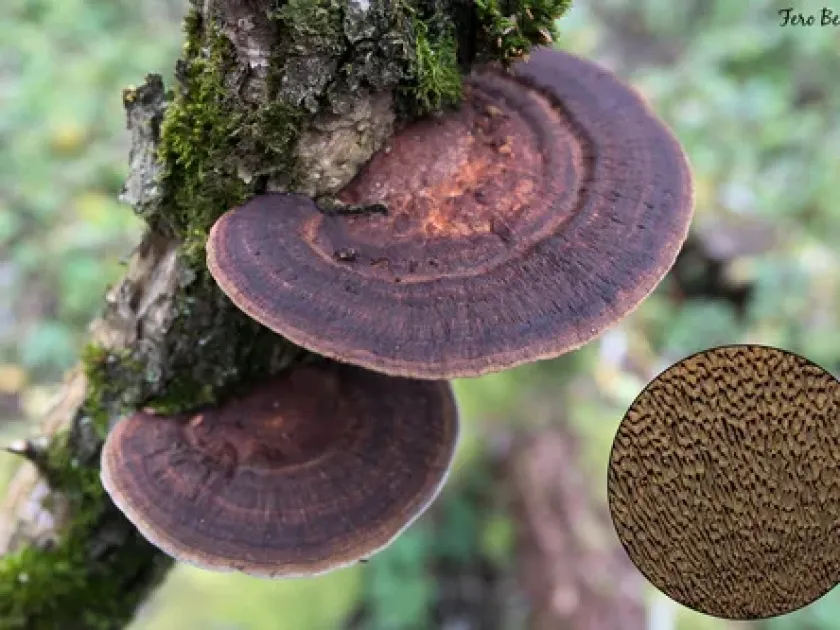
Description
Symptoms
The primary diagnostic sign is the appearance of characteristic fungal brackets on trunks, major branches, or pruning sites. Initially small, these structures expand rapidly during favorable weather.
The wood within the infected area loses structural integrity, becoming soft and revealing a pale, whitish hue often demarcated by dark, thin lines that outline the zones of fungal colonization.
Early-stage symptoms can be cryptic, including premature leaf yellowing, the dieback of individual skeletal branches, or deep bark cracks exuding dark sap or moisture.
In cases where the root crown or lower trunk is affected, the tree displays generalized decline, manifesting as reduced vigor that progressively worsens over several growing seasons.
Exterior bark surfaces often appear deformed or sunken inward due to the degradation of the internal heartwood, leaving the tree structurally unstable and susceptible to wind-throw.
Pathogen
The causal agent of this wood decay is Daedaleopsis confragosa, commonly known as the blushing bracket, belonging to the Basidiomycota division. It functions primarily as a saprotroph but can act as a facultative parasite on weakened woody plants.
The fungus mycelium penetrates deeply into the stem and branch tissues, inducing white rot. It systematically breaks down cellulose and lignin, transforming healthy wood into a soft, fibrous, and fragile consistency.
The fungus produces annual fruiting bodies, typically characterized by a semi-circular or shelf-like shape. The cap surface is usually wrinkled and displays colors ranging from reddish-brown to ochre.
Basidiospores are dispersed via wind currents over significant distances. These spores germinate readily upon encountering wounds in the bark, such as pruning cuts, frost cracks, or sunscald injuries.
The life cycle involves an active vegetative stage within the trunk interior and a reproductive phase, where visible sporulating fruiting bodies emerge on the bark surface.
Conditions for development
Development of Daedaleopsis confragosa is promoted by high humidity and moderate temperatures throughout the spring and autumn seasons. The optimal temperature range for mycelial growth is 18 to 25 degrees Celsius.
Dense, overcrowded plantings that lack proper air circulation create an ideal microclimate for spore germination. Moisture accumulation within the canopy further encourages infection.
Open wounds are the most critical factor for invasion. Neglected pruning cuts, rodent damage, or mechanical injuries to the bark serve as the primary entry points for the fungal pathogen.
Physiologically stressed trees, suffering from nutrient deficiencies or drought, are particularly susceptible and act as primary targets for the pathogen.
Prolonged rainy periods facilitate the swelling of fruiting bodies and the mass release of basidiospores, significantly increasing the risk of transmission to neighboring trees within the immediate area.
Why it matters
Daedaleopsis confragosa causes significant damage to broadleaf species, including apple, pear, willow, alder, and birch. In orchard environments, it is a frequent cause of premature tree mortality.
The primary damage is the erosion of the tree's internal structure, which disrupts the transport of water and nutrients from the roots to the upper canopy, leading to a general loss of tree vigor.
Infected trees become significant safety hazards; because of heartwood decay, the wood loses its tensile strength and may snap unexpectedly under the weight of fruit or during windy conditions.
Commercial fruit plantations suffer from reduced orchard longevity, decreased yields, and the economic necessity of removing and destroying heavily infected trees.
The high inoculum load produced by established fungal colonies ensures the continuous spread of spores throughout the orchard, increasing the risk to healthy specimens through unnoticed micro-fissures.
Protection
The cornerstone of prevention is maintaining a high standard of orchard hygiene, including regular sanitation pruning and the immediate application of wound sealants or antiseptics to all cuts.
It is essential to identify, remove, and destroy all infected branches and visible fruiting bodies promptly to stop sporulation and mitigate the spread of the pathogen.
Promoting overall tree health through balanced fertilization, proper irrigation management, and pest control significantly enhances the tree's natural resistance to fungal infections.
When localized infections are detected on major limbs, surgical removal of the decayed tissue back to healthy wood is required, followed by disinfection of the cut surface with copper-based fungicides.
Whitewashing trunks with lime and fungicide additives is a recommended prophylactic measure that helps seal minor bark fissures and creates a protective barrier against invading spores during the spring.
Discussion
No discussions yet — be the first.