
Daedalea
Daedalea
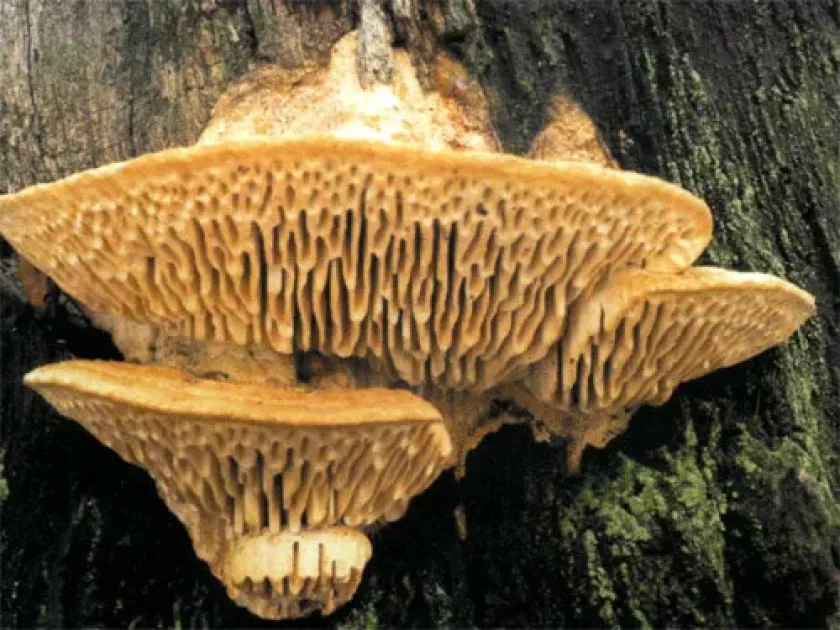
Description
Symptoms
The most prominent sign of infestation is the presence of hard, woody, perennial fruiting bodies growing from the bark of trunks or stumps.
The spore-producing surface underneath the fruiting body shows large, sinuous, labyrinth-like pores that are unique to this genus of polypores.
Internally, the wood exhibits a distinct brown rot, where the timber darkens significantly and breaks into characteristic cubic chunks when dried.
White fungal mycelium mats can often be found deep within the cracks of the wood, acting as the primary agent of destruction.
General symptoms in trees include canopy dieback, leaf chlorosis, and reduced growth, indicating the internal loss of vital tissue and sapwood.
Pathogen
Daedalea is a genus of polypore fungi that is well-known for its role in wood decomposition and its ability to cause brown rot in various hardwood species.
The most representative species is Daedalea quercina, which typically infects oaks and other broad-leaved trees within natural forest ecosystems.
Biologically, these fungi function as decomposers, specialized in breaking down cellulose and hemicellulose while leaving the lignin mostly intact.
This process results in the degradation of wood structural integrity, causing it to become brittle and eventually disintegrate into cubical structures.
The fungi produce perennial fruiting bodies characterized by a maze-like or labyrinthine pore surface, which serves as a key diagnostic feature.
Conditions for development
The development of Daedalea is heavily dependent on the moisture content of the wood, which typically requires a range between 30% and 60%.
Optimal growth temperatures for the mycelium are typically between 18°C and 28°C, often leading to increased activity during warmer seasons.
Entry points for the fungus are created by wounds, broken branches, fire damage, or improper pruning, which provide direct access to the interior.
Humid and poorly ventilated environments serve as ideal conditions for the spores to germinate and colonize new wood surfaces effectively.
Long-term environmental factors, such as high air humidity and dense canopy shade, create a microclimate that supports the fungal lifecycle.
Why it matters
Daedalea causes severe damage to timber quality, rendering logs unsuitable for construction, joinery, or any use where structural strength is required.
Trees affected by this rot become hazardous, as the decayed interior reduces their resistance to structural collapse during windstorms or heavy snow.
In silviculture, the fungus creates a continuous source of spores that can rapidly spread to healthy trees, leading to long-term decline in forest health.
Timber storage yards are particularly vulnerable; a single infected log can transmit the pathogen to an entire inventory if ventilation is poor.
The economic impact involves not only the loss of timber value but also the high costs associated with sanitation and disease management operations.
Protection
Effective control requires strict adherence to forest hygiene practices, including the removal of infected trees and fallen logs from the site.
Preventative measures during logging are essential, as avoiding physical damage to standing trees significantly reduces the risk of successful fungal infection.
For harvested timber, proper stacking on elevated foundations and ensuring maximum airflow are crucial to keep the wood moisture content below the rot threshold.
Application of fungicides or wood preservatives is highly recommended for protecting cut surfaces and high-value logs during storage and transit.
- Sanitary pruning of infected branches
- Controlled disposal of fungal fruiting bodies
- Regular inspection of storage facilities
- Applying chemical wood sealants
- Maintenance of optimal drying conditions
Discussion
No discussions yet — be the first.