
Cyttaria pallida
Cyttaria pallida
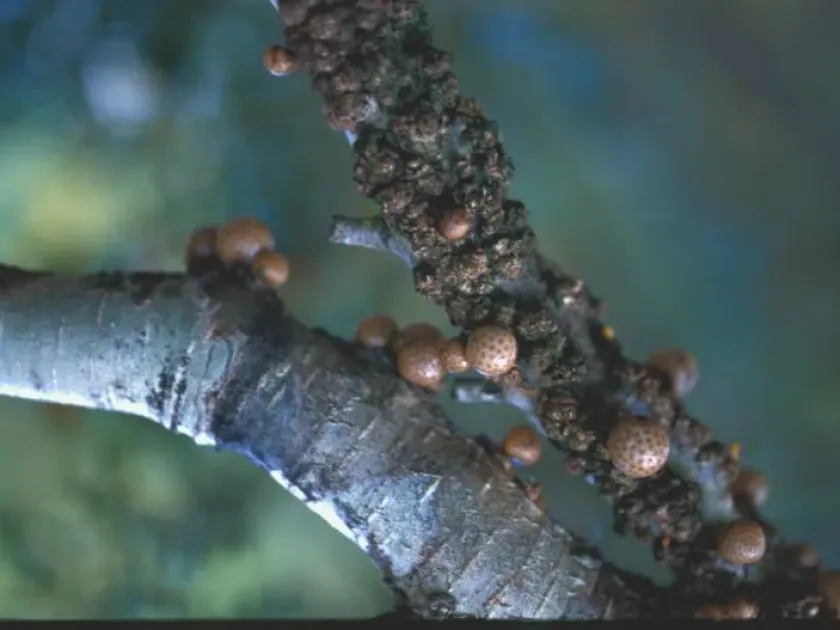
Description
Symptoms
The most distinctive symptom of infection is the development of abnormal swellings, galls, or tumor-like growths on the stems and branches of the tree.
During the sporulation stage, visible fruiting bodies with a pale or yellowish color break through the bark, which is a key diagnostic feature.
As the infection progresses, the host tree's tissue undergoes significant deformation, leading to fissures and open wounds that expose the internal wood.
Infected trees often show localized reactions such as stunted growth of twigs and abnormal cell proliferation around the infection site.
- Formation of prominent galls on branches.
- Appearance of pale, spherical fruiting bodies.
- Cracking of the bark due to internal pressure.
- Premature dying back of affected twigs.
Pathogen
The fungus Cyttaria pallida is an ascomycete pathogen that specifically parasitizes tree species belonging to the genus Nothofagus, commonly known as Southern beech.
This obligate parasite exhibits a high degree of host specificity, meaning its entire life cycle is intricately linked to the biological processes of the host tree.
Unlike many other fungi, it manifests through the production of characteristic fruiting bodies that emerge directly from the infected host tissues.
The pathogen establishes a systemic mycelium within the tree, leading to long-term pathological disturbances in the vascular structure of branches and trunks.
The fungus relies on the host's resources to complete its development, making it a persistent threat to the health of susceptible Southern beech populations.
Conditions for development
The development of Cyttaria pallida is heavily dependent on specific climatic conditions, favoring the cool and moist environments where Southern beech thrives.
Spore dispersal occurs primarily through wind and rain, which facilitate the transport of the pathogen to new, healthy areas of the host tree or nearby specimens.
Tree vigor plays a crucial role in disease outcome; trees under environmental stress are significantly more susceptible to successful colonization by the fungus.
High relative humidity and consistent moisture allow the spores to remain viable on the bark surface for extended periods before penetration occurs.
Accumulation of dead, infected material in the canopy or around the base of the tree creates a reservoir for reinfection, sustaining the disease cycle.
Why it matters
The primary harm caused by the fungus is the disruption of nutrient and water flow, which leads to the gradual weakening and decline of the host tree.
Structural integrity of the affected branches is compromised, making them prone to snapping under heavy wind or snow loads.
The persistent open wounds created by the fungus act as entry points for opportunistic wood-decay fungi, accelerating the degradation of the tree trunk.
In forest management, the disease leads to a reduction in the overall quality of timber and a decline in the vitality of the ecosystem.
Chronic infection drains the tree's metabolic energy, reducing its capacity to withstand other environmental stressors or insect attacks.
Protection
Effective management focuses on regular sanitary pruning, where infected branches are removed and destroyed to reduce the local inoculum density.
Strict disinfection of pruning tools is essential after working on infected trees to prevent the mechanical transmission of fungal spores to healthy specimens.
Maintaining optimal spacing between trees improves air circulation, creating a less hospitable microclimate for the development of fungal fruiting bodies.
Implementing proper arboricultural care, such as balanced fertilization and moisture management, helps the tree maintain its natural resistance to infection.
In severe cases, selecting and planting resistant varieties or species within the same genus can be a viable long-term strategy for forest health protection.
Discussion
No discussions yet — be the first.