
Cyttaria johowii
Cyttaria johowii
Description
Symptoms
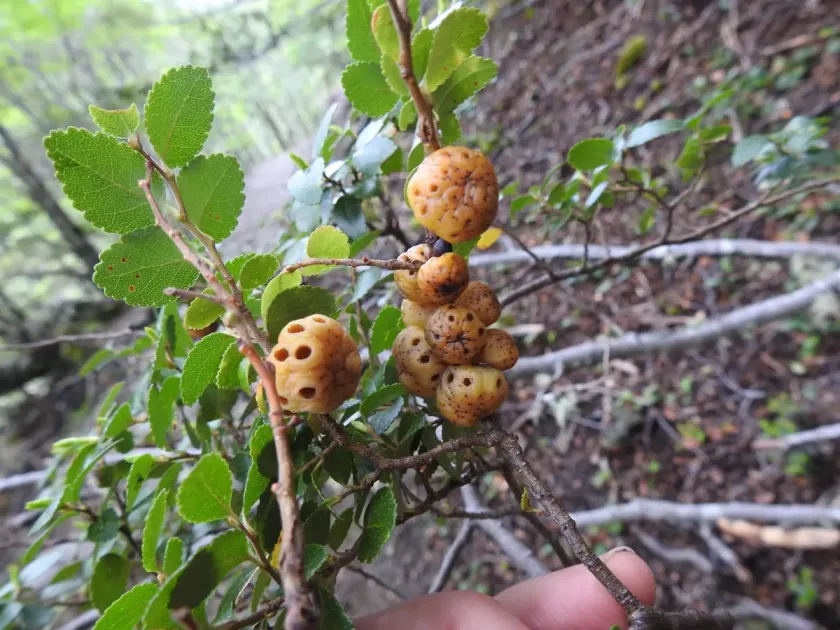
The main visual indicator of Cyttaria johowii presence is the formation of characteristic yellowish or orange-colored growths on the tree bark.
During the sporulation period, the surface of these galls becomes bumpy and may exude a sticky substance containing thousands of microscopic spores.
As the pathogen develops, localized swellings appear on the affected areas, gradually causing deformation and twisting of the tree shoots.
At the sites of fungal hyphae penetration, a disruption in normal sap flow often occurs, which is visually manifested by premature yellowing of the foliage.
- Appearance of bright fruiting bodies on branches.
- Deformation of young shoots and bark.
- Reduction in canopy density in the affected area.
- Presence of a sticky coating on the surface of galls.
Pathogen
The causative agent of the disease is Cyttaria johowii, a highly specialized fungus belonging to the Ascomycota class. This parasite follows a biotrophic lifestyle, being intimately connected to the living tissues of its hosts.
The biology of the pathogen involves the formation of spherical stromata directly on the branches of the tree. These structures act as fruiting bodies where active spore maturation occurs.
The life cycle of the fungus is strictly tied to the seasonal rhythms of the host plant, ensuring high synchronization for infecting new shoots during the spring season.
Dispersal is primarily aerial, occurring through the discharge of ascospores that are carried by wind currents and settle on healthy plant tissues.
The fungus is capable of maintaining viability for extended periods, even under significant temperature fluctuations within its native climatic zones.
Conditions for development
The disease develops most intensively under conditions of high air humidity, typical of temperate maritime climates.
The optimal time for spore germination occurs during periods of prolonged rainfall, which creates the necessary moisture film on the wood surface.
The fungus prefers forest areas with moderate lighting, where a dense canopy helps maintain a stable and humid microclimate.
A temperature range between +10 and +18 degrees Celsius is most favorable for the active growth of the mycelium within the host tissues.
The presence of weakened trees or physical bark damage significantly facilitates the entry of the infection into the plant.
Why it matters
The primary danger of this fungus lies in its ability to cause multiple tumor-like growths that impede the transport of nutrients.
Infection of branches by Cyttaria johowii leads to their gradual desiccation, reducing the overall photosynthetic surface area of the crown.
Under conditions of widespread pathogen infestation, a significant decline in the tree's vitality is observed, making it susceptible to secondary pests.
Prolonged parasitism leads to a decrease in the aesthetic and biological productivity of forest stands consisting of susceptible species.
In the long term, this can result in the premature death of individual trees or even entire sections of the stand when combined with other stress factors.
Protection
An effective control measure involves performing regular sanitary logging aimed at removing infected branches from the crown.
It is essential to strictly follow silvicultural management rules, ensuring optimal tree spacing to promote air circulation.
In nurseries, the application of broad-spectrum fungicides during peak spore dispersal periods is recommended to protect young seedlings.
Maintaining high tree immunity through proper mineral nutrition and consistent hydration is a key element of disease prevention.
Monitoring the health of forest crops allows for the timely identification of outbreak centers and prevents the mass infection of neighboring healthy trees.
Discussion
No discussions yet — be the first.