
Cyttaria hookeri
Cyttaria hookeri
Description
Symptoms
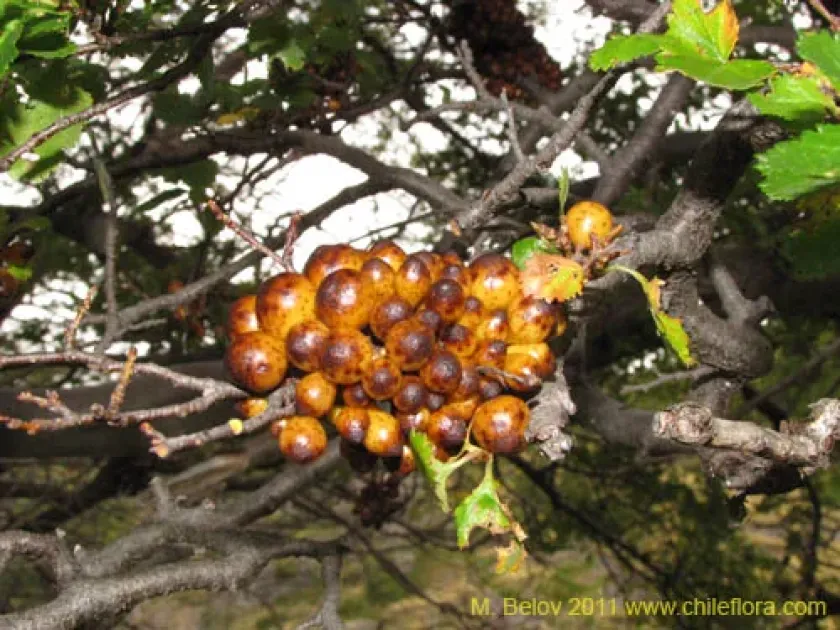
The primary symptom of infection is the emergence of globular, woody galls on the branches and stems of infected Nothofagus trees.
These galls often develop a pitted, honeycomb-like surface texture when the fungus begins to produce its reproductive structures.
Infection leads to localized swelling and deformation of the affected branches, which can significantly alter the tree's natural growth habit.
Over time, the tissues of the gall may crack, exposing the inner parts of the growth and making the tree susceptible to secondary bacterial or fungal attacks.
- Development of spherical galls.
- Deformation of branches.
- Pitted surface on mature fruiting bodies.
- Bark fissuring and localized tissue necrosis.
Pathogen
Cyttaria hookeri is a specialized ascomycete fungus that acts as an obligate parasite on trees belonging to the Nothofagus (southern beech) genus.
The fungal mycelium invades the host tissue, triggering abnormal cell division in the cambium, which results in the development of characteristic galls.
This pathogen has co-evolved with its host over millions of years, establishing a complex biological balance within the forest ecosystems of the southern hemisphere.
The fungus produces macroscopic fruiting bodies directly on the woody galls, which are responsible for releasing large amounts of spores during the favorable season.
As an obligate parasite, its survival is entirely dependent on the presence and health of its specific host trees, which it colonizes with high efficiency.
Conditions for development
The development and spread of Cyttaria hookeri are strongly favored by high atmospheric humidity and mild, temperate climatic conditions.
Periods of frequent rainfall facilitate the dispersal of spores, which are typically spread by wind currents and water splashes within the canopy.
Densely planted forests create a microclimate that supports fungal growth by reducing airflow and maintaining moisture levels on the bark surface.
Young, actively growing branches or existing wounds on the tree provide ideal infection courts for fungal spores to germinate and colonize.
Seasonal weather patterns dictate the timing of the fruiting body production, making the fungus most visible during specific wet periods of the year.
Why it matters
The host tree suffers from significant resource diversion, as nutrients are utilized by the fungus to support the metabolic demands of the galls.
The structural integrity of the branches is compromised, leading to an increased likelihood of limb failure under snow or wind loads.
Advanced infections can restrict the tree's vascular system, potentially slowing growth and reducing the overall vigor of the host specimen.
In industrial settings, the presence of these fungal galls reduces the timber quality, rendering affected stems less suitable for traditional woodworking.
While rarely killing a mature tree immediately, the chronic stress caused by the parasite leaves the tree prone to secondary pests and environmental stressors.
Protection
Management strategies focus on silvicultural practices, including the removal of heavily infected trees to reduce the overall inoculum load in the forest.
Maintaining appropriate stand density helps improve airflow within the canopy, which can suppress the conditions required for spore germination.
Early detection and sanitation pruning in managed landscapes are effective methods to limit the spread of the fungus to neighboring trees.
For ornamental or park trees, mechanical excision of galls combined with wound treatment can extend the lifespan of the host.
Research into breeding or selecting resistant Nothofagus varieties is considered the most viable long-term solution for managing the disease in commercial forestry.
Discussion
No discussions yet — be the first.