
Cyttaria hariotii
Cyttaria hariotii
Description
Symptoms
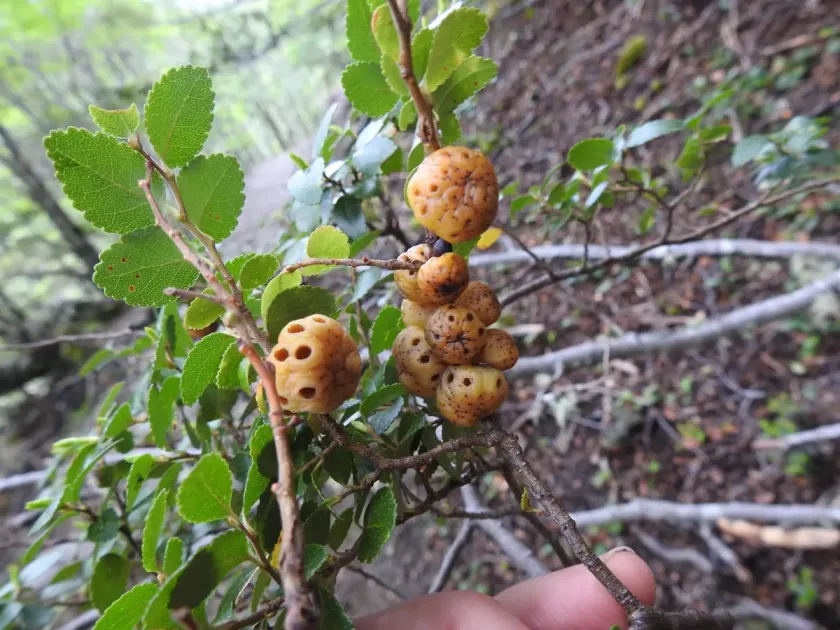
The most prominent sign of infection is the development of distinct, spherical, or convoluted galls on the branches and stems of the host tree.
These fungal structures display a vibrant yellow or orange color, making them easily distinguishable from the dark bark of the Nothofagus species.
During the sporulation stage, the surface of these galls may become slimy or covered with a characteristic texture that aids in the release of spores.
As the galls enlarge over time, they cause significant deformation of the wood, leading to cracking of the bark and exposure of the internal tissues.
Severely infected branches eventually show signs of dieback, with reduced foliage and overall physiological stress visible in the crown of the tree.
Pathogen
The causative agent is Cyttaria hariotii, an ascomycete fungus that acts as an obligate biotroph, relying entirely on its host for survival.
The fungus is highly host-specific, exclusively attacking various species within the Nothofagus genus, often referred to as southern beeches.
It establishes a complex parasitic relationship where it stimulates the host cells to create nutrient-rich galls, which serve as the fungal reproductive structure.
Spores are dispersed primarily by wind and rain, allowing the fungus to spread to new sites or healthy branches when conditions are favorable.
The fungus is well-adapted to the cool and moist environments of its native range, maintaining its presence in forest ecosystems for many years.
Conditions for development
High humidity and consistent rainfall are the primary drivers for the growth and reproduction of Cyttaria hariotii, facilitating the spore germination process.
The fungus thrives in temperate climates where temperatures remain within a range that supports both the host growth and fungal development.
Physical injuries to the tree's bark, whether from natural causes or external damage, significantly increase the chances of the fungus successfully colonizing the wood.
Forest stand density plays a major role in the spread, as closer proximity between tree branches allows for more efficient spore transmission between hosts.
Periods of prolonged moisture, especially during the spring and autumn, are critical for the formation of new, mature galls on the tree limbs.
Why it matters
The infection consumes a significant amount of the tree's energy, which can lead to suppressed growth and a decline in the overall vigor of the host.
Structural integrity of the branches is often compromised, as the galls interfere with sap flow and weaken the wood, making it prone to breakage.
In cases of heavy infestation, the cumulative damage can result in the premature death of individual trees, especially younger specimens.
The presence of Cyttaria hariotii affects the economic value of timber, as wood infested with these galls is structurally deformed and unusable for construction.
The disease contributes to forest degradation by altering the health status of Nothofagus stands, impacting the long-term ecological balance of the forest.
Protection
Management strategies focus on forest hygiene, including the removal of heavily infected branches to reduce the overall spore load within the stand.
Monitoring forest health and identifying hotspots of infection early can help prevent the disease from spreading to unaffected areas of the forest.
Preventing mechanical damage to the tree bark during logging or other forest operations is a crucial step in reducing the entry points for the pathogen.
Maintaining a balanced and diverse forest structure can improve the natural resilience of the trees against opportunistic infections by the fungus.
As the fungus is a native component of these ecosystems, control measures are typically localized and aimed at maintaining the forest's long-term sustainability.
Discussion
No discussions yet — be the first.