
Cyttaria exigua
Cyttaria exigua
Description
Symptoms
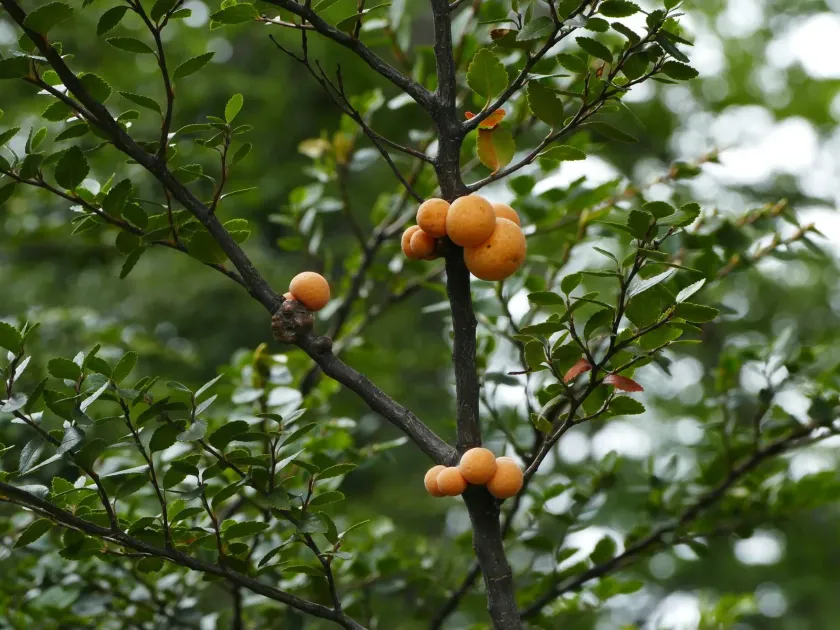
The most visible symptom of a Cyttaria exigua infection is the formation of galls or tumor-like growths on the branches of the host tree. These are the direct result of the fungus inducing abnormal plant cell division.
During the sporulation stage, bright yellow to orange fungal fruit bodies emerge from these galls. They appear as complex, honeycomb-like structures that are easily identifiable.
Affected branches often show signs of structural weakness, cracking bark, and stunted growth. Over time, the localized tissue may begin to decay due to the fungal activity.
Trees heavily infested with the fungus exhibit noticeable crown dieback, which progresses slowly over several years as the parasite drains the tree's vital resources.
Observations show that individual branches harboring the fungus become deformed and may eventually die, significantly affecting the overall aesthetic and health of the tree.
Pathogen
Cyttaria exigua is an ascomycete fungus that acts as an obligate parasite on trees of the Nothofagus genus (southern beech). This pathogen is uniquely adapted to the ecosystems of the Southern Hemisphere.
The fungus belongs to the family Cyttariaceae. It lives endophytically within the host tissue, specifically targeting the bark and cambium, which results in the characteristic proliferation of the plant's cells.
The pathogen's lifecycle is deeply integrated with the seasonal growth of the host tree. By establishing a permanent presence within the branches, it ensures its long-term survival and reproductive success.
Reproduction is carried out through the release of spores. These are dispersed by environmental factors such as wind and rain, allowing them to land on new susceptible host sites.
Biological specialization is a key feature of Cyttaria exigua, as it has evolved to thrive exclusively within the specific physiological environment provided by southern beech trees.
Conditions for development
The development and spread of Cyttaria exigua are highly dependent on high moisture levels. Frequent precipitation provides the necessary water for spore germination and fungal growth.
Optimal environmental conditions include cool to moderate temperatures, which are typical for the native range of southern beech forests. Poor air circulation in dense stands further facilitates the disease.
Trees that are already under physiological stress, such as those damaged by insects or environmental drought, show a higher susceptibility to initial infection by this pathogen.
The timing of spore release is closely linked to seasonal weather patterns. Wet seasons often lead to more abundant production of the characteristic fungal fruiting bodies.
Mechanical injuries to the bark provide the most likely entry points for the fungus, making careful forest management essential to prevent new infections.
Why it matters
The primary harm caused by Cyttaria exigua is the gradual weakening of the host tree. The energy invested by the tree into managing the fungal galls is diverted from normal growth and development.
The presence of the fungus negatively impacts the wood quality, as the resulting structural deformities and potential necrosis degrade the timber's integrity.
In forest ecosystems, the disease can reduce the overall productivity and longevity of affected stands, leading to shifts in tree population dynamics over time.
Severe infestations can lead to branch failure, posing a risk to the tree's stability and survival, especially when coupled with external stresses like strong winds.
Furthermore, the weakened condition of the tree makes it more vulnerable to secondary pests and pathogens, which may accelerate the tree's eventual decline.
Protection
Effective management begins with maintaining healthy, well-spaced stands to improve air circulation and reduce the duration of surface moisture on branches.
Sanitation is a critical control measure; removing and destroying infected branches helps to significantly reduce the local inoculum load of the pathogen.
Forestry operations should be conducted with care to avoid creating unnecessary bark wounds, which are primary sites for new infections by Cyttaria exigua.
Regular monitoring of forest health, particularly in sensitive areas, allows for the early detection and management of infection hotspots before they spread.
While no chemical treatment is currently viable for widespread forest control, focusing on silvicultural practices remains the best strategy for minimizing the impact of this fungus.
Discussion
No discussions yet — be the first.