
Cyttaria espinosae
Cyttaria espinosae
Description
Symptoms
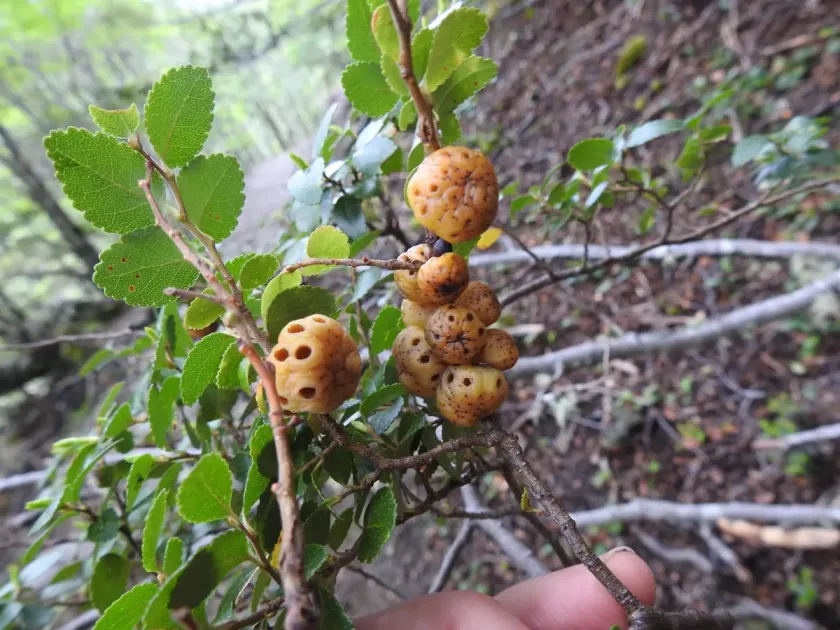
The main sign of infection is the formation of specific globular growths known as galls. These structures develop at the sites where the fungus infiltrates the bark and wood.
During the sporulation period, the surface of the galls becomes honeycombed, resembling a sponge or exotic fruits. They are typically colored in bright shades, ranging from yellow to orange.
In early stages, the galls may be inconspicuous, appearing as small swellings on the branches. Over time, they increase significantly in volume and deform the branches.
A characteristic sign is the wilting or premature yellowing of leaves on the affected parts of the crown, caused by the disruption of the tree's vascular transport.
- Severe deformation of affected branches.
- Presence of bright orange fruit bodies in spring.
- Cracking and necrosis of bark around the infection site.
Pathogen
The causative agent of the disease is the ascomycete fungus Cyttaria espinosae. It is an obligate parasite that is highly specialized in infecting specific tree species of the genus Nothofagus.
The fungus maintains an endophytic lifestyle, developing within the plant tissues over a long life cycle. It progressively alters the tree's metabolism to sustain its own nutrient requirements.
The fungus's life cycle is closely linked to the seasonal development patterns of the host tree. Spore production occurs on the surface of galls, which release conidia into the surrounding environment.
The spore dispersal mechanism is adapted to the climatic conditions of the habitat, allowing the fungus to effectively colonize new shoots.
The fungal mycelium is perennial, persisting within the tree branches and ensuring stable reproduction of fruit bodies in subsequent years.
Conditions for development
The development of the disease directly depends on the climate of humid forests. High air humidity is critical for the germination of fungal spores.
The fungus prefers the moderately cool weather characteristic of the natural distribution zones of Nothofagus in South America.
Infection most often occurs through micro-cracks or mechanical damage to the bark caused by insects, wind, or weather factors.
The rate of infection spread depends on the population density of host trees, which facilitates rapid colonization of neighboring individuals in forest stands.
Trees weakened by environmental stress become the most vulnerable to fungal colonization.
Why it matters
The primary damage lies in the suppression of tree growth and a reduction in its vitality. Heavy infestation with galls leads to the depletion of the entire crown.
The galls disrupt the normal transport of nutrients and water through vascular tissues, leading to the gradual dieback of shoot tips and entire branches.
During intense invasion, trees become prone to windthrow due to the loss of structural integrity in the trunk and large scaffold branches.
Long-term parasitism by the fungus can lead to premature tree death as a result of secondary colonization by pests on the weakened plant.
Economic losses are significant in forestry, as the affected wood loses its strength and is unsuitable for high-quality use.
Protection
Disease prevention is based on sanitary logging and the removal of heavily infected trees. This is essential for reducing the inoculum load in the forest stand.
An important element of protection is monitoring the health status of forest areas, especially in regions with a high concentration of Nothofagus.
Restricting the movement of infected plant material helps prevent the spread of the pathogen to new locations.
Chemical control in forest settings is limited due to the difficulty of treating large areas, so the focus is placed on biological resistance.
Breeding and planting species that exhibit natural resistance to Cyttaria is considered the most promising long-term management strategy.
Discussion
No discussions yet — be the first.