
Cyttaria berteroi
Cyttaria berteroi
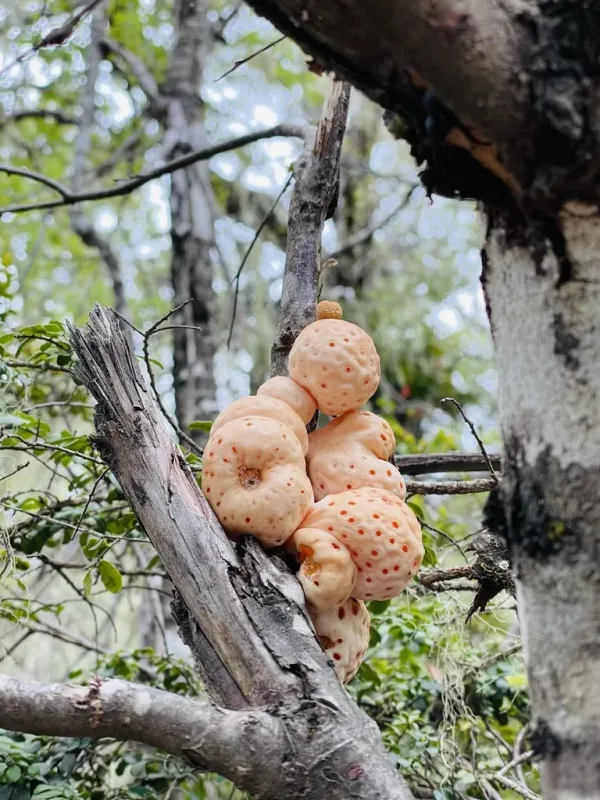
Description
Symptoms
The most prominent symptom of the infection is the development of distinct woody galls or tumor-like growths on branches and trunks.
During the active stage, the surface of these galls produces conspicuous, honeycomb-like or grape-like fruiting bodies that are easily visible during wet periods.
Affected bark typically shows signs of cracking and deformation, as the fungal growth disrupts the normal expansion of the tree's vascular system.
Leaves on infected branches often show signs of premature yellowing or wilting, indicating that the vascular tissues are failing to transport nutrients effectively.
In advanced stages of the disease, distal branches often experience dieback, leading to a thinning of the canopy and a distorted crown structure.
Pathogen
The causative agent of this disease is the ascomycete fungus Cyttaria berteroi, which belongs to the order Cyttariales. This is a highly host-specific, obligate parasite of southern beech trees (genus Nothofagus).
The fungus develops endophytically, colonizing the bark and cambial tissues. It triggers abnormal cellular proliferation in the host plant, resulting in the formation of woody galls.
The biological life cycle is characterized by the production of fruiting bodies that emerge through fissures in the bark. These structures serve as the primary source of inoculum.
As an obligate pathogen, Cyttaria berteroi relies entirely on its host for survival. Its distribution is therefore linked to the natural range of the Nothofagus species.
The mycelium resides within the woody tissue for several years, ensuring the long-term persistence of the infection on an individual tree.
Conditions for development
The development of Cyttaria berteroi is strongly correlated with high humidity levels and frequent rainfall, which are essential for spore germination and dispersion.
Spore dissemination is primarily mediated by rain splash and wind, allowing the pathogen to spread to nearby healthy trees in the forest.
Dense forest stands that maintain high humidity around the bark provide an ideal microenvironment for the pathogen to thrive and establish new infection sites.
The fungus is well-adapted to temperate and cool climates, where moderate temperatures support the continuous growth of the mycelium throughout the year.
Mechanical damage to the bark, caused by wind, ice, or insects, creates entry points that significantly increase the susceptibility of trees to colonization.
Why it matters
The primary impact of the infection is the significant weakening of the tree's health, making it increasingly vulnerable to secondary wood-boring pests and opportunistic pathogens.
The formation of large galls interferes with the normal flow of sap, which stunts tree growth and reduces the overall biomass accumulation in the forest stand.
Widespread infection can lead to the deterioration of forest health, eventually causing the death of heavily infested individual trees.
Structural integrity is compromised in heavily galled sections, which increases the risk of wind-snap and limb failure, especially during severe weather events.
The long-term physiological stress caused by the fungus negatively impacts the reproductive capacity of the host trees, leading to lower seed production.
Protection
Effective management in forest environments involves periodic sanitation logging, where heavily infested trees are removed to reduce the overall fungal spore load.
Maintaining proper forest density and ensuring adequate airflow can help reduce the localized humidity that favors fungal development.
In nursery settings, strict quarantine protocols and the removal of any seedlings showing signs of gall development are essential to prevent the spread of the disease.
Breeding and selecting Nothofagus genotypes that exhibit natural resistance to the pathogen is considered a long-term solution for forest resilience.
Chemical control is rarely utilized in forest ecosystems due to environmental regulations and the logistical challenges of applying treatments across large, inaccessible areas.
Discussion
No discussions yet — be the first.