
Cytospora canker
Cytosporaceae
Description
Symptoms
The hallmark symptom of Cytospora canker is the formation of sunken, discolored areas on the bark, often displaying a reddish-brown or dark brown hue.
As the infection progresses, the infected bark dries out, cracks, and may eventually peel away, exposing the underlying woody tissue.
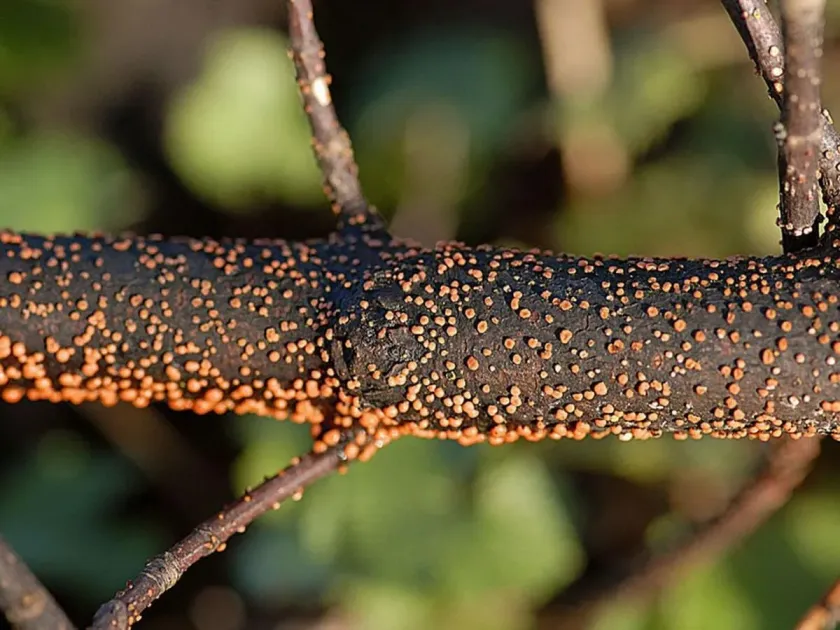
The presence of numerous small, blackish bumps (pycnidia) breaking through the bark surface is a definitive indicator of this specific fungal infection.
Branches affected by the disease often show chlorotic foliage that wilts and dies during the growing season, though the dead leaves tend to persist on the branch.
Gummosis, or the oozing of sap from the infection site, is frequently observed as the tree attempts a localized defensive response to the fungal colonization.
Pathogen
The causative agent of Cytospora canker is a group of fungi belonging to the genus Cytospora, which are common pathogens of woody plants.
These fungi are facultative parasites that predominantly invade stressed or weakened trees by entering through wounds, pruning cuts, or winter injury sites.
The fungus produces small, pimple-like fruiting bodies known as pycnidia on the surface of the infected bark, which are visible to the naked eye.
Under humid conditions, these pycnidia release masses of spores that are easily disseminated by splashing rain, wind, and pruning tools.
Once established, the fungal mycelium colonizes the cambium and inner bark, effectively girdling the branch and cutting off the plant's vascular system.
Conditions for development
Cytospora canker thrives on trees subjected to environmental stress, including severe drought, waterlogging, or improper nutrient availability.
Cold winter temperatures are a primary factor, as they often cause bark splitting and sunscald, which serve as perfect entry points for the fungal spores.
High moisture levels during the spring and fall provide the necessary environment for the pathogen to produce and disseminate its spores across the garden.
Poor orchard sanitation, such as failing to remove dead wood, allows the fungus to survive and multiply, ensuring a high inoculum level for future infections.
Mechanical injuries caused by lawn mowers, cultivation tools, or improper pruning practices significantly increase the tree's vulnerability to the disease.
Why it matters
The primary damage caused by Cytospora canker is the progressive dieback of branches, which leads to a significant loss of canopy and structural integrity.
When the infection moves to the main trunk and girdles it, the entire tree will suffer from rapid decline and eventual mortality.
The disease causes a substantial decrease in fruit yield and quality, as the tree redirects energy from production toward localized defensive efforts.
Infected trees become less resilient to other pests and diseases, creating a cascading failure of the tree's overall health and physiological function.
The cumulative effect of the disease is the premature removal of trees from the orchard, resulting in economic loss and the need for costly replanting.
Protection
The most effective strategy is a rigorous sanitation program, including the immediate removal and destruction of all dead and canker-infected wood.
Pruning tools should be disinfected with alcohol or a bleach solution between cuts to prevent the mechanical transmission of the pathogen to healthy tissues.
Applying white latex paint to trunks can help prevent sunscald, thereby closing one of the primary entry points for the fungus during the winter months.
Promoting tree vigor through balanced fertilization and adequate irrigation is crucial for maintaining a strong internal resistance against fungal invasions.
- Avoid pruning during wet weather to minimize the risk of spore transmission.
- Monitor the orchard regularly for signs of bark discoloration or sunken lesions.
- Consider the use of protective copper-based sprays during the dormant season to reduce spore loads.
Discussion
No discussions yet — be the first.