
Cytospora canker
Cytospora leucosperma
Description
Symptoms
The most distinctive symptom of Cytospora canker is the appearance of sunken, discolored patches on the bark. These lesions usually turn brown or reddish-brown and appear dehydrated compared to the surrounding healthy bark.
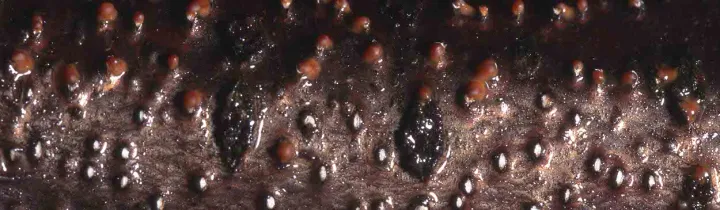
During wet weather, look for tiny, pimple-like bumps on the infected bark surface. These are the fruiting bodies of the fungus, and they are a diagnostic hallmark of the infection.
In high humidity, these bumps release thin, orange or yellow tendrils consisting of massed spores. This sign is unmistakable and confirms the presence of the pathogen in the active stage.
Leaves on affected branches will often show chlorosis, wilting, and premature browning. Unlike other diseases, these leaves tend to remain attached to the dying branch for an extended period.
Internal bark necrosis is evident upon cutting; the infected area shows a clear margin between dark, dead tissue and healthy, living wood. If the infection circles the branch, the tissue above the canker dies rapidly.
Pathogen
The causal agent of this disease is the fungus Cytospora leucosperma, a pathogen that primarily targets trees weakened by stress. It is a cosmopolitan fungus known for causing cankers on various woody plants.
The fungus exists primarily within the bark tissues, where it produces stroma (fruiting bodies). These stroma develop just beneath the epidermis, eventually erupting through the surface to release spores.
Cytospora is a facultative parasite, meaning it thrives on dead or dying tissues but can aggressively colonize weakened healthy bark. Its survival strategy depends on the persistence of mycelium in infected wood.
Spore dissemination is highly efficient, occurring primarily through rain splash and wind currents. Under humid conditions, spores are extruded in sticky masses that easily adhere to insects or pruning tools.
Its enzymatic activity is designed to break down cell walls, causing the rapid death of the cambium. Once established, the fungus expands in a circular or oval pattern, effectively girdling the branch or trunk.
Conditions for development
Cytospora canker is an opportunistic pathogen, meaning its development is intrinsically linked to tree stress. Factors such as extreme winter temperatures, frost cracks, and drought are the most common triggers.
Poor orchard ventilation and high relative humidity create an environment conducive to spore germination. Densely planted orchards often suffer more due to the limited air movement around the canopy.
Sunscald on the trunks and exposed branches serves as a major entry point for the fungus. Bark damaged by excessive solar radiation provides a perfect niche for the mycelium to colonize.
Improper pruning practices, such as leaving long stubs or failing to disinfect tools, facilitate the spread of spores from infected trees to healthy ones. The disease often moves through the orchard along with the pruner.
Trees suffering from nutrient deficiencies or inadequate irrigation exhibit weaker immune responses. Without the ability to produce adequate callus tissue, the tree cannot wall off the fungal infection.
Why it matters
The primary damage caused by Cytospora is the restriction and eventual cessation of nutrient and water transport. This leads to the dieback of branches and, in severe cases, the death of the entire tree.
The disease drastically reduces the yield and quality of the fruit. Branches affected by cankers are unable to support the energy requirements of developing fruit, causing them to drop or become misshapen.
Once a trunk is girdled by the canker, the tree is essentially lost. There is no systemic treatment that can fully reverse established trunk damage, making it a severe economic threat to orchard longevity.
In nurseries, this disease can devastate young stock, leading to significant financial losses. Infected saplings often struggle to establish or fail shortly after being planted in the field.
The cost of managing the disease is high due to the labor-intensive nature of pruning out infected wood. If not managed properly, an infection can lead to the complete replacement of orchard blocks.
Protection
The best defense against Cytospora canker is to promote overall tree vigor. Proper fertilization, consistent irrigation, and adequate spacing ensure the tree remains strong enough to resist the pathogen.
Rigorous sanitation is essential; all infected wood should be pruned out, removed from the orchard, and destroyed. It is critical to prune at least 10-15 cm below the visible canker margin to ensure all mycelium is removed.
Protecting the trunks from sunscald with white latex paint or specialized tree wraps is a crucial preventive measure. Maintaining a healthy, intact bark layer is the tree's primary defense against the fungus.
All pruning tools must be disinfected between trees using alcohol or a bleach solution. This simple step prevents the accidental transfer of spores from diseased to healthy wood.
Copper-based fungicide sprays applied during dormancy (early spring) can help protect fresh wounds and reduce the overall spore count in the environment. Consistent monitoring for early signs of bark discoloration is key.
Discussion
No discussions yet — be the first.