
Cytospora canker
Cytospora cincta
Description
Symptoms
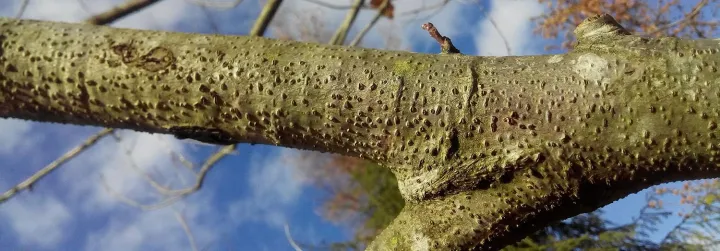
The most distinctive symptom is the formation of cankers on branches and trunks. The bark becomes sunken, discolored, and necrotic, often turning dark brown or reddish-brown.
Small, pinhead-sized, pimple-like structures, known as pycnidia, appear on the surface of the infected bark. These are the fruiting bodies that discharge masses of spores.
Infected branches may show signs of wilting and dieback during the growing season. Leaves often become chlorotic, curl up, and fall prematurely before the entire branch dries out.
When the bark is cut, the tissue underneath is often dead and brown. Unlike healthy bark, infected bark becomes brittle and separates unevenly from the wood.
- Sunken necrotic areas on the bark.
- Small orange or grey pycnidia on the surface.
- Sudden dieback of limbs.
- Gummosis (oozing of sap) near the canker.
- Brittle and cracked bark texture.
Pathogen
The causal agent of Cytospora canker is the ascomycete fungus Cytospora cincta (syn. Leucostoma cinctum). This pathogen primarily targets the bark and cambium layer of stone fruit trees.
It acts as a wound pathogen, meaning it typically enters the plant through mechanical injuries, pruning cuts, or winter-damaged tissues. It survives on both dead wood and living tree tissues.
The fungus produces pycnidia, which are small fruiting bodies that release conidia (spores) in gelatinous tendrils during wet weather conditions, spreading the disease to healthy branches.
The pathogen overwinters within the infected bark and wood tissues. This enables it to survive adverse conditions and remain present in the orchard for many years.
Biology of the fungus is characterized by its ability to thrive even in cool temperatures, which makes the disease particularly problematic during early spring when trees are emerging from dormancy.
Conditions for development
Cytospora canker development is heavily dependent on the tree's health and the presence of wounds. Vulnerability increases significantly after winter injury or sunscald.
High humidity and rainfall are essential for the dissemination and germination of the fungus. Wet weather allows the spores to be splashed onto other branches or trees.
Trees stressed by drought, poor soil fertility, or insect infestations are significantly more susceptible to successful colonization by the fungus.
Excessive nitrogen fertilization late in the season prevents proper hardening of the wood, making the trees more susceptible to winter frost damage and subsequent fungal entry.
Poor orchard sanitation, such as failing to remove and destroy dead or cankered wood, ensures that the fungal inoculum levels remain high throughout the season.
Why it matters
This disease is a major threat to stone fruits including cherries, peaches, plums, and apricots. It causes chronic decline and eventual death of the entire tree.
Cankers disrupt the vascular system, preventing the transport of water and nutrients. This leads to stunted fruit development, poor yield, and inferior quality.
Once a tree is weakened by Cytospora, it often becomes a target for secondary pests like bark beetles, which further accelerate the decline of the orchard.
Economic losses are severe, as the disease is difficult to eradicate once it establishes itself, often requiring the complete removal of infected orchards.
Without intervention, the pathogen can spread rapidly across a plantation, leading to high tree mortality rates over just a few growth cycles.
Protection
The primary control method is strict sanitation. All branches showing signs of canker must be pruned at least 15 cm below the visible infection and burned immediately.
Pruning should be performed during dry weather to minimize the risk of spore release and infection. Tools must be disinfected after every single cut to prevent pathogen spread.
Protecting trees from mechanical damage and sunscald is crucial. Using tree guards or white-wash paint on trunks helps prevent the initial wounds that the fungus requires.
Fungicide applications, particularly copper-based sprays during the dormant season, can help reduce the spore count on the surface of the bark.
Maintaining tree vigor through proper irrigation and balanced nutrient management is essential for helping the tree maintain natural defenses against fungal penetration.
Discussion
No discussions yet — be the first.