
Mango cytosphaerosis
Cytosphaera mangiferae
Description
Symptoms
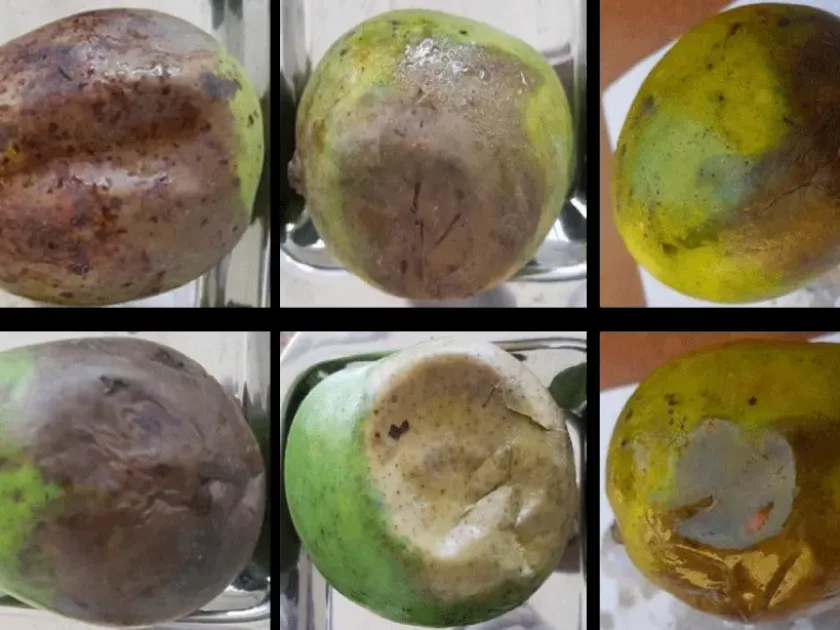
Early symptoms appear as small, dark, water-soaked spots on fruits. These spots expand rapidly, forming sunken lesions that often turn brown or black as the tissue decomposes.
In humid conditions, small black pimples emerge on the surface of the lesions; these are the pycnidia. They may exude light-colored or cream-colored masses of spores under high moisture, further spreading the inoculum.
The interior flesh of the infected fruit suffers from rapid rot, becoming mushy and emitting an off-odor, rendering the fruit completely unmarketable and unsuitable for consumption.
On stems and branches, the disease manifests as bark splitting and the development of deep cankers. If the fungus reaches the cambium layer, it can cause the branch to die back entirely.
Leaves on infected branches often show yellowing (chlorosis) and may wilt or drop prematurely due to the obstruction of the plant's vascular tissue by the encroaching fungal hyphae.
Pathogen
The causal agent of this disease is the ascomycete fungus Cytosphaera mangiferae. It is a pathogen that specifically targets mango trees, thriving primarily in tropical and subtropical regions where environmental conditions favor fungal growth.
The fungus persists in dead wood, plant debris, and infected bark for extended periods, serving as a primary inoculum source. Spores are disseminated by wind currents, rain splashes, and insect vectors.
The life cycle is closely linked to the physiological state of the host plant. Infection commonly occurs through wounds, pruning cuts, or openings created by wood-boring insects, where the fungus finds entry to the internal tissues.
Laboratory analysis of infected samples reveals the presence of pycnidia, which are specialized fungal structures producing masses of conidia. These spores are released during humid conditions, initiating new infection cycles.
The pathogen exerts its effect by secreting specific enzymes and toxins that break down plant cell walls. This action disrupts the vascular system, leading to systemic necrosis and physiological failure of the affected tree parts.
Conditions for development
The development of mango cytosphaerosis is highly dependent on humidity. Prolonged periods of high relative humidity (above 80%) are essential for the germination of fungal spores on plant surfaces.
The optimal temperature range for the proliferation of Cytosphaera mangiferae is between +22 and +28 degrees Celsius. This range allows for the most aggressive colonization of tissues.
Poor orchard design, particularly high-density planting that restricts airflow, creates microclimates within the canopy where moisture lingers, making it an ideal environment for the disease to flourish.
Inadequate sanitation practices, such as leaving diseased branches or fallen debris on the orchard floor, allow the fungus to maintain a high inoculum pressure throughout the year.
Environmental stress, such as heavy rain followed by intense sun or physical damage from hail, creates openings and weakens the tree's defensive barriers, facilitating rapid infection.
Why it matters
The primary economic impact is the direct loss of fruit harvest. Rapid rot during storage and transport leads to significant waste and financial losses for growers and exporters.
The disease reduces the long-term productivity of trees. Persistent infections can lead to the loss of large scaffold branches, significantly decreasing the yield potential of the tree over time.
Fruit quality degradation often leads to market rejection, forcing farmers to bear the cost of sorting and discarding vast amounts of product, which directly affects the bottom line.
The increased need for chemical intervention—applying fungicides to suppress the pathogen—adds to the overall cost of production and increases the environmental footprint of the orchard.
In severe cases, if the pathogen manages to colonize the main trunk, the entire tree may decline and die, necessitating costly tree removal and replanting efforts.
Protection
Orchard hygiene is the cornerstone of control. Regular removal and destruction (burning or deep burial) of all symptomatic branches and fallen fruit significantly reduces the spore load in the environment.
Systemic fungicides should be applied preventively during high-risk seasons, such as periods of heavy rainfall. Rotating active ingredients is crucial to prevent the fungus from developing resistance.
Proper pruning techniques that ensure an open canopy for sunlight penetration and air circulation are vital to drying out the trees and suppressing the fungal microclimate.
Integrated Pest Management (IPM) should be practiced to control wood-boring insects, as these pests create the wounding necessary for the fungus to establish itself.
- Disinfect all pruning tools between trees.
- Maintain optimal tree nutrition to enhance natural defenses.
- Monitor trees regularly for early signs of cankers.
- Apply copper-based sprays after pruning to seal wounds.
Discussion
No discussions yet — be the first.