
Cystostereum murrayi
Cystostereum murrayi
Description
Symptoms
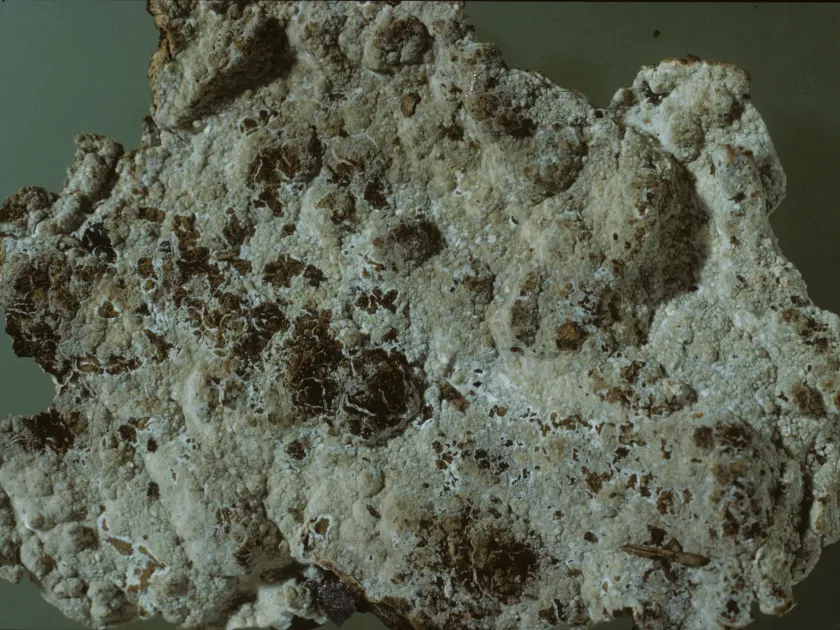
The most visible symptom is the development of leathery, perennial fruit bodies on tree trunks, which often merge into large, flat or reflexed patches on the bark.
Internal symptoms involve the development of white rot, which converts wood into a soft, fibrous, and pulpy mass, resulting in total loss of structural integrity.
Cross-sections of infected timber often reveal dark, distinct zone lines, which indicate areas where the fungal mycelium has concentrated its activity.
Externally, infected trees may show signs of canopy decline, such as premature leaf yellowing, branch dieback, and bark cracking around the infection sites.
Advanced stages of decay often result in the formation of hollows or cavities within the trunk, indicating extensive heartwood destruction by the pathogen.
Pathogen
The causative agent of this disease is the wood-decaying fungus Cystostereum murrayi, a member of the Basidiomycota phylum. It functions as a necrotrophic pathogen that gradually breaks down lignified plant tissues.
This fungus typically attacks the stems of both deciduous and coniferous trees, infiltrating the xylem through bark wounds or structural injuries.
Microscopically, the fungus is characterized by specific cystidia, which serve as its primary taxonomic identification feature. It forms a robust mycelial network that systematically degrades cell walls.
The life cycle encompasses both an active vegetative stage within the host tree and a reproductive phase that produces perennial fruit bodies capable of releasing large volumes of spores.
The pathogen is highly resilient, capable of persisting in dead wood for long periods and acting as a reservoir for further spread within a forest stand.
Conditions for development
High humidity and poor air circulation within forest stands provide optimal conditions for the colonization and growth of Cystostereum murrayi.
Mechanical damage to the bark, caused by logging operations, pests, or storm debris, is the primary gateway for spore entry into the tree's heartwood.
The fungus flourishes in shaded, damp environments where temperature fluctuations remain within moderate ranges favorable for fungal mycelial expansion.
Trees undergoing physiological stress due to poor soil conditions or unfavorable climatic shifts are significantly more susceptible to infection by this pathogen.
The dissemination of spores is largely driven by rain and wind patterns, which facilitate the transport of fungal propagules to new, vulnerable surfaces on healthy trees.
Why it matters
The primary economic impact is the severe degradation of wood quality, rendering the affected timber unusable for commercial construction or furniture production.
Infection drastically reduces the mechanical strength of tree trunks, significantly increasing the risk of windthrow and breakage, which compromises stand stability.
Losses include the devaluation of standing timber and the mandatory requirement for premature sanitary harvesting to mitigate the spread of the disease.
The presence of the fungus creates persistent infection centers, which can threaten adjacent healthy trees, potentially leading to widespread forest damage over time.
For parklands and residential areas, affected trees present a significant safety hazard due to the unpredictable risk of limb or trunk failure in populated zones.
Protection
Preventative management should focus on minimizing mechanical injury to trees during forestry operations, such as thinning or harvesting activities.
Timely removal of infected trees and the clearing of woody debris are critical steps to eliminate primary inoculum sources within the forest environment.
Regular monitoring of forest stands helps identify symptomatic trees early, allowing for targeted removal before the pathogen can reproduce and spread.
In garden settings, all pruning cuts and bark wounds should be treated with appropriate antiseptic dressings or fungicide pastes to prevent colonization by fungal spores.
Maintaining high forest vigor through proper density management and soil health promotion remains the most effective biological defense against fungal colonization.
Discussion
No discussions yet — be the first.