
Cymbella algae
Cymbellaceae
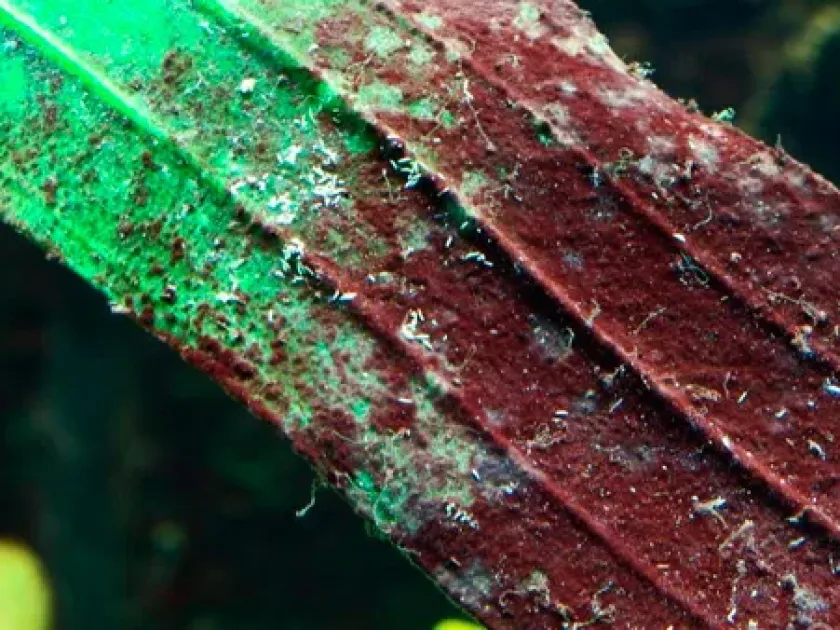
Description
Pathogen
Cymbella algae (family Cymbellaceae) are a distinct group of diatom algae recognized by their asymmetrical, boat-shaped shells composed of silica.
These unicellular organisms are primary producers in aquatic environments, playing a significant role in the food web of various water bodies.
In the context of agricultural and aquatic production, they are not typically classified as plant pathogens but rather as indicators of water chemistry and ecological balance.
Their life cycle involves sexual and asexual reproduction, which is highly responsive to the nutrient availability within their environment.
Detailed analysis of their shell morphology allows scientists to distinguish between species, which is vital for monitoring water quality accurately.
Conditions for development
The proliferation of Cymbellaceae is primarily governed by the availability of dissolved silicate, a fundamental nutrient for their frustule formation.
Environmental conditions such as temperature stability and light penetration are critical factors that influence their metabolic activity and growth rates.
Excessive nutrient runoff from agricultural lands, particularly phosphorus and nitrogen, can lead to the rapid blooming of these diatom populations.
They thrive in both lotic and lentic waters, showing adaptability to various levels of water turbulence and flow velocities.
Seasonal patterns, particularly shifts in spring and autumn, often trigger blooms due to the redistribution of nutrients throughout the water column.
Why it matters
The primary concern regarding Cymbellaceae in agricultural and fish farming contexts is the physical alteration of aquatic environments.
When mass proliferation occurs, these algae can clog water intake systems, filtration equipment, and pipes, causing technical disruptions.
As they die off, the decomposition process consumes significant amounts of dissolved oxygen, which can threaten the survival of aquatic species.
The accumulation of algae on spawning grounds or artificial surfaces may interfere with the reproductive cycles of certain aquatic animals.
In addition, significant algal biomass can alter the optical properties of water, impacting the photosynthesis of submerged vascular plants.
Protection
Managing nutrient influx from surrounding agricultural fields is the most effective long-term strategy for controlling algal growth.
Establishing buffer zones and riparian vegetation can help filter out runoff and reduce the nutrient load entering the water system.
Implementing effective aeration and water circulation systems helps maintain oxygen levels and prevents the stagnation required for heavy blooms.
In closed systems, ultraviolet (UV) sterilization serves as a reliable method to suppress algal cell counts without chemical additives.
Regular maintenance, including mechanical removal of biofilm and sludge from tanks and conduits, is essential to minimize future population outbreaks.
Discussion
No discussions yet — be the first.