
Mahonia rust
Cumminsiella
Description
Symptoms
The first signs of Mahonia rust appear as small, bright yellow spots on the upper leaf surface, which eventually progress into reddish or brown patches.
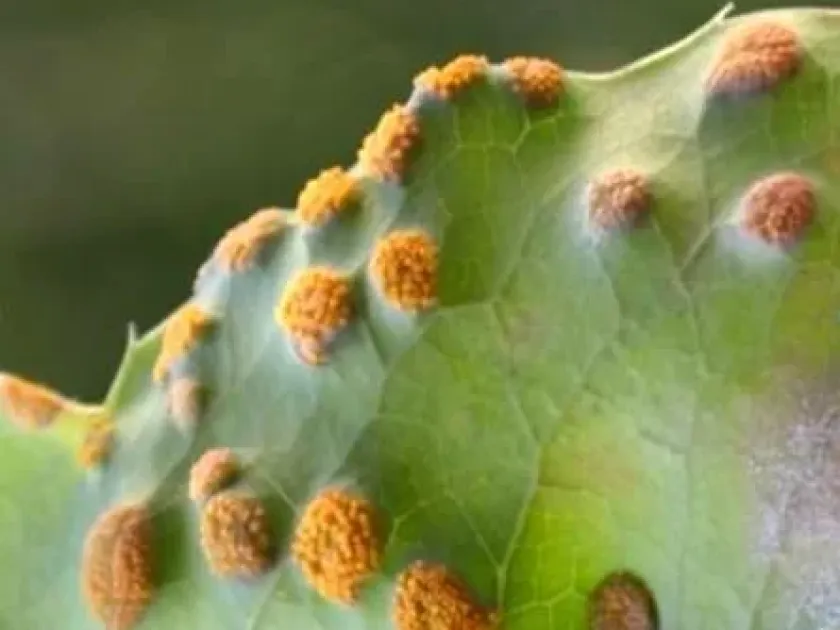
On the underside of the infected leaves, characteristic rust-colored pustules develop, which are clusters of fungal spores ready to be dispersed.
As the infection advances, the leaves turn yellow, lose their leathery texture, and may drop prematurely, leaving the shrub looking sparse and unhealthy.
In severe cases, the fungus may spread to the stems and leaf stalks, causing deformation, necrotic lesions, and stunted growth of the plant shoots.
- Yellow or red spots on leaf surfaces.
- Brown, powdery pustules on the undersides of leaves.
- Premature leaf abscission.
- Stunted growth and shoot distortion.
Pathogen
The causative agent of this disease is the fungus Cumminsiella mirabilissima, which is an obligate parasite specifically targeting plants in the Mahonia genus.
The fungus reproduces throughout the growing season, completing its lifecycle by forming various types of spores that spread easily through the air and water droplets.
It colonizes the leaf tissues, forming specialized structures called aecia and uredinia, which are responsible for the visible symptoms of the infection.
The pathogen thrives by extracting nutrients from the host plant, weakening its physiological processes and impacting its overall structural integrity.
Winter survival is typically achieved through resting spores or mycelium located on fallen leaves and stem tissues, creating a source of reinfection for the following spring.
Conditions for development
Mahonia rust thrives in environments with high humidity and moderate temperatures, which are essential for spore germination and colonization.
Frequent rainfall or overhead irrigation creates a water film on the foliage, which acts as a primary vehicle for the transmission of fungal spores.
Lack of proper air circulation, often caused by overly dense planting or poor site management, significantly promotes the spread of the fungus between plants.
Periods of prolonged dew or misty weather provide the optimal moisture levels required for the rust to flourish throughout the spring and autumn.
Stressed plants with poor growing conditions or nutritional imbalances are more susceptible to infection and show faster disease progression.
Why it matters
The primary harm caused by Mahonia rust is the loss of the shrub's aesthetic value, as the foliage is stripped of its healthy, evergreen appearance.
Reduced photosynthetic capacity caused by damaged leaves leads to an overall decline in plant vigor, growth rate, and potential flowering capacity.
Chronic infections can leave the shrub highly susceptible to secondary stresses, such as winter kill, drought, or attacks by other opportunistic pests.
For nursery production, the presence of this rust can result in significant financial losses due to the unsalability of the infected stock.
If left untreated, the cumulative impact of the disease can lead to the eventual death of individual branches or the entire plant over several years.
Protection
Sanitation is the first line of defense; gardeners should carefully collect and destroy all fallen leaves and debris to remove overwintering spores.
Fungicides containing copper or systemic active ingredients can be applied as a preventative measure or at the first signs of the disease outbreak.
Promoting good airflow by thinning out branches and maintaining proper spacing between plants helps keep the foliage dry and limits fungal spread.
Avoid overhead irrigation techniques that wet the leaves; instead, focus on soil-level watering to minimize the humidity levels around the foliage.
Regular monitoring of plants, especially in spring, allows for the early detection and removal of infected tissues before the rust spreads to healthy areas.
Discussion
No discussions yet — be the first.