
Cudonia confusa
Cudonia confusa
Description
Symptoms
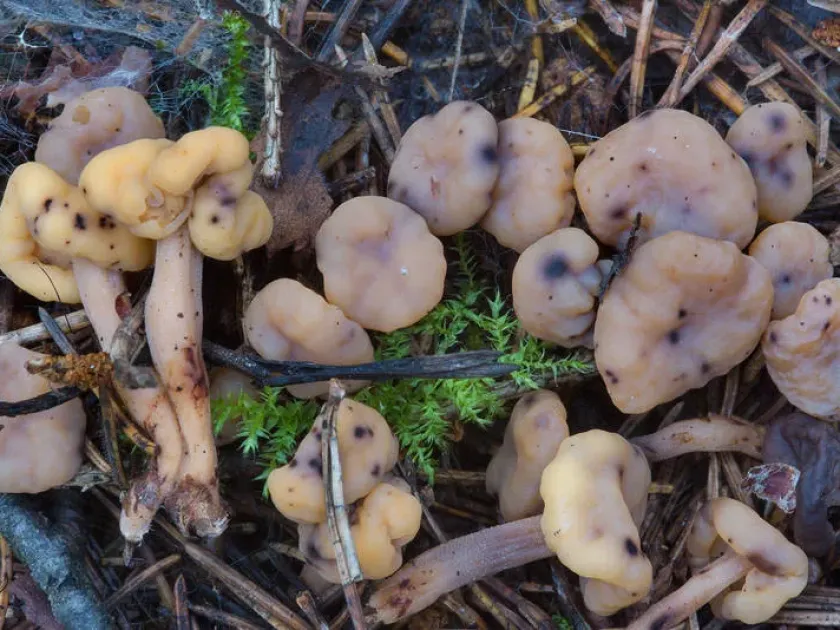
The presence of the fungus is manifested by the emergence of distinctive fruiting bodies during late summer and autumn, often found in clusters.
The cap morphology is notably convoluted or "confused," hence the specific epithet, often appearing brownish or yellowish in color.
The stem or stipe is typically pale, sometimes featuring minute scales, and provides support for the fertile part of the fruiting body.
There are no pathogenic symptoms observed on nearby plants, as this fungus does not possess the mechanisms to infect living plant tissue.
Field identification is supported by observing the arrangement of the fruiting bodies and the characteristic texture of the cap surface.
Pathogen
Cudonia confusa is a species of fungus in the family Cudoniaceae, belonging to the Ascomycota division. It is classified as a saprotrophic fungus and does not act as a plant pathogen for agricultural or forestry crops.
The fungus is characterized by the production of stipitate apothecia (fruiting bodies) with a wrinkled or wavy cap, often described as having a gelatinous or firm texture.
The mycelium resides within the leaf litter and organic matter layer, where it decomposes complex organic compounds, contributing to soil nutrient cycling.
The biology of Cudonia confusa is studied primarily within the field of mycology, focusing on its distribution and environmental niche within temperate forests.
Spore production occurs on the hymenium covering the surface of the cap, allowing for wind dispersal once the spores have reached maturity.
Conditions for development
The development of Cudonia confusa is highly dependent on high moisture levels and mild temperatures typically found in woodland environments.
It predominantly thrives in areas with a thick layer of coniferous needles or deciduous leaf litter, which serve as the primary substrate for the mycelium.
Optimal environmental conditions include shaded forest floors where evaporation is low, allowing the soil to retain necessary humidity for sporulation.
The fungus generally appears during cooler periods of the year when temperature and humidity conditions are stable and conducive to growth.
Soil composition, specifically the presence of accumulated humus and acidic forest soil, plays a critical role in sustaining the fungal population.
Discussion
No discussions yet — be the first.