
Cryptosphaeria canker
Cryptosphaeria pullmanensis
Description
Symptoms
The main sign of infection is the formation of large necrotic areas on the trunks and skeletal branches of poplars. The bark in the infected areas darkens, sinks, cracks, and often peels off, exposing the wood underneath.
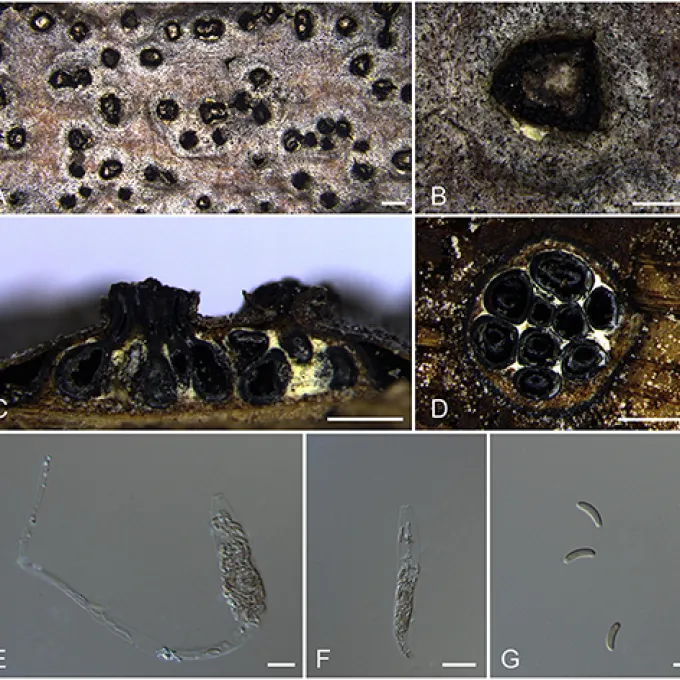
Another characteristic symptom is the appearance of numerous small fungal fruiting bodies that break through the bark, looking like small black bumps scattered across the surface.
Trees often show signs of dieback on individual branches or the entire crown due to the disruption of the tree's vascular system and nutrient transport.
When the bark is removed from an infected area, one can often see characteristic discoloration of the inner tissues, frequently with a clear boundary between healthy and diseased zones.
During periods of high humidity, dark-colored spore masses may emerge from the infected bark, indicating active sporulation of the pathogen.
Pathogen
The disease is caused by the ascomycete fungus Cryptosphaeria pullmanensis, which belongs to a group of micromycetes that specifically target the bark and cambial layers of trees.
The fungus generally follows a saprotrophic or opportunistic parasitic lifestyle, becoming highly active when the tree's natural defense mechanisms are weakened.
The pathogen's life cycle involves the formation of ascospores, which are spread by air currents, water splashes, and insects, successfully inoculating healthy plant tissues.
Infection typically occurs through mechanical bark wounds, frost cracks, sunburns, or areas damaged by wood-boring insects.
The fungal mycelium spreads throughout the bark and cambium, eventually causing tissue necrosis and blocking the tree's sap flow, which leads to branch mortality.
Conditions for development
The spread of the disease is closely linked to the physiological state of the host tree; those that are stressed, overmature, or growing in poor conditions are most susceptible.
High air humidity and frequent precipitation create an ideal environment for spore germination and the subsequent infection of new bark areas.
Temperature fluctuations during spring and autumn are critical factors that trigger sporulation and the rapid spread of the infection in nurseries and urban forests.
Mechanical damage to trunks caused by maintenance equipment or animals significantly accelerates the process of pathogen entry into deeper tissue layers.
High planting density promotes the rapid transmission of the disease from one tree to another, leading to severe outbreaks within the entire stand.
Why it matters
Cryptosphaeria canker poses a significant threat to ornamental and forest poplar plantations, causing premature dieback of individual trees and entire rows.
Fungal infection significantly reduces the timber value of the trees, making the wood unsuitable for industrial use and prone to rapid internal decay.
The disease compromises the structural integrity of the trunk, increasing the risk of windthrow and creating a safety hazard for falling branches in public parks.
Widespread infection leads to the loss of aesthetic value in poplar stands, which are essential components of urban landscaping and green infrastructure.
If left unmanaged, the infection can lead to the total degradation of the poplar plantation, ultimately necessitating expensive large-scale sanitary logging.
Protection
The primary preventive measure is to maintain the high biological resilience of the trees, which includes regular irrigation, fertilization, and proper pruning techniques.
It is essential to conduct timely sanitary logging to remove infected branches and trees, as they serve as the main reservoir for the spread of the pathogen.
When performing pruning operations, all tools must be thoroughly disinfected to prevent the transmission of fungal spores from diseased trees to healthy ones.
All pruning wounds and large mechanical bark injuries should be treated with wound paint or antiseptic agents to prevent infection entry points.
In nurseries, it is recommended to maintain spatial isolation between young and old infected trees and to conduct preventive fungicide applications when necessary.
Discussion
No discussions yet — be the first.