
Cryptomyces of willow
Cryptomyces
Description
Symptoms
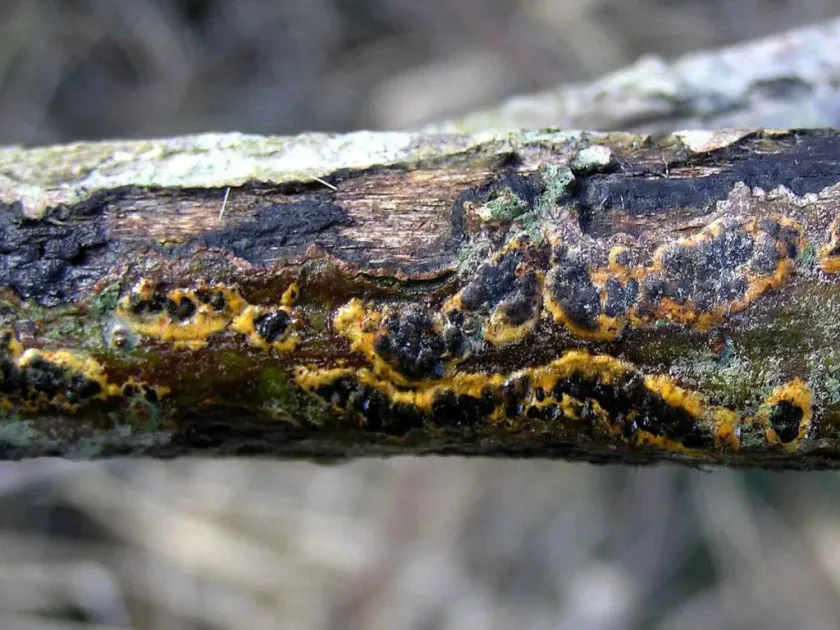
The most distinctive symptom of cryptomycosis is the formation of elongated, black, or dark-brown swellings on young branches. These represent the fungal stromata developing underneath the tree bark.
As the infection progresses, the epidermis splits, exposing the dark fungal structures. This creates visible longitudinal cracks and deformations along the length of the willow branches.
Leaves on infected branches often show signs of chlorosis and may drop prematurely. This happens because the fungal growth interferes with the water and nutrient transport in the shoot.
Affected branches often appear brittle and distorted. In advanced stages, the internal tissue becomes necrotic, eventually leading to the total death of the specific branch section.
A closer inspection of the damaged area reveals rough, broken bark with visible fungal fruiting bodies, which appear as dark, hardened patches or pustules.
Pathogen
The causal agent of willow cryptomycosis is the ascomycete fungus Cryptomyces maximus. This specialized pathogen primarily affects various species of the Salix genus, leading to significant damage in ornamental and commercial plantations.
The fungus develops within the cortical tissues and cambium of young branches. It follows a distinct biological cycle, forming stromata beneath the epidermis, which eventually erupt as the pathogen prepares to release its spores.
The pathogen thrives by hijacking the resources of the willow branches, causing the internal structure of the bark to degrade. Its long-term survival in infected woody parts makes it particularly resilient against environmental changes.
Spore dispersal typically occurs during periods of high humidity, allowing the fungus to colonize new parts of the tree or adjacent trees in a nursery or garden setting.
As a highly host-specific fungus, Cryptomyces maximus maintains its presence in willow populations by efficiently transitioning between vegetative and reproductive life stages.
Conditions for development
High moisture levels and sustained rain are the primary catalysts for the development and spread of Cryptomyces maximus. Willow trees in riparian zones or waterlogged soil are at high risk.
Temperature plays a crucial role in the development of the fungal mycelium. Warm and humid conditions accelerate the eruption of apothecia and the subsequent release of spores.
Dense planting patterns reduce air circulation, keeping the willow bark damp for longer periods. This stagnant microclimate is ideal for fungal colonization and infection.
Physical injuries, such as bark abrasions caused by wind, insects, or improper pruning, provide direct entry points for the pathogen into the tree's internal vascular system.
Trees under physiological stress, often caused by nutrient deficiency or poor environmental adaptation, show significantly lower natural resistance to the infection.
Why it matters
Cryptomycosis can lead to severe crown thinning as branches die back, resulting in a permanent loss of aesthetic appeal for ornamental willow varieties.
In commercial willow plantations, the disease causes reduced growth rates and poor-quality wood, making the harvest unsuitable for specialized use cases.
Severe infections weaken the overall vigor of the willow, leaving the tree susceptible to opportunistic pests and secondary infections that further accelerate tree mortality.
The cumulative effect of losing multiple branches over several seasons can cause a decline in the tree's health, eventually leading to the death of the entire plant.
The cost of managing the disease, including sanitation and chemical treatments, adds significant financial burden to the maintenance of willow nurseries and landscapes.
Protection
Strict sanitation measures are essential. All infected branches must be pruned back to healthy wood and removed from the site to prevent further spore dispersal.
Proper disposal is critical; infected plant material should be burned or buried to eliminate the reservoir of fungal spores that could persist through the winter.
Fungicide treatments, particularly those based on copper, can serve as a protective barrier if applied before the infection cycle begins in early spring.
Good horticultural practices, including proper spacing and balanced fertilization, strengthen the willow’s natural defense systems against fungal pathogens.
- Always disinfect pruning tools between cuts to avoid cross-contamination.
- Increase sunlight penetration by thinning the crown.
- Monitor trees regularly during wet seasons for early signs of lesions.
Discussion
No discussions yet — be the first.