
Cryphonectriaceae
Cryphonectriaceae
Description
Symptoms
The primary symptom is the development of sunken, reddish-brown patches on the bark surface. As the disease progresses, the bark cracks, revealing the decayed wood beneath.
The tree often reacts by forming callus tissue around the infection site, resulting in thickened ridges or swollen cankers. This is a sign of the host trying to wall off the pathogen.
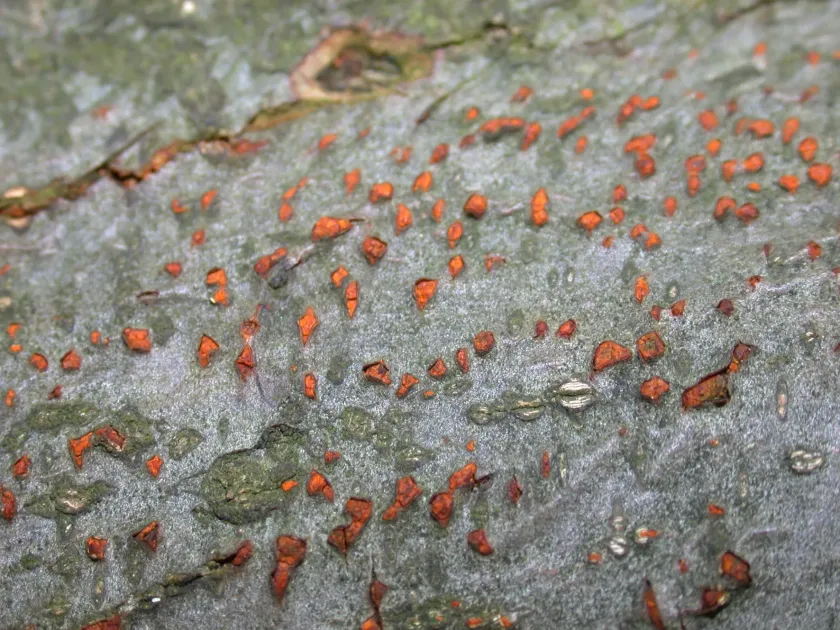
Under high humidity, bright orange to yellow pustules erupt through the bark surface. During wet weather, these produce spore masses that appear as twisted, thread-like tendrils.
Canopy thinning, leaf yellowing, and branch dieback are common external signs. When the main stem is girdled by a canker, the entire tree above the infection point will die.
- Sunken bark lesions
- Orange spore-bearing pustules
- Bark cracking and peeling
- Branch and crown dieback
- Canker formation with callus ridges
Pathogen
Cryphonectriaceae is a family of ascomycete fungi that includes several devastating pathogens affecting forest and orchard trees. The most prominent species is Cryphonectria parasitica, the causative agent of chestnut blight.
The disease typically manifests as bark necrosis and cambium damage. The pathogen enters the plant through wounds, cracks in the bark, or insect-caused injuries, colonizing the host tissues.
The life cycle involves the production of both conidia and ascospores. These spores are efficiently disseminated by wind, splashing rain, and insects, allowing the fungus to colonize new hosts rapidly.
The fungus produces enzymes that degrade lignin and cellulose, leading to a deep structural collapse of the tree's vascular system. This disruption causes wilting and eventual tissue death.
A unique aspect of this family is the occurrence of hypovirulence, where a viral infection within the fungus itself reduces its virulence, offering potential for biological control of the disease.
Conditions for development
Development of Cryphonectriaceae is highly dependent on warm and humid conditions. High moisture levels are essential for the survival and germination of spores on the tree bark.
Frequent rainfall and persistent fog facilitate the spread of the pathogen. Water droplets act as the primary vehicle for transferring spores from infected to healthy plant tissues.
Trees under stress, such as those suffering from drought, frost damage, or insect attacks, are significantly more susceptible to successful fungal colonization.
Optimal temperatures for mycelial growth typically range from +15°C to +25°C. Within this range, the incubation period is brief, leading to rapid disease progression throughout the summer.
Stand density and ventilation influence infection rates. Dense forests with stagnant air provide a conducive microclimate for the accumulation of fungal inoculums.
Why it matters
The primary harm is the death of branches and entire trees once the stem is girdled. This causes massive losses in timber production and ecological disruption.
Wood quality is significantly reduced by the fungal degradation of structural fibers. Timber from affected trees is often unfit for commercial use, leading to economic losses.
Ecological impacts include the loss of sensitive tree species and degradation of natural habitats. This can permanently alter forest structure and reduce local biodiversity.
In orchard settings, the disease causes severe yield losses and reduces the lifespan of fruit trees. Affected trees may also attract wood-boring pests that exacerbate the decline.
Management costs are high, requiring constant monitoring, removal of infected biomass, and disposal efforts, which represent a significant burden on forestry resources.
Protection
Sanitation is the cornerstone of control. All infected branches or trees should be promptly removed and destroyed by burning to reduce the local spore load.
Copper-based fungicides can be applied to wounds following pruning as a protective measure. These help sanitize exposed tissues and prevent new infections.
Breeding for host resistance is the most sustainable long-term solution. Planting resistant cultivars or hybrids helps maintain population health in blight-prone regions.
Strict quarantine measures are essential to prevent the movement of infected nursery stock or untreated firewood between non-infected and infected areas.
Biological control using hypovirulent strains is an innovative approach. By introducing weakened strains into existing cankers, the pathogen's ability to kill the host is significantly mitigated.
Discussion
No discussions yet — be the first.