
Violet webcap
Cortinarius violaceus
Description
Symptoms
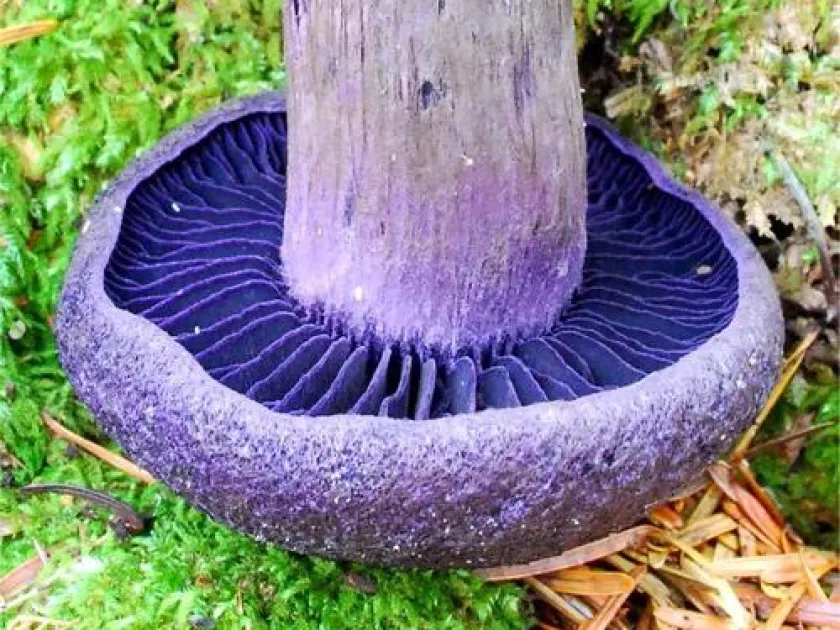
The fruit body is notable for its deep, rich violet or dark purple coloration throughout.
The cap surface is characterized by a velvety texture covered with tiny, dark scales.
Gills located beneath the cap are also intense purple and are covered by a cobweb-like veil when young.
The flesh is firm, dense, and displays a characteristic bluish-purple color when cut.
- The cap diameter typically ranges between 5 to 15 centimeters.
- The spore print is distinctly rusty-brown in color.
Pathogen
Clarification: The Violet webcap (Cortinarius violaceus) is not a plant pathogen or a disease-causing agent.
It is a mycorrhizal fungus that forms beneficial symbiotic relationships with the root systems of various forest tree species.
The fungus does not infect crops, nor does it exhibit any parasitic behavior towards agricultural plants.
It belongs to the Cortinariaceae family and is biologically distinct from phytopathogenic fungi that cause crop damage.
Therefore, it requires no disease management or fungicidal control protocols in agricultural settings.
Conditions for development
The fungus thrives in moist woodland environments with thick layers of leaf litter or acidic soils.
It is commonly found associated with birch, beech, or coniferous trees, which act as its host partners.
Development of fruit bodies is most prevalent from late summer through the mid-autumn period.
Stable moisture levels in the soil are essential for the maintenance of the fungal mycelium.
It is rarely found outside of established forest ecosystems where its symbiotic partners reside.
Why it matters
This fungus poses absolutely no threat to crops, orchards, or any other commercial agricultural plant species.
It plays a constructive ecological role by enhancing nutrient and water uptake for trees via its mycorrhizal network.
The species does not produce toxins that would interfere with plant growth or agricultural yields.
There is no record of this fungus causing harm to the productivity or health of cultivated fields.
Its presence is considered a sign of a healthy, functioning forest soil ecosystem rather than a hazard.
Protection
No protective or control measures are required, as the species is ecologically beneficial.
In many regions, the Violet webcap is listed as a protected species due to its rarity in nature.
Efforts should focus on habitat conservation rather than eradication, which would be ecologically counterproductive.
No chemical treatments or preventative agronomic practices are relevant to this non-pathogenic fungus.
Management remains limited to protecting forest landscapes where this organism performs its natural function.
Discussion
No discussions yet — be the first.