
Girdled webcap
Cortinarius trivialis
Description
Pathogen
The Girdled webcap (Cortinarius trivialis) is a mushroom species belonging to the family Cortinariaceae. It is essential to clarify that it is not a plant disease pathogen, but a beneficial mycorrhizal fungus.
This fungus establishes a mutualistic relationship with the root systems of various tree species, such as birch and conifers. By forming ectomycorrhizae, it facilitates the uptake of water and essential nutrients for its host tree.
Unlike parasitic fungi that cause root rot or wilting, the Girdled webcap supports the health of the host tree. It forms a mantle of fungal tissue around roots, known as the Hartig net, which serves as a physiological bridge for nutrient exchange.
Many historical records in outdated agricultural manuals may misidentify mycorrhizal fungi as disease agents. However, modern scientific consensus classifies Cortinarius trivialis as a non-pathogenic organism.
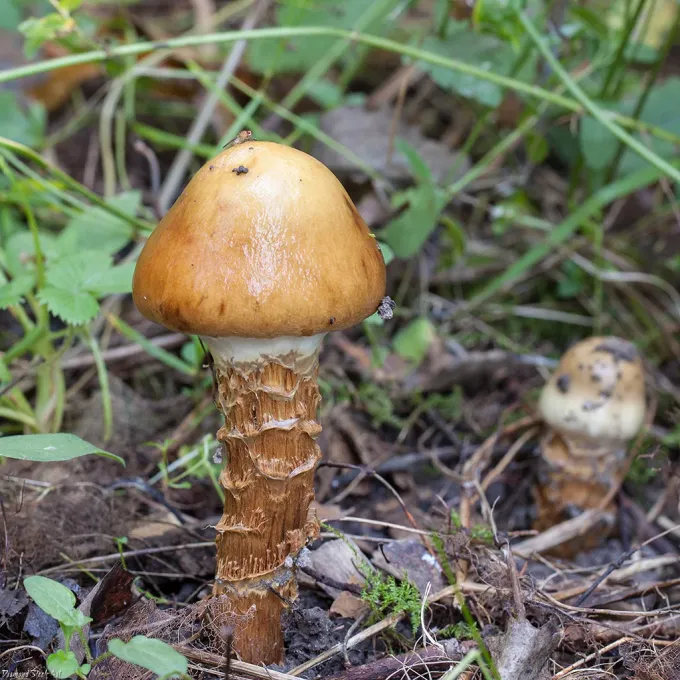
Its biological life cycle involves the production of fruiting bodies with a distinctive viscid cap and a fibrous stipe. These mushrooms release spores that colonize the soil and search for new root systems to establish symbiosis.
Conditions for development
The growth and development of Cortinarius trivialis are highly dependent on specific environmental conditions found in temperate forests. It thrives in moist, humus-rich soils with a slightly acidic pH level.
The presence of suitable host trees is the primary condition for its survival. The fungus requires stable climatic conditions, particularly high soil moisture levels throughout the late summer and autumn months.
Temperatures between 15°C and 22°C are considered optimal for mycelial expansion and the formation of sporocarps. Adverse conditions, such as extreme heat or prolonged drought, will suppress the appearance of the mushrooms.
Soil quality is another critical factor, as heavy nitrogen fertilization can disrupt the delicate mycorrhizal balance, causing the fungal population to decline or vanish entirely.
The fungus is sensitive to disturbances, such as soil compaction or deforestation, which break the physical connections between the mycelium and the host tree roots, leading to the collapse of the symbiotic colony.
Why it matters
The Girdled webcap causes no harm to agricultural crops, garden plants, or forestry operations. It is not capable of invading plant tissues or inducing necrotic damage that would lead to disease.
In agricultural contexts, this fungus is not a target for disease control or mitigation. Its presence is generally indicative of a well-functioning forest soil ecosystem that supports tree health and stability.
Mistaken identification often stems from observing white mycelial growth on roots, which is sometimes confused with root rot fungi. However, the presence of Cortinarius trivialis actually protects roots from certain pathogens by occupying the colonization sites.
There are no economic losses associated with this species. On the contrary, its role in nutrient cycling makes it an ecologically valuable organism that contributes to forest productivity.
In conclusion, agricultural and forest management practices should encourage the preservation of mycorrhizal networks, including species like the Girdled webcap, to ensure the long-term sustainability of the ecosystem.
Discussion
No discussions yet — be the first.