
Gypsy mushroom
Cortinarius caperatus
Description
Pathogen
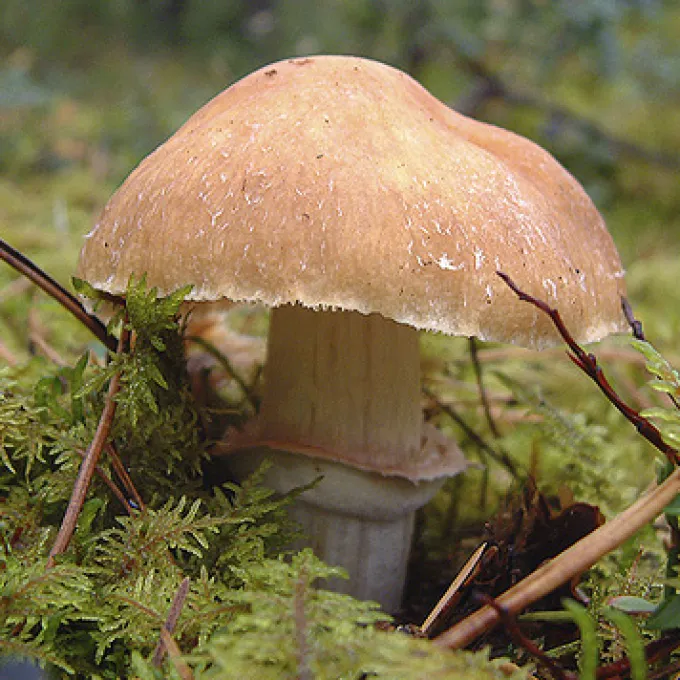
The Gypsy mushroom (Cortinarius caperatus), also known as the ringed cap, is a species of edible fungus in the family Cortinariaceae. It is strictly a mycorrhizal fungus and does not act as a plant pathogen or disease agent.
In forest ecosystems, this fungus forms symbiotic relationships with the roots of various trees, such as pine, beech, and birch. It helps trees absorb nutrients and moisture from the soil, acting as a partner rather than a parasite.
The fungus does not invade or destroy plant tissues. It does not cause wilting, spots, or any other signs of infection commonly associated with fungal plant diseases.
As a mycorrhizal associate, it requires a specific forest environment to survive. It cannot survive in agricultural fields or crop plantations where traditional plant diseases thrive.
Therefore, treating the Gypsy mushroom as a disease of crops is a scientific error. It is a beneficial organism that contributes to forest health through its complex symbiotic interactions with the root systems of mature trees.
Conditions for development
The Gypsy mushroom thrives in acidic soils with a significant amount of leaf litter and organic matter. It requires high humidity and temperate weather conditions to produce its fruiting bodies.
The presence of mature host trees is essential for the survival of the fungus. Without the carbohydrates provided by the host tree roots, the fungus cannot complete its lifecycle.
It is sensitive to environmental disturbances such as heavy machinery, soil compaction, and the application of synthetic fertilizers or pesticides, which disrupt the delicate mycorrhizal network.
Typical forest conditions include well-drained soils and a stable microclimate. The fungus is often found in open or semi-open forest spaces where sunlight can penetrate the canopy.
Because of its specific habitat requirements, the Gypsy mushroom is rarely found outside of undisturbed woodland areas, making it an indicator of healthy, stable forest ecosystems.
Discussion
No discussions yet — be the first.