
Cordyceps tenuipes
Cordyceps tenuipes
Description
Symptoms
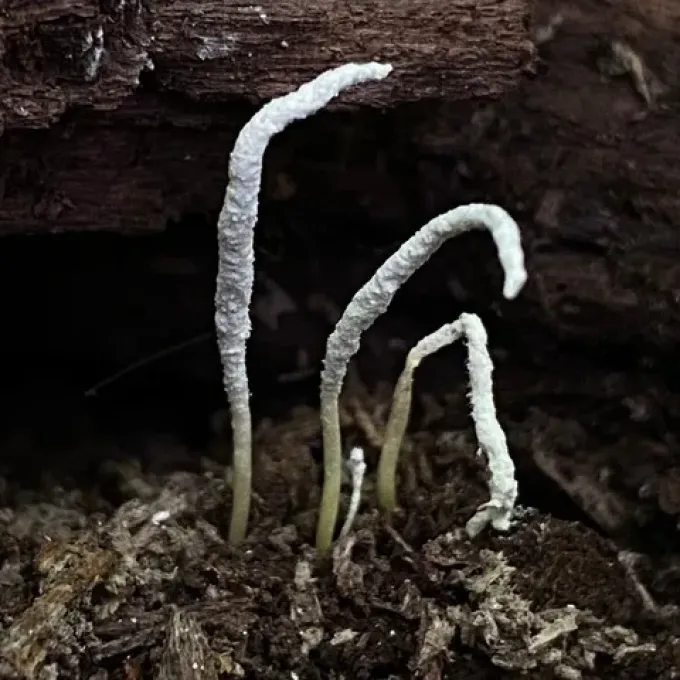
The most visible sign of Cordyceps tenuipes activity is the formation of elongated, thread-like white to cream-colored fruiting bodies that emerge from the host's body. These structures are distinct and easy to identify in moist habitats.
The infected insect usually becomes immobile and stiff, a process known as mummification. The corpse may be found attached to stems or leaves, covered in a fine, powdery layer of fungal conidia.
Microscopic examination reveals the presence of complex hyphal networks inside the insect's tissues. The exterior of the host may show clusters of conidiophores, which are the reproductive structures responsible for releasing spores.
Farmers might observe these mummified insects in damp, shaded areas of the field or under the dense foliage of crops. These findings indicate that the fungus is actively working in the area.
Unlike symptoms of viral or bacterial plant diseases, there is no chlorosis, necrosis, or wilting of the plant tissue associated with the presence of this fungus on insects found within the canopy.
Pathogen
Cordyceps tenuipes is a well-known entomopathogenic fungus belonging to the Cordycipitaceae family. Unlike common plant pathogens, its primary biological function is to infect and parasitize various insect species, particularly Lepidoptera.
The fungus operates by invading the host's cuticle using specialized enzymes and mechanical pressure. Once inside, the mycelium rapidly colonizes the insect's body, utilizing its nutritional resources for growth.
Historically associated with the anamorphic state Isaria tenuipes, this fungus serves as a critical component of natural population dynamics in forest and agricultural ecosystems. It is not a threat to the health or vitality of vascular plants.
In the agricultural sector, Cordyceps tenuipes is regarded as a beneficial organism. It functions as a natural pest control agent, effectively reducing the density of herbivorous insects that might otherwise damage crops.
The study of this organism is vital for sustainable agriculture. By fostering environments where such fungi can thrive, farmers can leverage natural biological control to supplement or replace chemical interventions.
Conditions for development
High relative humidity is the most critical environmental factor for the successful development of Cordyceps tenuipes. In dry environments, the fungus struggles to germinate and infect new hosts.
Temperature plays a significant role, with an optimal range between 18°C and 25°C. Exposure to extreme heat or direct, intense sunlight can degrade the spore viability and arrest the fungal growth process.
A sufficient density of host insects is required to sustain the fungal population. When pest pressure is high, the fungus spreads more efficiently, leading to potential epizootics within the insect population.
Dense crop canopies provide a protected microclimate that shields the fungus from environmental stress. This microenvironment is essential for the longevity of both the mycelium and the reproductive spores.
Rainfall and heavy dew facilitate the dispersal of spores from infected cadavers to healthy insects. This moisture-driven dispersal mechanism ensures the fungus remains present in the field during the growing season.
Why it matters
Cordyceps tenuipes causes no direct or indirect harm to crop plants. It lacks the biological pathways to infect plant tissue, making it a harmless presence for the agricultural yield.
The primary effect of this fungus is the suppression of insect populations. Therefore, its impact is categorized as beneficial rather than harmful. It contributes to the natural regulation of agricultural pests.
The only minor issue could be the aesthetic presence of infected insect cadavers on the harvest. However, standard post-harvest cleaning and washing processes are sufficient to manage this.
Aggressive use of broad-spectrum fungicides is the main cause of damage related to this fungus. By killing beneficial entomopathogenic fungi, farmers inadvertently create the conditions for pest outbreaks.
In conclusion, the fungus is not a plant pathogen. Its presence represents a healthy, balanced agro-ecosystem where natural biological controls are at work to minimize pest damage.
Protection
Since Cordyceps tenuipes is not a plant disease, no control or eradication measures are necessary. Farmers are encouraged to preserve the conditions that favor its presence as a natural pest control tool.
Integrating biological protection into the field management plan is the best strategy. This involves minimizing the use of synthetic fungicides during peak insect activity periods to prevent unintended harm to the fungus.
No special agronomic practices are required to manage this organism. In fact, maintaining healthy soil and balanced canopy density is beneficial for both crop growth and the survival of natural entomopathogens.
If the cultivation of the fungus is desired for commercial biological pest control products, specific laboratory conditions with high humidity and nutrient-rich substrates are employed to maximize spore production.
To support the natural biocontrol of pests, farmers can avoid excessive chemical sprays that have non-target effects on the entomopathogenic fungal community, ensuring sustainable field management.
Discussion
No discussions yet — be the first.