
Cookeina speciosa
Cookeina speciosa
Description
Pathogen
Cookeina speciosa is a species of cup fungus belonging to the Sarcoscyphaceae family. It is vital to clarify that this fungus is a saprotroph and does not cause diseases in agricultural plants or crops.
The fungus feeds on decaying wood and organic matter, playing a significant role as a decomposer in tropical and subtropical forest ecosystems. It contributes to nutrient cycling by breaking down complex woody tissues into simpler substances.
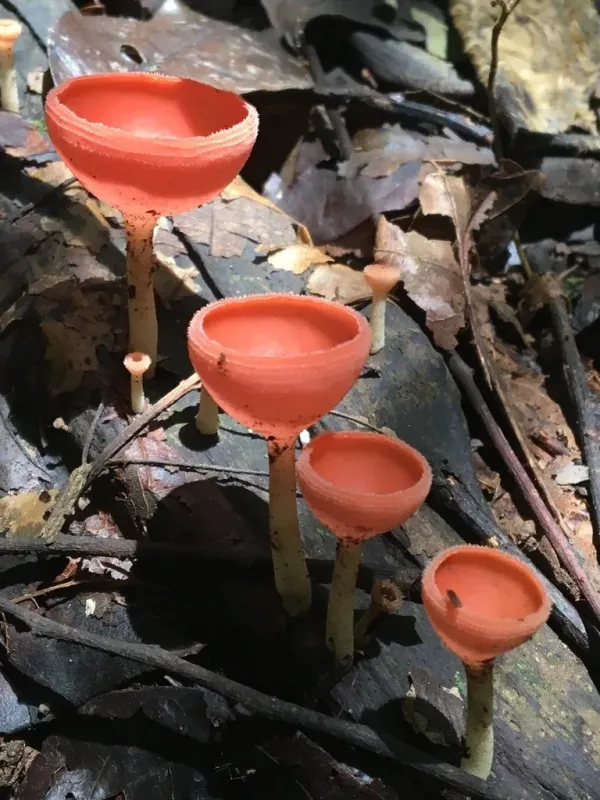
The fungus produces distinctive cup-shaped apothecia, often brightly colored, which serve as reproductive structures. Spores are released from asci found on the inner surface of the cup, typically dispersed by wind or physical contact.
As a non-pathogenic organism, Cookeina speciosa does not infect living plant tissues, meaning it poses no threat to farming, horticulture, or orchard management. It is purely an environmental participant in the natural decay process.
Agronomists and plant pathologists do not classify this species as a disease agent. Its presence is indicative of a healthy decomposition process in natural forest environments rather than a sign of plant stress or infection.
Conditions for development
The development of Cookeina speciosa is strictly dependent on high humidity and the presence of moist, decaying woody debris. It thrives in tropical climates where moisture levels remain consistently elevated throughout the year.
The fungus prefers shaded habitats on the forest floor, where the microclimate is stable and protected from excessive heat or dry air. These conditions are necessary for the formation and maturation of its visible fruiting bodies.
Availability of dead organic matter, such as fallen branches or decaying logs, serves as the primary growth medium for the mycelium. The fungus avoids direct sunlight, which would cause dehydration of its delicate tissues.
Environmental fluctuations, such as prolonged drought, drastically inhibit the metabolic activity of the fungus. During dry seasons, the organism remains dormant within the substrate until moisture levels become sufficient again.
There are no known agricultural control methods for this fungus simply because it does not interfere with crop production or plant vitality in any cultivated setting.
Discussion
No discussions yet — be the first.